From Lanka, to Law, to Down under fighting for the aborigines
by Jordana Narik
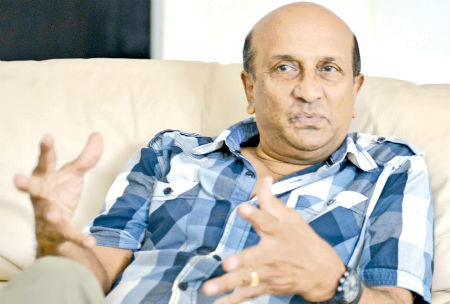
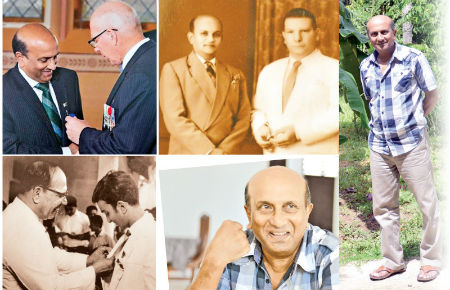
Maithri Panagoda who was born and raised in Gampaha is today a successful lawyer who is fighting for the rights of the Australian Aboriginal Community. He has fought many a case to reunite children of the ‘Stolen Generations’ with their families. “Quite a few aboriginals have said that what they wish for more than anything is an apology and while compensation would be helpful, a sincere apology is worth more than dollars,” said Panagoda in an interview with the Daily News.
Excerpts of the interview:
Q: What was your childhood like growing up in Gampaha?
A: I grew up in the village and moved to Colombo when I was 15 years old. My mother was a teacher at the local school here, so we all studied in that school. I spent a bit of time in the local village school, but later I went to Colombo and joined Ananda College. From Ananda College, I entered university. I didn’t live in the village after that. But my childhood in Gampaha was fantastic.
This is what I feel sad about that my children missed out on the childhood I had. One was born in England, while the other two were born in Australia. They didn’t get a taste of this life here which were a lot of happy memories. When I see older people here, I realize that they were the ones I played cricket with as boys. Everyone knew my family because my father was a doctor and we lived a carefree life.
We never even wore slippers, we just walked around bare footed. We didn’t have electricity, running water; the water was from the well. We studied using the kerosene oil lamp. It was a very simple life, and for a period of time, I travelled from here to Colombo every day for school. So all in all, it was a very simple, carefree, happy life. Uncomplicated.
Q: You said you left Sri Lanka for the first time at the age of 25. What was that like?
A: I qualified as a lawyer here, took my oaths at the Supreme Court and went to England to be a journalist. Actually, I joined the London School of Journalism for a one year course and then planned to come back and join Lake House. But then things took a different turn.
Q: What inspired you to pursue law instead of journalism?
A: I think law opened up more doors to journalism. At the same time, there were some trouble taking place in Sri Lanka at the time and my father discouraged me from returning. It was 1975. The JVP was coming up and as a young person it would have been easy for me to get involved in it. So I postponed coming back. I kept saying I’ll come back next year, every year, but then I did my law exams in London and I met this girl from Sri Lanka who was also a lawyer in London and we were married. We had our first child in London and by that time, I really enjoyed working in law and decided to migrate to Australia to live and practice there.
Q: Did you know about the strong Sri Lankan community in Australia at that point?
A: No, I didn’t know anyone. It was a very risky journey and I did not have a job lined up. Apart from my self-confidence, I didn’t have anything else. I didn’t have a lot of money and that’s how I joined the Aboriginal Legal Services. It was the first job I got. For four months in Sydney, I went to lots of interviews, but couldn’t get a job.
Q: Were you originally looking for more socially conscious legal work?
A: Not necessarily at first. I just wanted an income. I had a one year old baby and I needed to feed him. I would have taken any job. And I did take some menial types of work temporarily, just to buy milk and butter. In Sydney, I went for a number of interviews. But they all said, “Without local experience we are unable to hire you, even though you possess the needed qualifications.” Then I was called for an interview in Dubbo, five hours from Sydney. I had no idea where it was. It’s a bit of a funny story, actually. Fresh from England, I wore a three piece suit and went for the interview only to see there were twelve aboriginal elders in their shorts and thongs to interview me. I felt out of place, but they offered me the job straight away.
Q: What was like working there [Western Aboriginal Legal Services] like?
A: Very, very interesting work and hard work too. We had to travel hundreds of kilometres around the country. There was a fair bit of racism at the time and aboriginal people were facing much suffering. Our plan was to come back to Sydney in six months, but we stayed in Dubbo for ten years. I was at that job for seven years and then I setup my own practice. We liked the country, it was a bit like Sri Lanka. Quiet, not many people. It really reminded me of where I grew up. So we were very comfortable. We had two more children there and it was only when my eldest son got into high school that we thought we should move to Sydney, where there were better opportunities educational opportunities.
Q: I read that you were very involved in the Sri Lankan diaspora community in Australia. Was that specifically in Sydney ?
A: Yes, in Sydney. I could speak Sinhalese quite well and I knew the Sri Lankan scenario, so I felt I could do a lot for them. Initially the people who migrated to Australia (from Sri Lanka) were English-speaking people who had studied in Colombo schools. But then there were different generations who migrated to Australia who lacked the language skills, mostly during the war and I was able to help them out. That was a great feeling, because I had always had a pitiful feeling that I had left Sri Lanka too early and didn’t do enough here. So I was able to serve some Sri Lankans in that way and I got involved in a few social activities too, such as the Sri Lankan Society and the OBA (Old Boys Association) of Ananda College.
Q: Can you tell me more about your work for the aboriginal “Stolen Children” and the Stolen Generation Project?
A: I was connected very quickly to the aboriginal people when I went to Dubbo. They liked me, I liked the work, while we had many similarities. When I came to Sydney and joined a different law firm, Carroll & O’Dea, the issue of Stolen Generations came up, because for many, many years, aboriginal kids were taken from their families, mostly in an attempt to erase the black race.
They thought by mixing with white people, the aboriginal race would die out, while they did so under the pretence of safety. So these “kids” are now in their seventies and eighties and they have suffered a lot within the white families and in other situations, physically, sexually, psychologically and mentally.
They really have suffered. So I thought we should help them out and I initiated action against the government. It had never been done before successfully, but I negotiated with the government, who ultimately agreed that politically something needed to be done. Later we set up a mediation scheme and before I left Sydney a few weeks ago, we had just finished what I think was our 185th claim.
As an aboriginal, you would get a great apology from the government and some monetary compensation, around AU$ $200,000 – 300,000, so it’s all very satisfying work, and the aboriginal community really appreciated it, because these people were dying. They are a dying breed now, while the problem had been perpetuated unfortunately generation after generation.
Q: What are some examples of the traumas that members of the “Stolen Generation” have been through?
A: These were aboriginal boys and girls taken as children or as babies. The boys were taken to one home while the girls were taken to another home. In both places, the idea was to train the boys to be farmhands and labourers and the girls to be domestic servants. Some were very intelligent, of course, but they never got to pursue their studies. When they turned sixteen or seventeen, they were just sent to various places to work.
It was a very sad life. Of individual cases, I have plenty of stories. There were aboriginal girls who were sexually assaulted by the people who were supposed to care for them. And generally, they were not treated as human beings. They were punished for minor faults.
One girl, when she was about six, wet her bed once and as punishment she was thrown into the freezing swimming pool during winter and then forced to go back inside and clean the bed sheets.
With the boys, if they did something naughty, even mildly, there was a process called “lining up,” which is when all the other boys would line up in two rows and the offender would have to walk through the middle and the others have to punish him by punching him.
So by the time the offender got to the end, he’d be all bruised. And if any boy didn’t participate in the punching, he’d have to go through the line-up too. It was a very cruel and inhuman way to treat them.
Q: How long on average were children from the “Stolen Generation” in these homes? Were they ever reunited with their families?
A: They were never reunited with their families until they were about eighteen. When they asked for their parents, they were told all sorts of stories such as their parents were dead or didn’t want them. And if the parents tried to visit them, similar lies were told.
They were not allowed to visit. Most of the children grew up with the misapprehension that their parents didn’t love them, whereas the parents were trying to reach them.
Some parents wrote letters that were never given to the kids and vice versa. So it was a very sad period in Australia.
Q: And how does your work relate to this?
A: With the cases I’m handling, a top government official comes to the mediation and once the aboriginal person’s story is told, the official makes a really, really heartfelt apology on behalf of the Australian Government. And by this time, all the tough lawyers in the room are in tears. It’s a very emotional experience. I have a young lawyer working with me and she very often breaks down. Quite a few aboriginals have said that what they want more than anything is an apology, and that while compensation would be helpful, a sincere apology was worth more than dollars.
Q: Do you think that your identity as a Sri Lankan and as an immigrant in Australia influenced the way you looked at the law and the way you interacted with Aboriginal people?
A: I do think so, because I think I could easily identify the problems they had because of my own background, while the Aboriginal people gets closer to me very easily.
They suspect white people, but they accepted me straight away. They used to call me “the brother” and say “you are one of us.” So it wasn’t difficult to build up a relationship. Meeting me was the first time they saw a non-white lawyer, trying to defend them and it worked out very well. I am still in touch with many of them.