2026 Census – 11 August 2026 – Information and Support Available

Source:NSW Community Engagement
Dear community representatives,
Thank you for your ongoing support and contributions to the community. The Community Engagement Network has collated this newsletter of important information from across the Australian Government that may be of interest to yourself and members of your community.
Please feel free to share content from this newsletter with members of your community, but in the interests of ensuring the information remains accurate, please do not make any alterations to the content
In this fortnight’s edition, you can find information on the following:
News & Updates
· 2026 Census – 11 August 2026 – Information and Support Available
· 2027 Australia Day Community Events Grant Program opening 27 August 2026
· Bringing someone from overseas for events
· National campaign to address racism in workplaces
· Australian Government Response to the Special Envoy’s National Response to Islamophobia
· Scam Alert: Individuals Impersonating Home Affairs Officers
· Don’t fall into a money trap
· Got a question, complaint, feedback or suggestion for the department?
· If it doesn’t feel right, flag it.
Upcoming events
· Additional Webinar Session: Visa Options for International Graduates – 11 August 2026
Other information
· Useful information in your language
· Contact Us
· Other useful links
2026 Census – 11 August 2026 – Information and Support Available
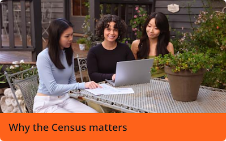
Every five years, the Australian Bureau of Statistics (ABS) counts every person and household in Australia. This is called the Census of Population and Housing.
Census night is Tuesday 11 August 2026. You can complete the Census as soon as you get your instructions, if you know where you’ll be on Census night.
Most households will get a letter in the mailbox with instructions to complete online. Some households will get a paper form or visit from Census staff.
The Census form asks questions about your age, country of birth, cultural background, living situation, work and education. Every answer matters to help us understand what Australia needs now and into the future.
The Census is compulsory. Everyone in Australia on Census night must be included on a Census form, no matter their residence status.
Why the Census matters
The Census is the most comprehensive snapshot of the country and tells the story of how we are changing. The Census is the only data collection activity that provides information for the entire country, including for small geographic areas and small population groups.
Community groups, not-for-profit organisations, businesses, and governments use Census data to make important decisions.
Census data informs planning for schools, health care, transport, infrastructure, and business. It’s also used to help plan local services for individuals, families, and communities.
How the Census benefits you
In the Census, every answer matters to help the Government understand what Australia needs now and into the future. Having the right numbers means the right services can be provided in your community.
For example:
- Playgroup Australia uses Census data to understand changing family needs and plan where and when playgroups are offered.
- Street Side Medics uses Census data to understand local communities and deliver mobile healthcare to people experiencing homelessness.
You can read more about how Census data can help your community in
If you need help with completing the Census Form, the ABS will be offering in-person support at Pop-up Hubs across Australia. Find one near you at
Alternatively, visit the
Census website to learn more about the Census help and support language support services and Information for migrants refugees and international visitors
| We have also attached factsheets to support questions around the Census:
· Privacy information sheet – how the ABS keeps people’s information safe and secure · CALD information sheet – consolidating information in one place regarding some of the questions raised in Culturally and linguistically diverse (CALD) communities. |

2027 Australia Day Community Events Grant Program opening 27 August 2026

The National Australia Day Council (NADC) offers
grant funding to community groups
government entities and councils to support Australia Day events that bring communities together and encourage participation in Australia Day activities.
In 2027, the NADC will provide funding of up to $15,000 through its Australia Day Community Events Grant Program to help communities reflect, respect and celebrate on Australia Day.
From community barbeques and concerts to citizenship ceremonies, flag raising ceremonies and parades, the community events grant program has helped deliver almost 4,000 community events across Australia since 2021.
Applications open 27 August 2026 and close 22 September 2026.
The NADC will hold a Grants Briefing on 25 August 2026, register for updates
here
Questions? Email grants@
Bringing someone from overseas for events

Are you sponsoring or supporting a visa applicant so that they can come to Australia for temporary activities?
This may include entertaining or playing sport, cultural exchanges, seasonal work, or training.
Some visas will require you to be an
approved temporary activities sponsor.
The International Event Coordinator Network (IECN) provides free advice on visas to event organisers on the following types of events:
· business or academic meetings, conferences and seminars
· sporting tournaments, championships and games
· trade shows, expos and fairs
· cultural festivals
· religious events.
The IECN can’t assist you with personal events such as graduation ceremonies, birthday parties, weddings or attendance at interviews or exams.
To find out more about the IECN services, see:
Bringing someone to participate in temporary activities
For enquiries, please contact the IECN by completing the
online form to register your event and receive advice.
National campaign to address racism in workplaces
| Racism often hides in the everyday rules, policies and decisions that shape how work gets done. Over time, these choices influence who belongs, whose voices are heard and whose rights are protected. The impact can build quietly, leaving people feeling unseen, unheard and unsafe.
But if we change the system, we can change the story. We can help everyone feel they belong, help protect everyone’s rights and let everyone feel seen, heard and safe. How you can help – the Australian Human Rights Commission (the Commission) has compiled a range of practical guides to help you and your communities understand racism in workplaces. We encourage you to start having meaningful conversations with your communities, and: · Download the campaign materials and print and display them where possible · Download the amplification kit and share on your social media channels · Download the community support services guide and share with your communities For more information, see Change the system. Change the story. Change the system. Change the Story. is part of the Seen & Heard project, a national project led by the Commission, and funded by the Department of Home Affairs. |
Australian Government Response to the Special Envoy’s National Response to Islamophobia

On 18 July 2026, the Australian Government released its response to the recommendations made by Australia’s Special Envoy to Combat Islamophobia, Mr Aftab Malik, in his 2025 report, A National Response to Islamophobia: A Strategic Framework for Inclusion, Safety and Prosperity.
A factsheet summarising the response is now available in 7 community languages, in addition to English – Arabic, Bengali, Farsi, Indonesian, Malay, Turkish and Urdu.
Visit the department’s website to view the factsheets and the government’s full response:
Australian Government response to the Special Envoy’s National Response to Islamophobia.
The government response includes a package of funded measures to support Muslim communities and build social cohesion, including multicultural grant opportunities.
More information on the grant opportunities is available at:
Response to Special Envoy to Combat Islamophobia – grant opportunities
The Community Engagement Team REGION are interested in receiving feedback to better understand community awareness, initial reactions, and any ongoing opportunities or concerns regarding this response.
We encourage you to contact us to share any feedback from your community: nsw.community.engagement@homeaffairs.gov.au
Scam Alert: Individuals Impersonating Home Affairs Officers

We are aware of reports of scammers impersonating Home Affairs officers and going door-to-door in local communities.
These individuals may present fake documents from Home Affairs and request;
· Personal information or documents
· Biometric information, such as fingerprints or photos
· Money
If someone unexpectedly arrives at your home claiming to represent Home Affairs:
· Do not share your personal information
· Do not provide money or financial details
· Do not allow them into your home
· Report to your local authorities
Stay scam safe and remember you can help others by reporting scams to Scamwatch at:
www.scamwatch.gov.au/report-a-scam
Don’t fall into a money trap

ou’ve just received a message offering $300 a day to “process payments” from home. The work sounds simple. The pay is good. You can start immediately. What would you do?
The safest response is to stop and ask questions first.
Easy money offers are often a warning sign of a money trap. Before accepting any job, take the time to check who you’re dealing with and exactly what’s involved.
Criminals use fake jobs, text messages and social media messages to recruit people to move money through their bank accounts.
What seems like easy money could put your finances, identity and future at risk.
If someone is offering money in exchange for using your bank account, receiving payments, or transferring money for them, that’s a major warning sign.
Know the signs. Don’t fall into a money trap.
See more at Money Trap – Crim Stoppers Australia and Resources – Crime Stoppers Australia
Got a question, complaint, feedback or suggestion for the department?

If you’ve got a visa question, we’d first recommend checking our website to see if you can find the answer. We also have a Digital Assistant on our website to help answer your questions.
But if you’re still unsure, our Global Service Centre (GSC) team are equipped to help answer your visa questions. Translation services are also available.
You can contact our GSC Monday to Friday 9 am to 5 pm your local time. We receive a high volume of telephone enquiries each day. Our GSC is closed on Australian National Public Holidays. Monday is our peak day and wait times may be longer.
In Australia, phone: 131 881
Outside Australia, phone: +61 2 6196 0196
If you’re having trouble navigating our website, GSC phone line, or the Digital Assistance, please let us know so we can improve our services: Complaints, compliments and suggestions
If it doesn’t feel right, flag it.

Communities play an important role in helping keep Australia safe and informed. Information provided by community members can help protect vulnerable visa holders and support the integrity of Australia’s migration system.
To learn more about what Border Watch is interested in and how to make a report, visit the Department of Home Affairs website:
Please do not investigate matters yourself or place yourself at risk. If there is an immediate threat to life or safety, contact emergency services on 000.
Additional Webinar Session: Visa Options for International Graduates –
11 August 2026
We received a high level of interest in our webinar for international students held on 4 August, to accommodate those who were unable to attend, we have scheduled an additional webinar covering the same content. This session will be hosted on Tuesday 11 August, from 2:00PM – 3:00PM AEST.
Please register your attendance on TryBooking by following this link
Please note your relevant time zone for the session. The session time is specified in the event information on TryBooking, which includes the relevant time for each state and territory.
Once you have registered, your link to the event will be included in your booking confirmation email received from TryBooking.
Australian Citizenship test resource booklet
Australian Values – Life in Australia booklet
Domestic/family violence and your visa*
Adult Migrant English Program (AMEP)
Australian Centre to Counter Child Exploitation*
eSafety Commissioner – be safe online
AusAlert – National Warning System
Australian Cyber Security Centre (ACSC)*
Australian Electoral Commission
Australian Taxation Office – Information about Tax
Fair Work Ombudsman – Your workplace rights
Department of Health and Aged Care
My Aged Care – Accessible aged care services
Carer Gateway – If you are a carer for someone
Scamwatch – Protect yourself from scams
Services Australia – Centrelink and Medicare
Translating and Interpreting Service (TIS National)*