eLanka Newsletter – 28 February 2021 – 6th edition – Sri Lankans in Australia
Click here or on the image below to read this week’s elanka Newsletter

The present-day sky is crowded. Airways crisscross above continents and oceans and are severely congested with all kinds of aeroplanes carrying passengers and cargo. Then someone crashes, people die, and we say “What a shame!” The manufacturers start defending their aeroplane, the insurance companies look for loopholes to creep through and save their bacon. Of course, there is always the ever-present ‘pilot error’ verdict to take the final blame. That is what happens in air crashes and crash causes. The dying or the surviving is seldom man-made. It is all done upstairs and has little to do with what we deduce from what we know or hear. I’ve seen enough of the sky and what happens in it to figure that out.
August 7th,1997, a Fine Air DC-8-61F took off from Miami International on a direct flight to Santo Domingo. It was a cargo flight, two pilots and a Flight Engineer plus a security officer were the only occupants. The DC-8 rolled off on Runway 27 Right and eased into the azure blue Florida sky.
That’s when the trouble started. The first officer was flying, and he could not control the pitch attitude of the aeroplane, and the nose kept creeping up. The speed started bleeding off and the big cargo jet stalled and crashed 3000 ft beyond the end of the runway. It instantly killed the 4 people on board and also a luckless motorist who was passing on the road beyond the airfield.
The investigation proved the DC-8 was loaded incorrectly by the cargo people and the trim settings shown were wrong.
The load sheet is given to the Captain a few minutes before the doors are closed. It shows how the aeroplane is loaded and how the Center of Gravity is calculated by the load master who decides how the payload should be distributed. If he makes a mistake, and the Captain fails to notice it, no one would know that till the aeroplane rotates and the pitch attitude misbehaves. At times it could become almost impossible to fly the aeroplane.
That’s one down and two to go of the three stories.
The Ethiopian 707 cargo aeroplane was loaded and ready for takeoff in Fiumicino Airport in Rome on 19th November 1977. It was a two-sector flight, first to Asmara and then to Addis Ababa, carrying a consignment of tyres. There were five onboard, the two pilots and the Flight Engineer and two security officers.
The aeroplane was almost fully loaded with heavy cargo plus 11,000 gallons of fuel. The Captain checked the load sheet and calculated the take-off power needed and set the stabilizer trim according to the units that were displayed in the load sheet.
The 707 rolled out of Fiumicino and took-off. It is not clear what happened, the theories expressed are multiple. The 707 could not be controlled in the pitching and nosedived to a scrub bush jungle on the extended centerline of the runway.
All 5 people in the aircraft died. The 11,000 gallons of fuel burned the fuselage to cinders. Maybe the calculated trim was wrong or maybe the loading of the cargo was not according to center of gravity limits. Some even said the cargo pallets may have shifted. Either way, the 5 people who died lost their lives in vain, perhaps due to a loading mistake.
And now I come to the third aeroplane, the one that got away.
No, this I did not take from any record book nor is it a trumped-up story from a third or fourth party. This is straight from the horse’s mouth which I pulled out with tongue and teeth. It was the surviving pilot who laid bare all the facts of this incredible story. Captain Jaya Seneviratne is no more, he passed away some years ago. First Officer Nihal Jayawickrema flew almost every jet aeroplane that served Sri Lanka and retired after being the Director of Flight Operations in the national carrier. I write this in honour of these two pilots. Let the truth be on record, stated as it happened, so that such professional pinnacles are remembered and told and re-told for future generations.
The year was 1971. Sri Lanka was boiling and bursting at the seams. The JVP had taken arms to fight the ruling coalition of the Sirimavo Bandaranaike government. At the start the armed forces were ill-prepared to contain the onslaught of the youth uprising. The pendulum swung both ways and hundreds of the innocent from the two sides died in vain. I better stop that sad story now before I forget my purpose and blast away at things that are best left unsaid.

Ammunition and soldiers had to be moved to fight the JVP. Road transport was difficult with guerilla type ambushers. The safest was by air, load an old DC-3 and fly to wherever you want. Such was the plan when Capt. Seneviratne and F/O Jayawickrema got onboard to fly from Ratmalana to Vavuniya. They had to carry some soldiers and a lot of ammunition boxes that weighed like concrete blocks. Of course, there were no cabin crew, and strangely more passengers than seats, more like military musical chairs. The plane had to fly to Vavuniya, unload soldiers and ammo and return empty to Ratmalana. Of course, whoever ordered the flight had thrown away the rule book. There was no LOAD SHEET. This was an emergency; nobody knew how much the payload weighed and where the trim sheet center of gravity was. The Captain was a grizzly old school veteran, and the F/O was a bright young spark and between them they were more than capable of flying to Vavuniya and back. Passengers seated and standing, limitlessly over-loading, and with enough ammunition to make it a flying bomb if any emergency occurred, somebody sure had vaporized the rule book. Had to be somebody big.

They started engines and taxied to line up on runway 04 (heading north/east) and opened full power for the take-off. It was slow to gather speed and almost ran to the other end before the Captain gently eased the control column back and got the lumbering DC-3 to get airborne. The instant Capt. Seneviratne lifted the plane he would have known something was very wrong. The old Dakota was climbing foot by foot while the F/O retracted the gear and the flaps. The aeroplane was still not climbing, the two pilots knew they were flying a heavily over-weight aeroplane which had been loaded with total disregard to its center of gravity.
From here onwards I am writing exactly what First Officer Jayawickrema told me. This is no fairy tale, but some clever piece of flying which was completely out of the box.
The old Dakota crawled to 1500 feet and stopped climbing. Too heavy and completely out of trim. The Captain turned left and stayed on top of the northern Bolgoda Lake and followed the waterway to Dehiwela. There they turned left and followed the snaking canal to the sea, safe from tall buildings at 1500 ft. Once they crossed the rail-track and the beach, they turned North and flew over the water parallel to the coast. Now they were safe at this low altitude and the Captain sent the First Officer to check the situation in the cabin. There were 24 seats and 38 passengers and so many ammunition boxes that were loaded on the floor at the back. The seatless passengers had conveniently sat on the iron boxes and made themselves comfortable. No wonder the Dakota was over-weight and completely out of trim. It was a minor miracle the Dakota made it to 1500 ft. The pilots decided to fly low level over the sea and head North and somewhere near Kalpitiya to turn right and make a direct track to Vavuniya.
The Captain called the leader of the soldiers and explained and requested the passengers who had no seats to bring the ammo boxes forward along the aisle and the soldiers to sit on them. This was clever thinking. Boxes and men shifted up the aisle, the aircraft was better balanced after the seatless passengers re-located. However, the crew stuck to their original plan to coast-crawl and managed to climb a little too. They flew past Negombo, Chilaw, spotted Deduru-Oya and Puttalam and reached Kalpitiya. There they turned right to track to Vauniya, flying over Wilpattu and Thanthirimalai. The fading sun was still giving enough light and they came to Vavuniya and spotted a clearing amidst the scrub bush. The runway was just a flat strip, a relic from the old second world war days where the RAF had a squadron of Hurricanes based in Vavuniya. That was all gone now and there was only a little hut and a watcher who was there to guard (I do not know from what) but perhaps to chase the cattle that strayed to the airfield.

The DC-3 usually approached to land at 65-70 knots. But the crew knew she weighed so much more than her maximum landing weight with ammo boxes and 38 passengers. The pilots had to come much faster to land and to avoid stalling the plane. The Dakota did not have stall warning devices. Capt. Seneviratne compromised and made his approach to runway 05 at 100 knots. It would have been an extremely difficult task, an over-weight DC-3 approaching at 100 knots, on a short field of around 1500 meters. There were no guide lights or runway markings to gauge the descent path. The flare alone would have been so difficult to judge, the deck sure was stacked against the pilots, nerve-wracking to say the least.
They touched down and went straight for the brakes, but the speed was too high and the runway too short. The Dakota over-ran the threshold on the far end and went into a ditch that was full of mud. The nose was down, and the tail was up but no one was hurt.
Considering all factors, including the part they over-ran the short, unmarked runway, I think it was a brilliant piece of flying. From take-off to touch down it was all seat of the pants out of the box handling and decision-making. My humble opinion says if one was to study everything that happened and how they survived – this sure was a class act.
The soldiers disembarked carrying their ammunition and the crew followed. They inspected the Dakota and saw nothing had happened to the rugged aeroplane except some torn canvases in the tailplane. Ropes were brought and the 38 soldiers pushed and pulled the Dakota and got it out of the ditch. Her wheels were caked with mud and the wheel bays too were pretty badly soiled. Once the soldiers got the aeroplane to hard ground they turned it to face runway 23. The pilots got in and they had to do a battery start. This was tricky, but the crew knew their business. The starter rotated the prop, fuel flowed, ignitors fired, and the engine coughed and smoked as the 14 cylinders came to life. That sure is the sweetest sound from a Pratt and Whitney engine. Both engines started singing and it was all set to go, the Dakota took off on runway 23 and flew to Ratmalana.
They radioed Engineering in Ratmalana and told the Vavuniya story. The men who manned Ratmalana were a special breed.They were ‘Hammer and Spanner’ trouble-fixers who were Grand-Masters of the DC-3. By the time the Dakota landed the engineers were ready with high pressure hoses to peel the mud off and also had an expert to stitch the torn tail plane canvas. Some names I remember, it is my privilege to mention them. G.V. Perera, Noel Peiris, Sath Silva, JCT, Quintus Gunasekara, Piya. I remember, the rest were equally good, but I am sad I cannot re-collect all the names.
The engineers took over the aeroplane and the pilots went home.
Next morning my friend Jayawickrema rode his bicycle and came to the airport. The DC-3 was taxiing out for take-off, on the morning flight to Jaffna.
“She looked the beauty she always was” he nostalgically murmured. “Even spruced up by her high-pressure water bath. I couldn’t believe this was the same aeroplane that made an approach at 100 knots to land at a short strip in Vavuniya and ended up in a ditch, full of mud.”
Some pilots crash and die, and some survive. The script is decided by fate that flings the dice. You win some, you lose some and if you are lucky, you live to tell the tale.
Some call it consecration; some call it God.
It is as simple as that.

Capt Elmo Jayawardena
Located in the center of Kandy City, at a major intersection, Kandy Clock Tower is an iconic landmark. Embellished with traditional Kandyan style architectural motifs, the Clock Tower blends well with the surroundings. The design of the clock tower is influenced by Kandyan architectural style.
Kandy Clock Tower was completed on December 23, 1950 and declared open for the public by the former Prime Minister of Sri Lanka, D.S. Senanayake and Kandy Mayor E.L. Senanayake in 1951 in the presence of Mohamed Zacky Ismail’s family members.
The clock tower has a tragic story behind it and is also known as Kandy Ismail Clock Tower as it was constructed by Haji Mohomed Ismail, the local agent for Rowlands Limited (the largest importer of British cars to Sri Lanka during that period) in memory of his son Mohamed Zacky Ismail, his son-in-law, an employee of Rowalnds and the driver, who died in a landslide that took place at *Kadugannawa, on the Colombo – Kandy Road. Zacky Ismail passed away on August 14, 1947 (three years before the construction of the clock tower). As there was no proper communication method during that period, (telephone lines were not working due to heavy rains) the family could not convey the message to Mohamed Zacky Ismail and the others to return after the heavy rains subsided.
According to historical records, in August 1947, heavy rains and major floods had occurred in Kandy. The bridge over *Mahaweli River in close proximity to *Peradeniya Botanical Gardens had been submerged and there had been landslides in Kandy and its environs. Mohamed Zacky Ismail and three others had been traveling by car from Colombo to Kandy on the fateful day. Due to a landslide at Kadugannawa, the car had been submerged under a huge boulder that had come down from the mountain and all four passengers in the car had been instantly buried under the boulder. The number plate of the car (Mr. Ismail’s car) and a parcel which was in the car had been discovered by the Police, the only items that could be discovered from the wreck of the landslide and handed over to Mr. Haji Mohamed Ismail. This incident left an indelible sorrow on Mr. Ismail. Hence, he decided to construct a memorial for his son.
He pondered about a memorial for his son for a long time and understood that there was no clock tower in Kandy City during that time. This was a period when the majority of people did not have wrist watches. Hence, a clock tower was essential to those who came to Kandy City. He discussed with the Kandy Municipal Council and acquired the land for the clock tower and Mr. Shirley De Alwis, a leading architect during that period (the local architect who worked in collaboration with Sir Patrick Abercrombie on the design of *University of Peradeniya) designed the clock tower.
The equipments and machinery to construct the clock tower had been brought from the United Kingdom.
At present too, the clock tower is very useful to people in Kandy City. The clock tower is in good condition and well-maintained to date. For tourists, the clock tower is an iconic landmark similar to many historic buildings in Kandy City.
The plaque at Kandy Clock Tower states as follows:
This clock tower is the gift of
Haji Mohomed Ismail’
To the town of Kandy in
Memory of his beloved son
Mohamed Zacky Ismail
Who lost his life
At Kadugannawa
On 14th August 1947
Location: Kandy City
VICTOR MELDER SRI LANKA LIBRARY
7, Benambra Street, Broadmeadows, Vic 3047, Australia.
Telephone + 61 3 9309 4040
E-mail < melder.rjvm1935@bigpond.com >
Web Site < www.vmsl-library.com >

THOSE WISHING TO DONATE BOOKS & OTHER PUBLICATIONS TO THIS LIBRARY, THEY ARE MOST WELCOME. PLEASE CONTACT ME AT ABOVE ADDRESS, BY EMAIL OR TELEPHONE. Thank You.
ACQUISITIONS FOR THE MONTH OF FEBRUARY 2021
BOOKS.
(No’s 1 -2, Donated by Mrs Beulah, Nathanielsz, Broadmeadows, Vic)
(Donated by the Author, Singapore)
(Donated by Dennis De Rosayro, Colombo 8, Sri Lanka)

DIAZ – THOMAS (TONY) BERNADINE, husband of the late Jeanne (nee Bastiansz), father of Johann and Jeff, in England, on January 19, 2021, aged 84 years. (Contributed)
JANSEN – DR RONALD R. G (RONNY), husband of late Olga, father of Diedre, Deryck, Sonia and Suzette, father-in-law of late David Theogarajah and of Priyantha Perera and Thishani, grandfather of Rochelle, Manoj, Warren, Ashwini, Ansuman, Nicole and Aimee, great grandfather of Jayden, Jayna and Maya, in Sri Lanka. (Daily News, 1.2.2021)

The Government of Japan provided a total sum of $ 620,379 (approx. Rs. 115 million) to Skavita Humanitarian Assistance and Relief Project (SHARP) for humanitarian demining activities in northern Sri Lanka. The grant contract was signed on 11 February at the Ambassador’s Residence in Colombo, between Ambassador of Japan Sugiyama Akira, and SHARP Program Manager Lt. Col. (Retd.) V.S.M. Jayawardhana. The Government of Sri Lanka aims to achieve ‘A Mine Impact Free Sri Lanka’ within a few years and become the next mine impact free country in the world. Towards this endeavour, Japan has been a major donor in mine clearance in the country since 2002. The Government of Japan is SHARP’s primary donor and has provided necessary funding for mine clearance since its inception in 2016 when its first program was launched in Kilinochchi. Subsequently, SHARP cleared more than 1.5 km2 of mine field through funds disbursed from Japan’s Grassroots Human Security Project (GGP). Japan has provided financial assistance amounting to $ 38.8 million to SHARP and to the other three demining NGOs currently operational in Sri Lanka. The project is expected to contribute to the efforts of the Government of Sri Lanka in ensuring that mine-contaminated areas are safe, enabling resettlement of displaced people and enhancing their livelihoods directly or indirectly in Kilinochchi and Mullaitivu districts. Commenting on the provision of this grant, Lt. Col. (Retd.) V.S.M. Jayawardhana stated, “Today marks the granting of GGP funds to SHARP by the Embassy of Japan for the fifth consecutive year, for which we are indeed very appreciative and grateful to the Embassy of Japan in Sri Lanka for assisting and encouraging SHARP to initially commence demining operations in 2016, and thereafter continuously grant funding support annually for SHARP. Most significantly, SHARP receives funding only from the Japanese GGP program. “SHARP has cleared a total of 1,574,573m2 and recovered 9,135 anti-personnel mines, 119 anti-tank mines, 3,289 UXOs and over 12,000 SAA since November 2016 to-date, with over 1,500 families directly and indirectly benefitted (Daily Financial Times, 13.2.2021)

The Kalutara Bodhi
Source:Sundayobserver

The city of Kalutara unlike other urbanised cities is redolent of the ancient Buddhist Sinhala culture. It is because of the most sacred Kalutara Bodhi encircled with the gold fence seemingly holding the sky with its massive branches and standing majestically in the upper terrace of the temple premises. Even the gentle breeze blowing through the branches of the “Bo” tree heals the hearts of people.
History
The Kalutara “Bo” tree is proven to be one of those 32 saplings of the Jaya Sri Maha Bodhi which was planted on the advice of Arahat Mahinda Thera during the reign of king Devanampiya Tissa. Back in 1052 AD, a pandyan prince by the name of Wickrama Pandyan, said to have been the viceroy of Kalutara had planted a “Bo” tree at the Pahala Maluwa of the Kalutara Temple.
Influence of the Portuguese
The tragedy struck this Buddhist country after the invasion of the Portuguese. The lamp of the wisdom lit with the Buddhist teachings and the Sinhala culture blew out. The virtues instilled into the people’s hearts began to vanish. Not the morality but the immorality began to engulf the city.
Considering the geographical location of the city, the Portuguese used the Bodhi premises for their military purposes.
Railway bridge
Bridging the Southern border and the Western border together, the British Government decided to construct the Kalutara railway bridge. The only obstruction they had was the “Bo” tree. As a result, they proposed to uproot the “Bo tree” and continue the construction of the bridge.

mran Khan with former members of the Sri Lanka cricket team
Source:Sundayobserver
Pakistan Prime Minister Imran Khan, in his efforts to strengthen sports diplomacy, participated at an interactive session with the sports community of Sri Lanka on Wednesday at the Shangri- La Hotel in Colombo during his two day visit.
The former Pakistan cricket captain Khan fondly recalled his visit to Sri Lanka as a fresh university graduate and as a young player and commended the Sri Lankan players in attendance especially Arjuna Ranatunga as the team captain in the World Cup win in Pakistan.

Flashback to May 2019: Chaminda Vaas imparts fast bowling tips to two village boys, Steven Soosai (left) and MRM Rimzi at a private clinic in Colombo
Source:Sundayobserver
Chaminda Vaas joined the list of ex-players to be forced out of national cricket coaching which has exposed a cruel and forbidden system that the powers that be are yet to address as the sport has been placed in the dock awaiting its fate or salvation.
Vaas and cricket have not only gone to parliament for debate but has shed light on a free-for-all set up at Sri Lanka Cricket (SLC) where nepotism and cronyism is the name of the game that has led to an unprecedented crash of the team.
The scenario could not have been explained any better than by Vaas himself who said in a public message that “justice will prevail” after he failed to secure a payment to condition the Sri Lanka team on a current tour of the West Indies that was outside the obligations of his contract as a fast bowling consultant.
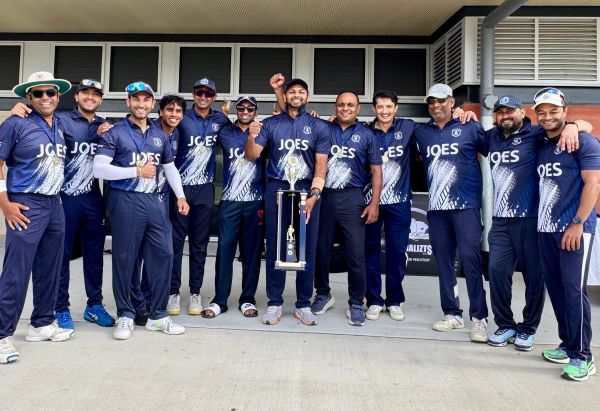
A great service to the community… good on you all!.. Cricket fans with a keen eye might have spotted some familiar faces behind the wheel of Melbourne’s buses.
For nearly two decades eLanka has reliably reported the facts, good news stories, photos, events at no charge, but our work is far from free to produce. Make an unconditional contribution today and help ensure the internet’s most trusted fact-checking site endures — and grows. Thank You!