Sidath Wettimuny occupies a distinguished place in Sri Lankan cricket history, having emerged during the formative years of the country’s Test journey as a patient, technically accomplished opening batsman whose long innings provided both stability and belief. At a time when Sri Lanka was still establishing its credentials among the established cricketing nations, Wettimuny’s methodical approach, sound judgement and capacity to remain at the crease for extended periods became symbolic of a team learning to compete on the international stage.
Born in Colombo on 12 August 1956, Wettimuny was educated at Ananda College, an institution with a proud sporting tradition and a deep connection to Sri Lanka’s cricketing heritage. His development within that environment helped shape a batsman whose technique was suited to the demands of Test cricket, where concentration, discipline and an ability to absorb pressure are often as valuable as stroke-making ability.
His family also possessed a notable sporting legacy. His brothers, Sunil Wettimuny and Mithra Wettimuny, represented Sri Lanka in cricket, making the Wettimuny name part of an important chapter in the country’s cricketing story. Together, the brothers reflected the contribution made by school cricket and family sporting culture to the development of national players during a period when Sri Lanka’s cricketing structures were steadily expanding.

Establishing himself on the Test stage
Wettimuny made his Test debut against England in 1982, at a significant moment in Sri Lanka’s cricketing evolution. The transition from limited international recognition to regular participation in Test cricket required players to demonstrate resilience against more experienced opponents, unfamiliar conditions and prolonged periods of pressure. As an opening batsman, Wettimuny was entrusted with one of the most demanding responsibilities in the game: facing the new ball and creating a foundation for the innings.
Later in 1982, he produced a landmark performance against Pakistan in Faisalabad, scoring 157. The innings was recognised as Sri Lanka’s first Test century and consequently became an enduring milestone in the national record books. Beyond the numerical achievement, the century carried considerable historical importance because it demonstrated that Sri Lankan batsmen could construct substantial innings against established Test opposition.

The importance of that performance lay in its timing as much as its score. Sri Lanka’s early Test teams were required to build confidence gradually, and innings such as Wettimuny’s 157 offered tangible evidence that the country’s players possessed the temperament and technical resources necessary for the longest form of the game. A first Test century was therefore not merely a personal accomplishment; it was part of the broader process through which Sri Lankan cricket began to define its identity.
The memorable 190 at Lord’s
The most celebrated innings of Wettimuny’s career was played in 1984 at Lord’s in England, one of the most revered venues in world cricket. He scored 190, becoming the first Sri Lankan batsman to score a Test century at Lord’s and, at the time, recording the highest Test score by a Sri Lankan player.
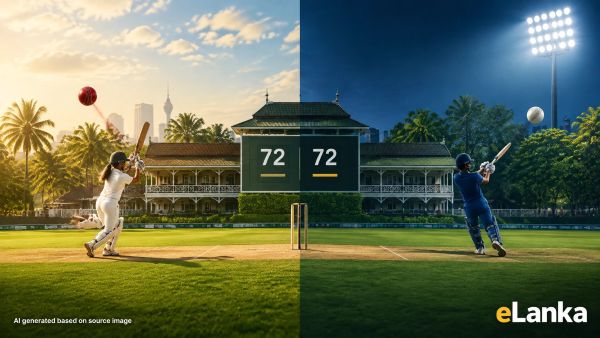
The achievement was particularly significant because Lord’s represents more than an ordinary cricket ground. Its historic pavilion, carefully maintained outfield and long association with international cricket have made it a demanding stage for visiting players, while the English conditions have traditionally tested a batsman’s balance, patience and judgement outside the off stump. Wettimuny’s ability to remain composed and productive in that setting elevated the innings beyond a personal best.
His 190 illustrated the qualities that defined his batting. Rather than relying solely on aggression, he built his innings through concentration, careful shot selection and a willingness to spend long periods at the crease. Such an approach was instrumental during Sri Lanka’s formative Test years, when the team needed batsmen capable of occupying the crease and giving the lower order a platform from which the match could be shaped.
The Lord’s performance brought Wettimuny international recognition and contributed to his selection as one of the Wisden Cricketers of the Year in 1985. He became the first Sri Lankan to receive the honour, marking another historic achievement for both the player and the country. The recognition confirmed that Sri Lankan cricket was no longer merely participating in Test cricket; it was producing individuals whose performances could command respect within the wider international game.
A career built on reliability and technique
Representing Sri Lanka from 1982 to 1987, Wettimuny played 23 Test matches and scored 1,221 runs. In One-Day Internationals, he appeared in 35 matches and scored 786 runs, with a highest score of 86 not out. He also contributed to Sri Lanka’s first ODI victory over England in 1982, remaining unbeaten on 86.
These figures provide a useful outline of his career, although they do not fully express his influence. Opening batsmen are frequently judged by the runs recorded beside their names, yet their wider responsibility involves protecting the innings during its most vulnerable phase, assessing the bowling attack and establishing a rhythm for those who follow. Wettimuny’s value was therefore connected not only to his centuries and aggregate, but also to the manner in which he approached his role.

His patience was particularly valuable because Sri Lanka’s early Test sides were still developing the depth and experience that more established teams possessed. A long opening partnership or a carefully constructed first-innings contribution could reduce pressure on the rest of the team, while also demonstrating that Sri Lankan batsmen were capable of adapting to different grounds and conditions.
Technique was equally important. A technically sound opener is required to leave the ball effectively, defend with a straight bat and make measured decisions when opportunities to score appear. Wettimuny’s batting reflected those demands, and his reputation was built upon the calm, structured manner in which he accumulated runs. His approach represented the antithesis of hurried batting, with each substantial innings reinforcing the importance of preparation and sustained concentration.
The Ananda College connection
Ananda College has long been associated with academic achievement, cultural identity and sporting excellence, and Wettimuny’s career forms part of that enduring tradition. School cricket has played an instrumental role in Sri Lanka by providing young players with their earliest serious experience of competition, teamwork and responsibility.
For a schoolboy cricketer, the pathway from school grounds to international cricket involves more than natural talent. It requires coaching, discipline, fitness, match awareness and the ability to respond constructively to setbacks. Wettimuny’s progress from Ananda College to the Sri Lankan Test team reflected the importance of that foundation.
His story also remains relevant to younger players because it demonstrates that technical assurance and patience can create a lasting reputation. While modern cricket often places considerable emphasis on speed and instant scoring, the fundamentals represented by Wettimuny’s career remain indispensable: a strong defensive method, respect for conditions, concentration under pressure and the capacity to build an innings over time.
Service after international retirement
Wettimuny retired from international cricket in 1987, but his association with the game did not end with his playing career. In 1997, he worked as a match referee, applying his knowledge of the sport to the administration and oversight of competitive cricket. His later appointment as President of the Sri Lanka Cricketers’ Association in 2006 provided another avenue through which his experience could be devoted to the interests and development of players.
This continuing service is an important part of his legacy. Cricket is sustained not only by the performances witnessed on the field, but also by the administrators, referees, associations and former players who contribute to its structure. Wettimuny’s post-playing involvement demonstrated a commitment to the game beyond personal achievement, allowing the knowledge gained through international cricket to remain valuable to future generations.

A lasting place in Sri Lankan cricket
Sidath Wettimuny’s legacy rests upon a combination of landmark performances, technical discipline, family sporting heritage and sustained service. His 157 in Faisalabad gave Sri Lanka its first Test century, while his 190 at Lord’s established a new benchmark and placed his name among the country’s pioneering Test batsmen. His Wisden recognition in 1985 further confirmed the international significance of his achievements.
Yet his contribution extends beyond records. During Sri Lanka’s early Test years, when every strong performance helped shape national confidence, Wettimuny represented the value of resilience and composure. His long innings showed that Sri Lankan cricket could compete through patience as well as flair, while his later administrative work reflected the responsibility often carried by those who have helped build the game’s foundations.
For Sri Lankans in Australia and around the world, his career remains a valuable part of the country’s sporting heritage. The story of Wettimuny is one of steady excellence: a batsman educated in a respected Colombo institution, supported by a family with international cricket connections, entrusted with the difficult role of opening the innings, and remembered for performances that helped Sri Lanka gain stature in Test cricket.
The continuing preservation of such stories is important because sporting history is also national history. Through platforms such as eLanka, the achievements of Sri Lankan figures can remain accessible to communities across generations and across continents. Sidath Wettimuny’s career, marked by patience, technique and service, deserves its place among the foundational stories of Sri Lankan cricket.
This article was written based on the source https://www.facebook.com/eLanka.com.au/posts/pfbid0252135aQV2Ydwmkxcadq2GrCRecpc1TChHAgzRu6S8AumnFdRRcjNLiXrt8A48Q4al?rdid=37Vjncbtlh3y2DfX#, kindly email us at info@eLanka.com.au if any information needs to be corrected. Biographical material for this eLanka feature was supplied by eLanka management.