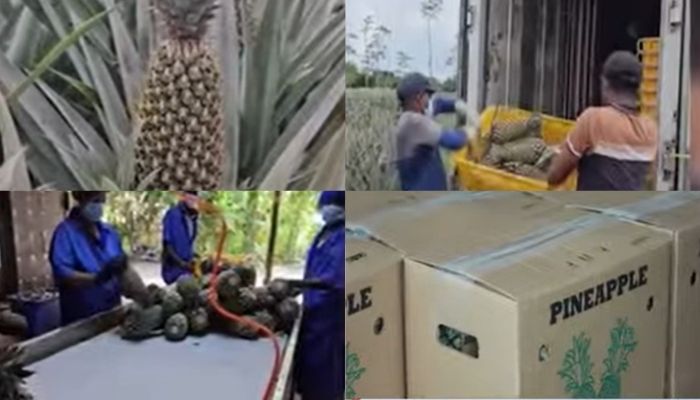
Sri Lanka has achieved a significant agricultural trade milestone with the packing and export of its first 20-foot container of fresh pineapples to Pakistan, a development that establishes a new destination for one of the country’s most recognisable tropical fruits and demonstrates how coordinated public-sector support, technical compliance and private-sector enterprise can convert market-access discussions into a practical commercial opportunity.
The shipment, handled by C R Exports (Pvt) Ltd, was dispatched on 21 August 2026, according to a report published by Newswire. Although Sri Lankan agricultural products have reached numerous overseas markets, this consignment represents the first documented shipment of fresh Sri Lankan pineapples to Pakistan, creating an important foundation for future trade between the two countries.
A first shipment with wider significance
The opening of a new market is rarely achieved through a single commercial transaction. It generally depends upon a sequence of negotiations, inspections, regulatory assessments and operational preparations, all of which must be completed before agricultural produce can be accepted across an international border.
In the case of Sri Lankan pineapples, market access was supported by cooperation among the Sri Lanka Export Development Board, the Sri Lanka High Commission in Pakistan, the Pakistan High Commission in Sri Lanka, the Department of Commerce, the Department of Agriculture and the National Plant Quarantine Service.
Technical discussions were conducted between the plant-protection authorities of Sri Lanka and Pakistan, enabling the two countries to establish phytosanitary arrangements for the import and export of fresh pineapples. These arrangements are instrumental because fresh fruit can carry pests, diseases, soil or plant material capable of affecting agricultural production in the importing country.
The first container therefore signifies more than the movement of fruit from one port to another. It reflects the completion of a formal process through which Sri Lankan pineapple producers and exporters have been given access to a new regional market under defined plant-health conditions.

Quality begins at the farm
The export programme places emphasis on produce sourced from fields certified under Good Agricultural Practices, commonly known as GAP. Such certification provides a framework for responsible cultivation, traceability, food safety, environmental management and appropriate agricultural handling.
For international buyers, GAP certification offers greater confidence that produce has been cultivated and managed according to recognised standards. It also assists exporters in demonstrating that the fruit has passed through an organised supply chain, from farm-level production and harvesting to packing, inspection and shipment.
The Department of Agriculture’s role in registering relevant producers and exporters is consequently important, while the National Plant Quarantine Service provides the official plant-health oversight required for entry into Pakistan. Each consignment must comply with the agreed import conditions and be accompanied by a phytosanitary certificate issued by Sri Lanka’s National Plant Quarantine Service.
Such certification confirms that the shipment has been inspected and meets the applicable requirements relating to quarantine pests and other plant-health risks. Consignments that do not comply with the specified conditions may be delayed, rejected or subjected to further action at the destination, making accurate preparation essential for both exporters and growers.

Pakistan offers a promising regional market
Pakistan’s population, expanding retail networks and demand for a broader range of fresh and processed foods provide a potentially valuable market for Sri Lankan agricultural exporters. Geographical proximity, established diplomatic relations and existing commercial links also create a practical basis for developing trade in selected food products.
Fresh pineapple is particularly well suited to market diversification because it can be consumed in homes, restaurants, hotels, cafés and food-processing businesses. Its applications range from fresh fruit and juice to desserts, preserves and other value-added products, allowing demand to develop across several sections of the food economy.
The initial 20-foot container should be regarded as an opening step rather than a final measure of commercial success. Continued progress will depend upon the consistency of supply, fruit quality, packaging standards, transport efficiency, competitive pricing and the ability of exporters to meet delivery schedules.
If those conditions are maintained, the first consignment could provide a reference point for repeat shipments, stronger buyer relationships and greater visibility for Sri Lankan fresh produce in Pakistan. It may also encourage more farmers and exporters to invest in the certification, post-harvest handling and cold-chain systems required for high-value agricultural trade.
Cooperation has converted access into opportunity
The cooperation among the relevant Sri Lankan and Pakistani institutions illustrates the importance of coordinated action in agricultural exports. Exporters may possess the commercial capacity to supply a foreign market, but market access can remain unattainable unless regulatory and technical requirements have also been addressed.
The Sri Lanka Export Development Board has a central role in identifying export opportunities and supporting commercial engagement, while the Department of Commerce assists with trade-related coordination. The High Commissions provide valuable diplomatic and institutional channels, and the Department of Agriculture together with the National Plant Quarantine Service ensures that production and plant-health requirements are properly addressed.
This combined approach is particularly valuable for small and medium-sized producers, for whom complex export procedures can otherwise present a formidable barrier. When technical guidance, registration, inspection and market development are aligned, a wider group of agricultural businesses can become capable of participating in international supply chains.
C R Exports (Pvt) Ltd’s handling of the first shipment provides a practical example of how private enterprise can work alongside government institutions to deliver a concrete result. The company’s involvement also highlights the need for experienced exporters that understand product selection, packing, documentation, logistics and overseas buyer expectations.

Future prospects for avocados, oranges and other produce
The successful establishment of a phytosanitary pathway for pineapples may encourage further consideration of other Sri Lankan agricultural products, although each fruit would require its own technical assessment and import conditions.
Avocados and oranges have been identified as possible areas for future export development. However, they should not be regarded as part of the first pineapple shipment. Any future consignment of these fruits to Pakistan would require separate discussions, risk assessments, approvals and phytosanitary protocols.
The possibility is nevertheless encouraging. Sri Lanka possesses a varied agricultural base, with tropical and subtropical products that can appeal to overseas consumers when they are cultivated consistently, graded carefully and presented according to international market expectations. Greater attention to post-harvest technology, packaging, refrigerated logistics and producer training would strengthen the country’s ability to expand beyond traditional export categories.
The long-term opportunity lies in developing a reliable portfolio rather than depending upon a single product. Pineapples may serve as the initial entry point, while other fruits could follow once the necessary regulatory and commercial foundations have been established.
A positive signal for Sri Lankan agriculture
The first fresh pineapple shipment to Pakistan offers a positive example of Sri Lanka’s capacity to pursue new agricultural markets through technical discipline and institutional cooperation. It also demonstrates that international trade opportunities can emerge when farmers, exporters, government agencies and overseas authorities work towards a clearly defined objective.
For Sri Lankan producers, the development may create an incentive to pursue GAP certification and improve farm-level traceability. For exporters, it provides an opportunity to build new commercial relationships. For the national agricultural sector, it offers a useful model for moving from market-access announcements to actual shipments.
The opening of Pakistan as a destination for fresh Sri Lankan pineapples is therefore a noteworthy achievement, while the next challenge will be to transform the inaugural container into a dependable and expanding trade channel. With consistent quality, careful compliance and sustained cooperation, Sri Lankan pineapples could gain a durable presence in the Pakistani market and help prepare the way for further agricultural exports.
Readers seeking more positive stories about Sri Lankan enterprise, community achievement and international opportunity can follow eLanka’s latest news and updates and subscribe to the eLanka Newsletter.
Source: https://www.newswire.lk/2026/08/21/sri-lankan-pineapples-enter-pakistan-market-for-first-time/
This article was written based on the source https://www.newswire.lk/2026/08/21/sri-lankan-pineapples-enter-pakistan-market-for-first-time/, kindly email us at info@eLanka.com.au if any information needs to be corrected.
(adsbygoogle = window.adsbygoogle || []).push({});
At eLanka, we respect the rights of creators. If we have used an image you own and you’d like it removed, please email us at info@elanka.com.au and we’ll handle it promptly.