



SLASSCOM Foundation Calls for Industry Support to Build an Accessibility Testing Centre for Hearing and Visually Impaired Talent

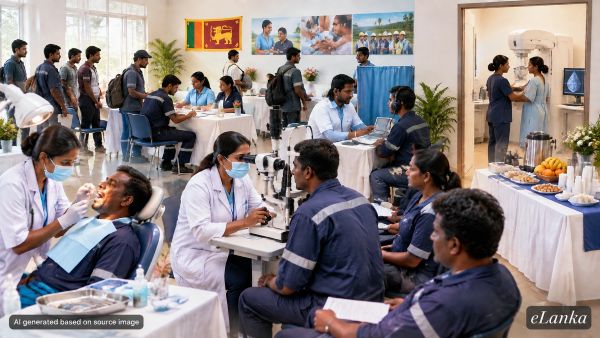
AI-generated illustration based on the source image. No authentic source photograph is used.
As Sri Lanka accelerates its digital transformation, the SLASSCOM Foundation is calling on the IT and BPM and corporate sectors to support the establishment of an Accessibility Testing & QA Centre of Excellence, an initiative intended to create new pathways for hearing and visually impaired individuals to enter, develop careers and thrive within the technology sector.
The proposed centre represents a practical approach to inclusive employment, linking skills development with commercial opportunity while encouraging technology companies to treat accessibility as an essential component of digital product development. For young people with disabilities and their families, the initiative could offer a more direct connection between education, professional confidence and sustainable employment.
A collaborative centre in Ratmalana
The initiative is being developed in collaboration with the Ceylon School for the Deaf and Blind (CSDB), which is providing space at its Nippon Building in Ratmalana for the Accessibility Testing & QA Centre and its associated capacity-building facility.
The centre is intended to provide hearing and visually impaired individuals with access to industry-relevant training, assistive technologies and employment opportunities. Rather than limiting accessibility to a discussion about social responsibility, the project is designed to create an operational environment in which participants can learn, test digital products and contribute to technology-sector assignments.
A memorandum of understanding between SLASSCOM and CSDB was signed in June 2026, formally establishing the framework for the collaboration. Under the agreement, SLASSCOM is responsible for coordinating the project, facilitating engagement with industry partners, sponsors and volunteers, and supporting curriculum and training initiatives.
SLASSCOM will also provide guidance on accessibility testing standards and industry best practices, while helping to create employability and revenue-generation opportunities for individuals who complete the relevant training. This combination of education, technical guidance and commercial engagement is central to the centre’s potential long-term value.

AI-generated illustration based on the source image.
An initial testing laboratory has already been completed
A key component of the initiative is already underway, with SLASSCOM and the SLASSCOM Foundation having completed an initial testing laboratory. The facility is intended to enable IT companies to outsource accessibility testing and quality assurance requirements to the centre.
This outsourcing model could create a practical avenue for industry participation, while generating sustainable work opportunities for trained hearing and visually impaired individuals. It also provides an important connection between corporate technology requirements and the capabilities being developed inside the centre.
Accessibility testing can assist companies in identifying whether websites, applications and digital services can be used effectively by people with different access needs. Depending on the assignment, testing may involve screen readers, keyboard navigation, high-contrast settings, magnification tools, captions, alternative text, tactile interfaces and other assistive technologies.
By positioning trained individuals as contributors to this process, the centre can help demonstrate that accessibility is not merely an additional obligation, but an area in which skilled professionals with lived experience can provide valuable insight and technical expertise.

AI-generated illustration based on the source image.
Industry partners invited to support expansion
To scale the centre’s impact, the SLASSCOM Foundation is seeking industry partners willing to support infrastructure, technology, assistive equipment and software. Companies are also being encouraged to provide accessibility testing and QA projects that can create sustainable employment pathways for persons with disabilities.
This request extends beyond financial sponsorship. Technology companies can contribute through equipment, professional expertise, mentoring, curriculum development, volunteer support and the provision of real testing assignments. Such practical involvement could enable participants to gain experience with industry processes while helping companies strengthen the accessibility of their own digital products.
Partners will receive visibility through recognition across project materials and branding within the centre, reinforcing their participation in an initiative focused on inclusive and responsible business. More significantly, participating organisations will have the opportunity to support a model in which inclusion is connected to measurable skills development and employment outcomes.
Several companies have already joined the initiative. Nagarro is serving as the Training and Mentoring Partner, Dialog Axiata is the Connectivity Partner and 99x is a Resource Partner. Virtusa has also extended manpower support towards renovation and strengthening the centre’s operations.
The involvement of these organisations provides an early indication of how the technology sector can contribute through distinct forms of support, with each partner helping to address a particular requirement in the centre’s development.
Moving from inclusion discussions to employment pathways
Denver De Zilva, representing SLASSCOM’s sustainability forum, said:
> “We are delighted to have the opportunity to collaborate in establishing and operationalising the long-awaited Accessibility Testing Lab and Inclusive Digital Employability Centre. This flagship initiative has the potential to create meaningful pathways for skills development and employment, while advancing accessibility testing capabilities and fostering inclusive digital innovation in Sri Lanka.”
The statement reflects the dual purpose of the project: to develop employment opportunities for hearing and visually impaired individuals while also strengthening Sri Lanka’s capacity to deliver accessibility testing services.
SLASSCOM Immediate Past Chairperson Shehani Seneviratne said:
> “This initiative represents an opportunity for the technology industry to move beyond conversations around inclusion and create practical pathways into employment.”
She added:
> “We can help hearing and visually impaired individuals build confidence and capabilities that open doors to employment and greater economic independence.”
For families, the importance of such pathways extends beyond a first job. Structured training, access to assistive equipment and exposure to professional environments can help young people build confidence while giving families a clearer understanding of possible career opportunities within the expanding digital economy.
The centre could also assist employers in developing a better understanding of workplace adjustments, accessible communication and the value of recruiting people with different forms of technical and personal experience.
A sustainable model for CSDB and the wider technology sector
CSDB Chairman EXCO Harshana Perera emphasised that the centre’s success will depend upon sustained cooperation among the school, SLASSCOM and the wider technology industry.
> “The success of this centre will depend on strong collaboration between the CSDB, SLASSCOM and the wider technology industry. We invite companies to contribute not only through resources and expertise but also by creating real opportunities through accessibility testing and QA projects, helping build a sustainable model for the school where inclusion translates into tangible employment outcomes.”
This emphasis on tangible outcomes is particularly significant. A centre that provides training without connections to actual work may struggle to deliver lasting change; however, a centre linked to commercial testing assignments, mentoring and industry standards can offer participants a more credible route into employment.
For Sri Lanka’s technology sector, the initiative also presents an opportunity to strengthen the quality and reach of digital services. Accessible products can serve a broader range of users, while systematic testing can help businesses identify barriers before digital services are released to the public.
Building a more inclusive digital future
The proposed Accessibility Testing & QA Centre of Excellence places inclusive employment at the intersection of education, technology and corporate responsibility. Its success will depend on continued support from companies prepared to share resources, expertise and work opportunities, as well as on the development of training that responds to genuine industry requirements.
The initial laboratory, the collaboration with CSDB and the participation of Nagarro, Dialog Axiata, 99x and Virtusa provide a foundation for further progress. With additional industry engagement, the centre could become a practical model for preparing hearing and visually impaired talent for technology careers while helping Sri Lankan companies improve the accessibility of their digital products.
For the global Sri Lankan community, the initiative is a positive example of how innovation can be directed towards social inclusion and economic independence. It demonstrates that the country’s digital transformation can be measured not only by new platforms and services, but also by the number of people who are given a meaningful opportunity to participate in building them.
eLanka continues to share positive stories about Sri Lankans and Sri Lankan-led initiatives around the world through its online community platform, news coverage and community services.
This article was written based on the source https://www.dailymirror.lk/business-news/SLASSCOM-calls-for-industry-support-to-establish-Accessibility-Testing-QA-Centre-for-hearing-and-visually-impaired-talent/273-351678, kindly email us at info@eLanka.com.au if any information needs to be corrected.
At eLanka, we respect the rights of creators. If we have used an image you own and you’d like it removed, please email us at info@elanka.com.au and we’ll handle it promptly.
Thanks.
eLanka team
eLanka Disclaimer
Content published on eLanka may be created by the eLanka team, submitted by contributors or third parties, reproduced or adapted from other sources with appropriate source acknowledgement, or provided as promotional/advertising material by our clients. While eLanka takes reasonable care in preparing and publishing content, we do not warrant its completeness or accuracy. Views expressed are those of the respective authors or contributors and do not necessarily represent the views of eLanka. Third-party contributors, content providers and advertisers are responsible for the accuracy of material they supply and for ensuring they hold the necessary rights and permissions for its publication. Advertising and promotional content should not be regarded as an endorsement by eLanka of any product, service or claim.