DS’s Astuteness, Delivered in JR’s Oratory: J. R. Spoke for Ceylon, But Who Sent Him There?-by K.K.S Perera
Source:
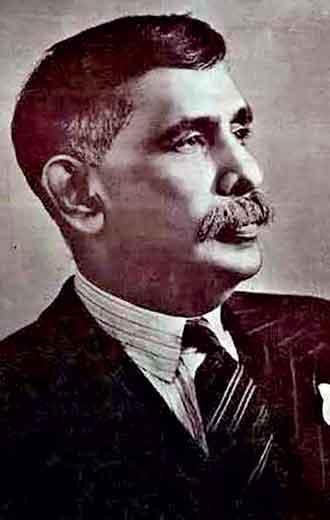
Prime Minister D. S. Senanayake
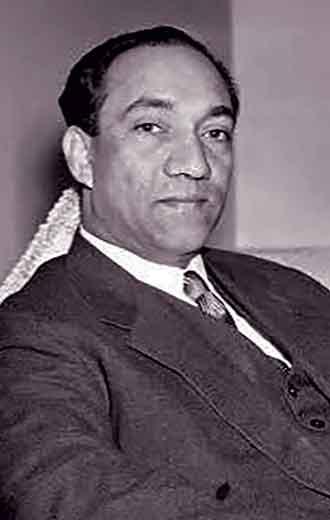
J. R. Jayawardene spoke at the 1951 San Francisco Conference
Yet in his autobiography, ‘Men and Memories’, Jayewardene admitted something that recasts the episode. The idea of championing full Japanese independence, he confessed, was not his own; it belonged to his Prime Minister, D. S. Senanayake.
At San Francisco, Jayewardene’s central question was deceptively simple: why were the peoples of Asia anxious that Japan should be free? His answer drew on history rather than diplomacy alone.

In September 1951, Ceylon’s Finance Minister J. R. Jayewardene rose to speak at one of the most consequential diplomatic gatherings of the post-war world: the San Francisco Conference on the peace treaty with Japan. Representing a nation barely three years independent, he argued for restoring Japan’s sovereignty, equality and dignity without qualification. The New York Times described the moment as one in which “the voice of free Asia” dominated the proceedings. History would remember Jayewardene very differently after 1977, when his presidency left a legacy many Sri Lankans still regard as disastrous. But that day, he spoke as a young minister, extending “a hand of friendship” to a defeated former enemy.
For seven decades the speech has stood as Jayewardene’s own achievement, the moment a small island found an outsized voice on the world stage. Yet in his autobiography, ‘Men and Memories’, Jayewardene admitted something that recasts the episode. The idea of championing full Japanese independence, he confessed, was not his own; it belonged to his Prime Minister, D. S. Senanayake. Jayewardene, by his own account, travelled to San Francisco to deliver a message on Senanayake’s behalf.
The revelation does not diminish the speech so much as relocate its authorship, shifting it from one man’s improvisation to a considered act of state policy, conceived by the Prime Minister and executed by his finance minister on a stage Senanayake never occupied. And San Francisco was not the first time Jayewardene had carried Senanayake’s ultimatum to a foreign power.
Sterling Assets Agreement
Two years earlier, in 1949, Britain had moved to draw Ceylon more tightly into the Sterling Assets Agreement. This arrangement left the island’s dollar earnings sitting under London’s control even after independence. Senanayake sent Jayewardene, with adviser John Exter, later the first governor of the Central Bank, to the Commonwealth Finance Ministers’ Conference with a blunt brief: to tell the British plainly that Ceylon’s earnings were its own, not funds to be managed from London’s coffers, and that if Britain would not let Ceylon act independently over its own money, Ceylon would simply leave the Sterling Area.
It was a threat Whitehall could not brush aside, calculated from Colombo down to the last detail. San Francisco, two years on, repeated the same arrangement on a larger stage: the Prime Minister supplied the position, the finance minister supplied the voice.
The roots of Ceylon’s position lay at the Colombo Conference of Commonwealth Foreign Ministers in January 1950, where the case for a fully independent Japan was first seriously advanced. Two ideas emerged there: that Japan should regain its sovereignty, and that South and South-East Asia needed economic development if their independence was to mean anything in practice. The second idea would eventually produce the Colombo Plan. The first would shape Ceylon’s position at San Francisco the following year.
By 1951, the international climate had shifted. The Cold War was intensifying; Soviet influence had spread across Eastern Europe, and the Communist victory in China had transformed the balance of power in Asia. Washington and its allies had come to see Japan not as a defeated enemy to be punished, but as a potential partner against Communism. Senanayake, like his Australian contemporary Robert Menzies, was firmly anti-Communist, and saw in a rehabilitated Japan a future counterweight to Communist expansion across Asia and the Pacific.
Ceylon’s foreign policy could not be separated from its economic vulnerabilities. Its comfortable living standard rested on a handful of exports, and when American wartime rubber stockpiles hit the market, prices collapsed. New markets were needed, and one arrived unexpectedly: China, whose purchases sustained the rubber industry and later funded a replantation programme, provided proof that survival did not always respect Cold War lines.
Cultural ties with Japan
At San Francisco, Jayewardene’s central question was deceptively simple: why were the peoples of Asia anxious that Japan should be free? His answer drew on history rather than diplomacy alone. Asia, he argued, shared long-standing cultural ties with Japan, the one Asian nation to have grown strong and independent while others remained under colonial rule. He went further into uncomfortable territory, acknowledging that Japan’s wartime rhetoric of Asian “co-prosperity” had genuinely appealed to nationalists in Burma, India and Indonesia, some of whom had cooperated with Tokyo hoping a Japanese victory might hasten their own liberation.
It was an uneasy truth to voice so soon after the war, but it captured how differently Asian nationalists had experienced Japan’s wartime challenge to colonial rule. Jayewardene was not defending wartime Japan; he was separating that old Japan from the independent nation Asia’s future might require.
Drawing on Buddhist teaching, “nahi verena verani sammantidha kudacanam,” hatred is never appeased by hatred, only by love, he rejected punitive reparations that could cripple Japan’s recovery, a position given weight by the fact that Ceylon itself had suffered Japanese air raids yet chose not to seek compensation.
He was equally forthright in criticising Soviet amendments concerning political freedom, expression, religion and assembly, observing with pointed sarcasm that these were freedoms the Soviet people themselves might well envy. He also endorsed Japan’s right to organise its own defence, accepting the protection of a friendly power in the meantime, a position that aligned closely with Washington’s own.
Ceylon’s stance was therefore both principled and pragmatic: Buddhist ideals of forgiveness sat alongside hard Cold War calculation, and alongside a Prime Minister’s quiet determination to secure new markets, allies and influence for a small nation newly arrived on the world stage.
What Jayewardene’s later admission makes clear is that this combination of idealism, strategy and timing was Senanayake’s design as much as, if not more than, his own. The Prime Minister, absent from San Francisco just as he had been absent from London two years before, had shaped both outcomes from Colombo. His finance minister carried the message each time, delivering it with a rhetorical skill that made it his own in the world’s eyes, and in history’s memory, for seventy years.
The goodwill Ceylon earned that day did not fade with the men who created it. Japan went on to become one of Sri Lanka’s most significant development partners, its grants and concessional loans underwriting decades of infrastructure and economic growth, a legacy owed as much to a Prime Minister’s foresight in Colombo as to the eloquence of the minister who spoke his words abroad.
Jayewardene’s own account, offered only in the reflective distance of memoir, invites a correction to the record rather than a demolition of it. The words themselves, at San Francisco and before the Commonwealth ministers alike, were still his to deliver, shaped by his own command of rhetoric. But the decisions behind them, that Ceylon should defend a defeated Japan against the victors’ punitive instincts, and that it should warn Britain off its own reserves belonged, by the speaker’s own admission, to the quiet Prime Minister who sent him.
kksperera1@gmail.com
At eLanka, we respect the rights of creators. If we have used an image you own and you’d like it removed, please email us at info@elanka.com.au and we’ll handle it promptly.
Thanks.
eLanka team
eLanka Disclaimer
Content published on eLanka may be created by the eLanka team, submitted by contributors or third parties, reproduced or adapted from other sources with appropriate source acknowledgement, or provided as promotional/advertising material by our clients. While eLanka takes reasonable care in preparing and publishing content, we do not warrant its completeness or accuracy. Views expressed are those of the respective authors or contributors and do not necessarily represent the views of eLanka. Third-party contributors, content providers and advertisers are responsible for the accuracy of material they supply and for ensuring they hold the necessary rights and permissions for its publication. Advertising and promotional content should not be regarded as an endorsement by eLanka of any product, service or claim.