



Conserving and Caring for Wild Elephants-by Harold Gunatillake

Conserving and Caring for Wild Elephants — A Test of the Government’s Will and the Nation’s Conscience
Sri Lanka’s wild elephants symbolise heritage, resilience, and ecological wisdom, yet they are now central to an urgent environmental debate. The current government’s conservation agenda—including the Kasikote elephant underpass and forest-reserve expansions—points towards more systematic, science-based protection. Still, are these changes ambitious and swift enough to protect a species facing daily threats?
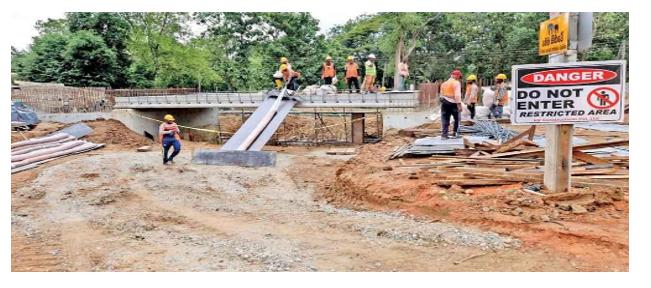
A Conservation Milestone: The Kasikote Underpass
Built beneath a high-risk railway crossing, the Kasikote elephant underpass is a rare example of engineering used proactively to protect wildlife.
- It lowers the risk of collisions between trains and
- It respects elephants’ traditional migration
- It shows that thoughtful planning allows infrastructure and wildlife to coexist.
With more than 400 elephant deaths recorded in some recent years, the underpass is more than a tunnel: it signals a commitment to conservation.
A New Conservation Architecture: Promising but Unfinished
The National People’s Power (NPP) government has introduced several frameworks aimed at moving beyond ad-hoc responses to human-elephant conflict (HEC). These include:
1. Coordinated Tri-Forces Enforcement
A joint operations room involving the Tri-Forces and the Department of Wildlife Conservation (DWC) strengthens tusker monitoring and responses in conflict areas. Replacing fragmented enforcement, it could anchor modern wildlife protection if sustained and adequately funded.
2. Science Before Short-Term Solutions
The government’s stated shift towards data-driven conservation—tracking elephant movements, mapping conflict hotspots, and relying less on electric fencing—reflects global best practice.
However, measurable results on the ground have been slow to follow.
3. Extending Forest Protection
Through programmes such as National Vanaspati, new reserves in districts including Anuradhapura aim to safeguard cascade systems and natural food sources. Habitat loss drives human-elephant conflict; fencing and enforcement cannot make up for shrinking forests.
4. Managing Whole Ecosystems
DWC officials advocate moving beyond the protection of individual, well-known tuskers to managing entire ecosystems. The approach is scientifically sound but politically challenging, as public attention often centres on iconic animals.
Public Grief, Activist Pressure, and Political Debate
Despite these measures, the government remains under intense scrutiny.
“Kawanthissa”: A Death That Sparked Outrage
The shooting of the beloved tusker Kawanthissa, who was left to die, sparked national outrage and exposed weaknesses in enforcement, response times, and deterrence. For many citizens, his death underscored a painful reality: legal safeguards exist, but protection often comes too late.
Activists Demand Proof, Not Promises
Environmental groups argue that:
- Gunshot injuries
- Hakka patas
- Electrocutions continue at unacceptable levels. They insist that the government’s manifesto commitments must translate into field-level reductions in elephant mortality, not just policy frameworks.
Opposition Push for Constitutional Reform
Opposition Leader Sajith Premadasa has proposed embedding wildlife and biodiversity rights into the Constitution. This would allow environmental destruction to be challenged as a violation of fundamental rights—a bold legal shift that could reshape conservation enforcement for decades.
A Critical Turning Point for Government Progress So Far
- Wildlife-friendly infrastructure, including the Kasikote underpass
- Enforcement coordinated with the Tri-Forces
- Expanded protected forest reserves
- An expressed commitment to science-based conservation
Priorities for Further Action
- Faster responses to poaching and other illegal activities
- More effective prosecution and stronger deterrents
- Transparent reporting on elephant deaths and human-elephant conflict
- Community-led programmes that support coexistence
- Sustained habitat restoration beyond formal reserve declarations
Sri Lanka’s wild elephants embody the island’s ecological identity. Their protection demands courage, consistency, and an honest reckoning with land use, rural livelihoods, and political priorities.
The government has made meaningful progress, but success rests on an uncompromising test: fewer elephant deaths, fewer human casualties, and healthier forests.
Until those outcomes are achieved, even the most promising initiatives are only first steps in a longer journey.
Deploying military units to protect endangered wild elephantsThe Sri Lankan government has decided to launch a joint operation between the Department of Wildlife Conservation and the three armed forces to better protect wild elephants and tuskers and address human-elephant conflict.
Environment Minister Dr. Dhammika Patabendi and Deputy Minister Anton Jayakody chaired a special meeting on the initiative at the Ministry of Environment on 23 October.
Attendees included Army Commander Lt. Gen. K. V. Nilantha P. Premaratne, senior wildlife officials, representatives of military intelligence and drone operations, and members of environmental organisations, including Wild Tusker.
The proposed programme will establish a special operations centre at Army Headquarters to coordinate elephant protection, staffed by wildlife officers, veterinarians and personnel from the three armed forces.
Authorities also agreed to provide special security for identified tuskers in high-risk areas.
Newswire, 24 October 2026
New Project- Plonnaruwa to get new elephant transit home. According to Newswire’s report of 24 October 2026, a new elephant transit home is planned on 15 hectares in Kalahagala, near Polonnaruwa. It will treat orphaned and injured elephant
calves rescued from Sri Lanka’s Northern and North Central regions.
Elephant researcher and former Director General of Wildlife Conservation Dr. Sumith Pilapitiya said the centre would rehabilitate calves for release into wildlife
reserves in their regions of origin, helping maintain the natural separation of Sri Lanka’s three main elephant subpopulations.
The project is also expected to boost tourism and create jobs for local residents.
Insight for the Global Sri Lankan
Harold Pulse is an independent editorial platform offering clear, thoughtful analysis on Sri Lanka’s political direction, governance reforms, diaspora concerns, and the evolving health landscape of Sri Lankans living abroad. Built for global Sri Lankans who value informed perspectives, it clarifies the issues shaping the nation’s future—from domestic policy shifts to the well-being of expatriate communities navigating new health systems, lifestyles, and challenges worldwide.
Harold Pulse speaks to Sri Lankans everywhere: those shaping change at home, and those building lives overseas while staying deeply connected to the island’s progress. It is a space where political clarity, community insight, and diaspora health awareness come together to support a stronger, more informed global Sri Lankan identity.
At eLanka, we respect the rights of creators. If we have used an image you own and you’d like it removed, please email us at info@elanka.com.au and we’ll handle it promptly.
Thanks.
eLanka team
eLanka Disclaimer
Content published on eLanka may be created by the eLanka team, submitted by contributors or third parties, reproduced or adapted from other sources with appropriate source acknowledgement, or provided as promotional/advertising material by our clients. While eLanka takes reasonable care in preparing and publishing content, we do not warrant its completeness or accuracy. Views expressed are those of the respective authors or contributors and do not necessarily represent the views of eLanka. Third-party contributors, content providers and advertisers are responsible for the accuracy of material they supply and for ensuring they hold the necessary rights and permissions for its publication. Advertising and promotional content should not be regarded as an endorsement by eLanka of any product, service or claim.