News & Community eLanka

eLanka

Thursday, 18 Jun 2026
  • Home
  • Read History
  • Articles
    • eLanka Journalists
  • Events
  • Useful links
    • Obituaries
    • Seeking to Contact
    • eLanka Newsletters
    • Weekly Events and Advertisements
    • eLanka Testimonials
    • Sri Lanka Newspapers
    • Sri Lanka TV LIVE
    • Sri Lanka Radio
    • eLanka Recepies
  • Gallery
  • Contact
Newsletter
Sri lankan news
  • eLanka Weddings
  • Property
  • eLanka Shop
  • Business Directory
eLankaeLanka
Font ResizerAa
Search
  • Home
  • Read History
  • Articles
    • eLanka Journalists
  • Events
  • Useful links
    • Obituaries
    • Seeking to Contact
    • eLanka Newsletters
    • Weekly Events and Advertisements
    • eLanka Testimonials
    • Sri Lanka Newspapers
    • Sri Lanka TV LIVE
    • Sri Lanka Radio
    • eLanka Recepies
  • Gallery
  • Contact
Follow US
© 2005 – 2026 eLanka Pty Ltd. All Rights Reserved.
Home » Goodnews Stories Srilankan Expats » Articles » A Book on Orang Malayu in Sri Lanka : Book Review: Banishment and Belonging: Exile and Diaspora in Sarandib, Lanka and Ceylon (2019) – by Ronit Ricci
Articles

A Book on Orang Malayu in Sri Lanka : Book Review: Banishment and Belonging: Exile and Diaspora in Sarandib, Lanka and Ceylon (2019) – by Ronit Ricci

eLanka admin
Last updated: December 20, 2021 1:21 pm
By
eLanka admin
ByeLanka admin
Follow:
Share
8 Min Read
SHARE
Views: 16

A  Book on Orang Malayu in Sri Lanka : Book Review: Banishment and Belonging: Exile and Diaspora in Sarandib, Lanka and Ceylon (2019) –   by  Ronit Ricci 

A Book on Orang Malayu in Sri Lanka

Source:Newmandala

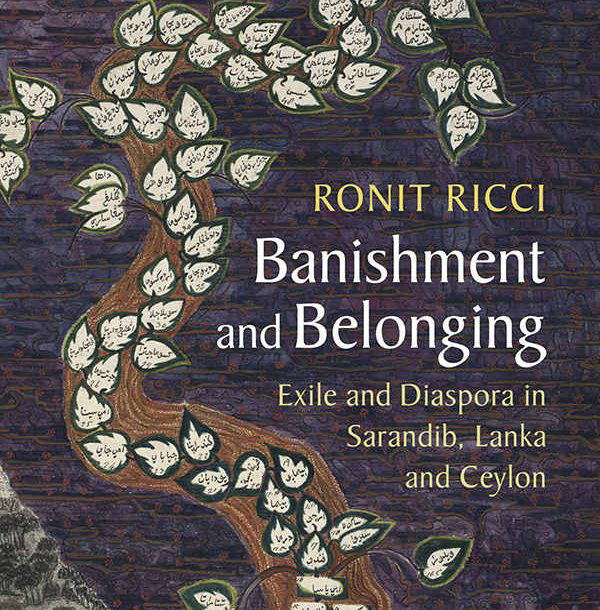
Ronit Ricci, Banishment and Belonging: Exile and Diaspora in Sarandib, Lanka and Ceylon, Cambridge University Press, Cambridge, 2019, 282pp, ISBN 978-1-108-72724-2.

For well over a century, Sri Lanka was the Dutch colonial administration’s main site of exile for troublesome Indonesians. From the late seventeenth century, hundreds of ‘natives’ from the Netherlands East Indies who were deemed rebellious were consigned to the island, many never to return. They were a diverse community, including members of royal families from across the archipelago and their retinues, as well as soldiers, convicts and slaves. Among the nobles were kings, sultans and princes from Java, Madura, the Moluccas and Timor. Revered Islamic leaders were also banished there. Conditions for the exiles ranged from tolerably comfortable to miserable, with often tight restrictions on their ability to socialize and travel within the island, and also limited communications with family and peers in the Indies. The psychological toll of separation from their homeland was immense. Many felt humiliated and personally diminished by the experience. Today, the descendants of this exilic community are known collectively as ‘Sri Lankan Malays’ and they have a distinctive culture and identity borne of their peculiar historical experience.


Ronit Ricci has written a most comprehensive and remarkable English-language account of this community and its history. This is not a conventional history centred upon chronologically narrating key events, personages and movements. Rather, it is an ambitious cultural, linguistic and religious history based mainly on Ricci’s meticulous examination of archival and literary sources, but also drawing on her recent field research among Sri Lanka’s ‘Malay’ community. The result is an account of great subtlety, nuance and imagination, which explores the meanings and historical significance of important literary texts emanating from or written about exiled Indonesians. She is also concerned with the process by which this community of ‘Malay’ exiles became a settled diaspora in contemporary Sri Lanka.

Ricci brings a rare and highly developed array of linguistic and cultural interpretative skills to her work. She analyses texts in Indonesian and Malay, Javanese, Arabic, Dutch, Tamil and English but does more than simply describe or translate passages. She carefully explores how terminology has shifted over time and place, analysing why this is and what significance particular nomenclature may have had for the authors of various texts. For example, what today is called Sri Lanka is variously known in the texts she studies as Sarandib, the old Arabic name for the island, Lanka, an Indic title drawn from the Ramayana epic and the place to which Sita is cast, and finally Ceylon, the preferred colonial usage. She queries whether each name, though applied to the one island, in fact represents separate and parallel exilic narratives and perceptions of location and predicament.

Ricci also analyses the interlinear translations of texts—the practice of inserting Malay translations between the lines of the original Arabic language text. She regards these translations as providing ‘a microcosm of the transmission’ of language and meaning. The choice of words in the translations, whether emphasis is given to word-for-word accuracy or to semantic coherence, and even the relative size of the interlinear translations compared to Arabic script, all provide indications how the exiles regarded these texts and sought to convey their meaning.

No part of the text better illustrates the interpretative richness of this work than chapter six, entitled ‘Nabi Adam: The Paradigmatic Exile’. Ricci explores how the Malay community found parallels between its own exilic suffering and Adam’s fall. According to Muslim tradition, the Prophet Adam was banished from Paradise by God for tasting the forbidden fruit and cast to Sarandib, landing on Nudh mountain—a location now commonly known as Adam’s Peak. The story of Adam’s fall is found in many Arab and Persian sources in the tenth to twelfth centuries and was then taken up in later Southeast Asian texts, including those produced by Indonesians. Ricci considers how the exiles identified with Adam’s expulsion to the very island where they themselves were consigned, and also how proximity to the sacred Adam’s Peak allowed pilgrimage and the seeking of blessings and Prophetic intercession with God. For example, in the poet Baba Ounus Saldin’s Syair, it is suggested that just as Adam’s fall signaled the end of his heavenly existence, so too the forced transportation of Indonesians to the same island showed their removal from their beloved abodes. Nonetheless, because of the great spiritual importance of Sarandib/Ceylon as Adam’s resting place, the island offered religious succour and enrichment for the exiles. As Ricci observes, these texts reveal that Ceylon ‘was no longer just a godforsaken place of exile but home to the important Islamic sacred site of Adam’s Peak’ and thus enabled the Malay community to regard this as a ‘return that introduced some measure of familiarity to a foreign land in which, over time, the Malays established a new home’ (148).

The book is beautifully presented. The cover illustration is a reproduction of the Tree of Adam, showing the genealogical connection from the first Prophet to the Javanese rulers of the early eighteenth century, including Amangkurat III, the first sultan from Java to be banished to Ceylon. There are many images in the text, not only of the literary works being analysed but also of newspapers, maps, letters and photographs from present-day Malay sites in Colombo.

Banishment and Belonging is a superb feat of scholarship. The material with which Ricci is working is often fragmented and challenging to interpret, not only because of the linguistic complexity or frequently baffling allusions, but also because of what is not stated. Indeed, reading her text, it is tempting to see her as akin to a museum restorer painstakingly piecing together remnants of a precious ceramic piece and then musing on how the object’s intriguing form and recondite script and messages might be understood, and moreover, why this work of art is relevant to present times. This is Ricci’s great contribution. She brings empathy and acute insight to her work and allows access not just to a past world rarely seen but also to enduring human efforts to respond to the trauma of displacement and disruption through literature and religion.


 

TAGGED:Ronit Ricci
Share This Article
Facebook Whatsapp Whatsapp LinkedIn Email Copy Link Print
Previous Article Interview with Michael Holding
Next Article Brief introduction of the arrival of the Malays in Ceylon 1 “Brief introduction of the arrival of the Malays in Ceylon (Sri Lanka)”. By Noor Rahim
FacebookLike
YoutubeSubscribe
LinkedInFollow
- Advertisement -
BAY ONE Residences - Colombo, Sri Lanka_eLanka
eLanka Wedding
- Advertisement -
Ad image
Most Read
ONLY JESUS IS HOLY - By Lakshman Navaratne

ONLY JESUS IS HOLY – By Lakshman Navaratne

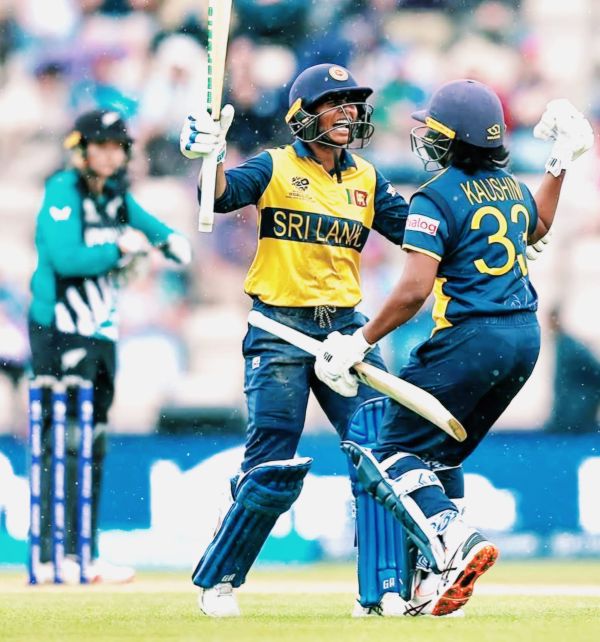
Sri Lanka stun New Zealand in World Cup boilover

Sri Lanka stun New Zealand in World Cup boilover. BY TREVINE RODRIGO IN MELBOURNE. (eLanka Sports Editor)

What Is “Airspace Disease” After Pneumonia-eLanka

What Is “Airspace Disease” After Pneumonia?-by Harold Gunatillake

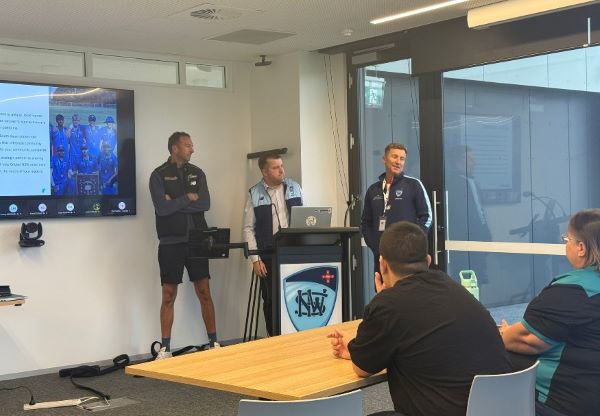
Cricket NSW, South Asian Engagement Strategy, Cricket NSW SAES, South Asian cricket Australia, multicultural cricket Australia, NSW cricket diversity, Cricket Central Silverwater, cricket inclusion Australia, South Asian communities NSW, Sydney Thunder, Sydney Sixers, NSW Blues, Australian cricket diversity, community cricket NSW, cricket participation programs, cricket pathways Australia, South Asian players Australia, cricket coaching pathways, cricket administration Australia, cricket fan engagement, multicultural sport Australia, diaspora communities Australia, Sri Lankan community Australia, Indian community Australia, Pakistani community Australia, Bangladeshi community Australia, Afghan community Australia, Nepali community Australia, Cricket NSW media event, Cricket NSW community engagement, cricket leadership programs, South Asian cricket fans, grassroots cricket NSW, inclusive sport Australia, cricket development NSW, Cultural Perspectives Australia, Duke Ramachandran eLanka, eLanka news, Australian cricket community, cricket networking event, diversity in sport, Cricket Central facilities

Cricket NSW’s South Asian Media Discussion & Partnership Session – by Duke Ramachandran for eLanka

BAY ONE RESIDENCES COLOMBO_eLanka

BAY ONE Residences – Colombo, Sri Lanka

Related News
Who typically experiences lactose intolerance-by Harold Gunatillake
Articles Dr Harold Gunatillake

Who typically experiences lactose intolerance?-by Harold Gunatillake

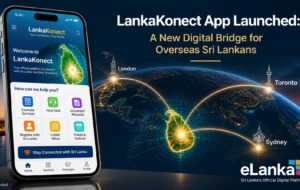
LankaKonect app, Sri Lanka Foreign Ministry app, LankaKonect Sri Lanka, overseas Sri Lankans services, Sri Lankan diaspora app, consular services Sri Lanka, digital government Sri Lanka, Ministry of Foreign Affairs Sri Lanka, complaint platform for Sri Lankans abroad, Sri Lankan expatriates, global Sri Lankan community, Sri Lanka digital transformation, mobile government services Sri Lanka, Sri Lankan embassy services, passport renewal Sri Lanka, consular assistance Sri Lanka, Sri Lankan diaspora engagement, e-governance Sri Lanka, government mobile app Sri Lanka, emergency assistance overseas Sri Lankans, Sri Lankan citizens abroad, digital consular services, Sri Lanka public sector modernization, overseas Sri Lankan complaints, Arun Hemachandra, LankaKonect launch 2026, Sri Lankan community Australia, Sri Lankan community UK, Sri Lankan community Canada, eLanka news
Articles

LankaKonect App Launched: A New Digital Bridge for Overseas Sri Lankans

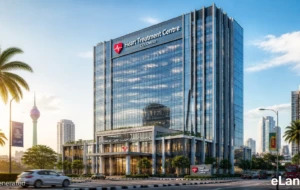
Sri Lanka healthcare development, Sri Lanka cardiac centre, National Hospital of Sri Lanka heart centre, Colombo hospital upgrade, 16 storey hospital Sri Lanka, Sri Lanka heart treatment centre, NHSL Colombo expansion, cardiovascular treatment Sri Lanka, Sri Lanka medical infrastructure 2026, Nalinda Jayatissa health announcement, Sri Lanka public health investment, cardiac surgery Sri Lanka, stroke unit Sri Lanka, Sri Lanka hospital modernization, medical tourism Sri Lanka, Asian healthcare hub Sri Lanka, government hospital Colombo upgrade, Sri Lanka Rs 12 billion project, healthcare infrastructure Sri Lanka, specialist cardiac hospital Asia
Articles

Rs. 12 Billion 16-Storey Heart Centre for National Hospital Colombo

siyambalanduwa solar power plant, sri lanka solar energy, 100MW solar project sri lanka, renewable energy sri lanka, sri lanka green energy, solar power sri lanka, monaragala solar park, siyambalanduwa solar project, sri lanka energy sector, clean energy sri lanka, sustainable development sri lanka, solar PV plant sri lanka, battery storage technology sri lanka, ceylon electricity board, CEB renewable energy, sri lanka infrastructure projects, sri lanka economic development, renewable energy investment sri lanka, lakdhanavi solar project, windforce sri lanka, the blue circle renewable energy, rividhanavi private limited, 132kV transmission line sri lanka, sri lanka energy independence, green technology sri lanka, sri lanka sustainability goals, renewable energy 2030 sri lanka, solar panel installation sri lanka, Uva Province development, Monaragala district development, energy security sri lanka, foreign exchange savings sri lanka, grid connected solar plant, solar battery storage sri lanka, climate action sri lanka, sustainable infrastructure sri lanka, clean power generation, sri lanka renewable future, global sri lankan community, eLanka news
Articles

Sri Lanka’s Largest Solar Project Reaches 20% Milestone

Dr.-Asoka-Bandarage-300x190
Articles

Finding Balance: Wisdom for a Peaceful World with Professor Asoka Bandarage

  • Quick Links:
  • Articles
  • DESMOND KELLY
  • Dr Harold Gunatillake
  • English Videos
  • Sri Lanka
  • Sinhala Videos
  • eLanka Newsletters
  • Obituaries
  • Sunil Thenabadu
  • Dr. Harold Gunatillake
  • Tamil Videos
  • Trevine Rodrigo
  • Sinhala Movies
  • eLanka Newsletter
  • Photos

eLanka

Your Trusted Source for News & Community Stories: Stay connected with reliable updates, inspiring features, and breaking news. From politics and technology to culture, lifestyle, and events, eLanka brings you stories that matter — keeping you informed, engaged, and connected 24/7.
Kerrie road, Oatlands , NSW 2117 , Australia.
Email : info@eLanka.com.au / rasangivjes@gmail.com.
WhatsApp : +61402905275 / +94775882546
  • About eLanka
  • Terms & Conditions

Disclaimer:
eLanka is committed to sharing positive and community-focused stories. We do not publish or endorse political, religious, or ethnic viewpoints. The content published on eLanka, including articles and newsletters, reflects the opinions and views of the respective authors and not those of eLanka. eLanka accepts no responsibility or liability for the accuracy, completeness, or consequences of any content provided by contributors.

(c) 2005 – 2025 eLanka Pty Ltd. All Rights Reserved.