Consumption of Coconut: Myths and truth-By H. A. Aponso
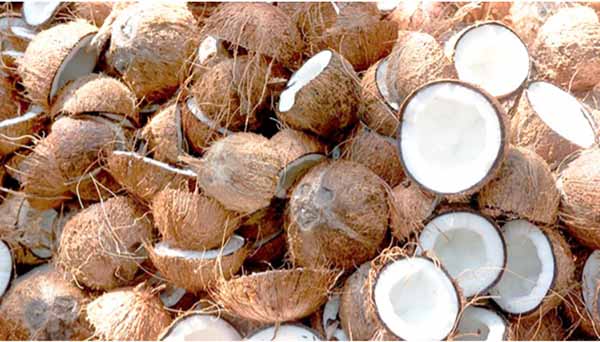
Source:Island
Emeritus Professor of Paediatrics, University of Peradeniya
It was reported a few weeks ago that a Professor of Nutrition and his Research team had reported that consumption of coconut had harmful effects. This news item seems to have caused a scare which I believe was not the intention of the researchers. Perhaps this is not their final report on the topic.
Coconut
is incorporated into most Sri Lankan food preparations in many forms -grated kernel, coconut milk, coconut oil, etc. Sri Lankans get most of their energy requirements from the coconut fat; also small amounts of protein, calcium and iron, from the kernel and milk. After squeezing out the milk from the grated kernel, the left over is often thrown away, or fed to the chickens or pigs, which thrive on it. It is referred to as coconut refuse (pol-kudu), a derogatory term in Sri Lankan parlance; a better term is low-fat coconut. Poonac, which is the left-over after obtaining the oil from dried coconut kernel (copra), is excellent fodder for cattle. Coconut refuse contains significant amounts of carbohydrate and protein; it is actually low-fat coconut. Can coconut refuse be used in human diet? Is it digestible? If sambol and mellun (made with grated kernel) is digestible, why not coconut refuse, which is grated coconut from which some carbohydrate, fat, protein, and water has been extracted? It is not suggested that coconut refuse should be a principal article of food in our daily diet! However, considering the escalating cost of coconuts, the time has come for us to incorporate it into our food preparations rather than throwing it into the garbage. It can very well be added to sambol, melluns, (together with some fresh grated coconut), without interfering too much with the taste or flavour. Coconut refuse can be used entirely or mixed with grated coconut in preparations such as roti and pittu . It is specially useful in the diet of those who should avoid the fat in coconut, as explained below. It also contains dietary fibre, which is known to bring down the level of cholesterol. Thus, it is of value for the overweight and those whose cholesterol levels need watching.
The fat in coconut has a high level of saturated fat. The P/S ratio, the ratio of polyunsaturated fats to saturated fat is very low. [When the saturated fat content is high, as in coconut fat, this ratio becomes low; when the saturated fat is low and the unsaturated fat is high, as in corn oil or soya oil, the ratio becomes high.] This has caused an unnecessary fear and controversy about consuming coconut. However, it should be noted that the coconut fat consists largely of “medium chain fatty acids”, such as lauric acid. These fatty acids are metabolised to produce energy. They have beneficial effects on the heart, in view of their function of reducing triglycerides,Total and LDL cholesterol, increasing HDL, and improving blood coagulation factors and antioxidants. They are reported to be useful in managing Alzheimer’s disease. Lauric acid is also claimed to kill harmful germs, and thereby to prevent infections. Coconut kernel, as pointed out earlier, contains carbohydrates, proteins and fibre, in addition to the fat. Recent studies in Sri Lanka and abroad indicate that when coconut oil is consumed, along with coconut kernel in any form, HDL the ‘good’ cholesterol is increased, and LDL the ‘bad’ cholesterol — reduced. It is reported from Kerala ( India ), that an amino-acid, arginine, which is present in the protein of the kernel in coconut, counteracts the harmful effects of a high cholesterol diet by manipulatng the levels of free radicals. It has been reported that the medium chain fatty acids in coconut oil, have a curative effect on diseses such as Alzheimer’s Dementia, Parkinson’s Disesae and even Schizophrenia
Considering the above-mentioned facts regarding coconut, it can be said that coconut is a nutritious food about which there should be no fear of causing an increase in the levels of LDL (the “bad” cholesterol), except in those who consume large amounts of animal fats, such as fatty meats (pork, bacon, etc), milk and milk products (butter, ghee, curd, yoghurt, cheese, etc) and egg yolk, all of which are high in cholesterol. Those who are unable to cut down the regular use of high-cholesterol foods are well advised to cut down their intake of coconut fat / oil. It is the cumulative effects of the intake of such foods, very often in the form of fast foods, which have recently become a part of our food culture, and the increasing tendency to a sedentary and stressful life style that is causing a concern about the consumption of coconut, as opposed to the earlier era when these adverse conditions were minimal.
Before 1970, coconut oil was freely used in the USA and in Europe for baking and frying food without any health complaints. However, starting in the 1970s, some very powerful groups in the U.S., including the American Soybean Association (ASA), the Corn Products Company (CPC International), and the Center for Science in the Public Interest (CSPI) began to categorically condemn all saturated oils used for food preparation on the grounds that they are not safe for human health. Unsubstantiated stories were used to convince the public that all saturated fats were unhealthy, when in fact saturated fats rich in medium-chain fatty acids like Lauric acid have been scientifically proven to be exceptionally healthy. Such baseless propaganda was carried out with the intention of undermining the salient position held by coconut oil in the edible oil market and in the minds of the people around the world. Learning blindly from them, even doctors in Asia who were not aware of the real benefits of coconut oil restricted people from consuming coconut oil on health grounds.The result was that most people switched to soya oil and sunflower oil for food preparation ratherthan coconut oil which contains Lauric acid, and as a result the main source of Lauric acid from tropical oils in the European and American diet was lost. However, wrongly accused of being the factor responsible for increasing harmful cholesterol and health disorders by the Westin 1990s, coconut oil is now revered, held in high esteem, and is in fact used by doctors in the treatment of a variety of disorders. Clinical studies have shown that coconut oil has anti-microbial and anti-viral properties, and is now even used in treating AIDS patients. There are companies in Europe and the USA that sell coconut oil for medical applications such as incorporating into antibiotics given intra venous. However, they never call it “Physically Refined Coconut Oil’/ virgin coconut oil containing a high Medium Chain Triglyceride (MCT) value, and instead call it “MCT” and sell it for pharmaceutical applications at very high prices. Contrary to their earlier theory that coconut oil contains ‘cholesterol’, now, the TNT spray given as a first aid to heart patients to improve oxygen supply to the heart, produced in the UK and marketed at a very high price under the trade name JPN spray, contains coconut oil as the solvent. The reason for that too is the dilation effect caused by MCT in the coconut oil by relaxing muscles; which promotes free flow of blood.
The US medical journal writer, Dr. Bruce Fife, a naturopathic doctor and the author of the book “The Healing Miracles of Coconut Oil” says that Coconut oil is the healthiest edible oil on earth. Modern scientific research backs this bold statement.”More than 50 percent of the fatty acids in coconut fat is Lauric acid, which is a medium chain fatty acid. It has the additional beneficial function of being converted into monolaurin in the human or animal body. Monolaurin is the antiviral, antibacterial, and antiprotozoal monoglyceride used by the human or animal body to destroy lipid coated viruses such as HIV, herpes, influenza and various other pathogenic bacteria. Some studies have also shown the antimicrobial effects of free lauric acid. In nineteen seventies, unsubstantiated stories were used to convince the public that All Saturated Fats were unhealthy, when in fact saturated fats rich in medium-chain fatty acids like lauric acid were scientifically proven to be exceptionally healthy. US scientists agree that unhealthy Low Density Lipids (LDL) are not found in coconut oil. Instead, coconut oil has health safe HDL (High Density Lipids).HDL removes cholesterol and carries it back to the liver, which flushes it from the body. HDL is known as “good” cholesterol because having high levels of itcan reduce the risk ofheart diseases and stroke.
If coconut oil actually helps reduce cholesterol and if it’s healthy, how can we get the health benefits of coconut oil? Most of the coconut oil producers in Sri Lanka do not follow quality and food safety procedures. Even the specifications given in the SLS standards are not defined to identify the “Chemically refined” or “Physically refined” process. What should the SLSI talk about or specify in their standards? They should set standards in such a way that those brands which carry SLSI logo should be free of toxins, polyaromatic hydrocarbons and high peroxide values, which are the main causes of health problems attributed to coconut oil usage. A clinical and laboratory survey carried out by a group of eminent scientists and doctors in Sri Lanka found that of branded and non-branded coconut oils commonly sold in super markets in Colombo, only physically extracted coconut oilhad peroxide levels and chemical residue levels within the accepted health safe limits. Rest of the branded oils, some of them even with the SLS mark, had those parameters at the high risk level. The paper was published at the annual sessions of the Institute of Chemistry in 2013. The report is also available in the Medical Journal of Sri Lanka. Subsequent to this study, the Coconut Development Authority (CDA) too has been keen on revising the SLS standards including the above parameters which are useful to the consumer in selecting an oil for food applications. Taking a step forward, CDA also carried out a study. The results showed that even some of the brands which carry the SLS mark contained harmful D1-Toxin in them. Now the standards for coconut oil which is commonly used by the general public are under review. Subsequently,the CDA recommended SLSI to do necessary changes in standards and it was also communicated to the Health Ministry. Even though SLSI (Sri Lanka Standard Institute) accepted the proposal to revise the standards, it still hasn’t been done.
Hence, it is high time that we set proper standards for coconut oil and execute them in the market as many of parties are manipulating within the current legal framework in place. Historically, we have been a healthy nation and it’s time to set proper standards to make sure that the consumers are protected when buying coconut oil. Coconut is gaining confidence and acceptance around the world and as a result the same countries that undermined coconut oil are today embracing it back as they have realized the true value of coconut. — Misconception about health benefits of coconut oil — Dr L.M.K.Tillekeratne, Retired Professor of Chemistry, University of Sri Jayawardenapura, December 2015.
Note that it is not the consumption of coconut that has given rise, in recent times, to an increasing incidence of coronary heart disease, (due to increasing levels of cholesterol ), but the change in lifestyle (from the healthy physical activity of earlier times to sedentary habits) and diets heavy laden with fat and cholesterol
Those who have diseases due to atherosclerosis, such as coronary heart disease or strokes, or those who have a strong family history of such diseases, should also cut down the coconut oil, unless it is taken together with significant amounts of coconut kernel. Such people should get used to preparations made from soya, soya oil, corn oil, etc.
Warning: It is reported that coconut oil is often adulterated with cheaper vegetable oils, such as palm oil, which are saturated and do not have the beneficial effects of pure coconut oil; virgin coconut oil, which is a little more expensive, is not adulterated
Also, if the same coconut oil is used over and over again in frying, the fatty acids would be converted to tranfatty acids
(The writer has had a training in Nutrition at the International Institute of Nutrition, Hyderabad)