A German Analyst’s View on the Eelam War in Sri Lanka-by Mathias Keittle
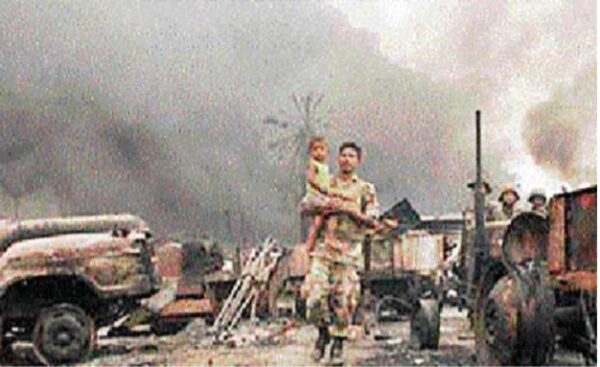
Source:Island
Sri Lanka eliminated a dreaded terrorist group, with intricate global links, but receives little credit for it. Unlike elsewhere in the world, Sri Lanka has succeeded in resettling 300,000 IDPs (Internal Displaced Persons). There are no starving children for the NGOs to feed but this gets ignored. Sri Lanka has avoided mass misery, epidemics and starvation but the West takes no notice of this. Sri Lanka has attained enviable socio-economic standards for a developing country while eliminating terrorism but gets no acknowledgement. The Government of Sri Lanka and its President continue to enjoy unprecedented popular approval through democratic elections but this is dismissed. The economy is functional, but remains not encouraged by the West.
Background: After 27 years of bloody conflict Sri Lanka’s internal mayhem came to an end with the comprehensive defeat of the Tamil Tigers. In an Alice in Wonderland scenario, the country changed from an environment of unconstrained fear and uncertainty to peace and utter relief overnight. Thousands poured out on to the streets to celebrate in an outpouring of incomparable joy and restaurant keepers spontaneously distributed food to all passersby along busy thoroughfares.
Over the following months approximately 300,000 IDPs were returned to their own towns and villages, admittedly not to the best of living conditions. But one has to remember that their circumstances were hardly comfortable under the iron rule of the LTTE (Tamil Tiger Terrorist Group) for close to 27 years or as they were herded from one tent camp to another as a human shield and a bargaining chip by the retreating LTTE.
The LTTE had also removed roofing material from houses to prevent the return of their human shield to their homes. The captured child soldiers (approximately 600) have undergone rehabilitation and have returned to their communities. UNICEF documented 5,700 child recruits by the LTTE. Of the 11,700 former LTTE combatants, over 7,000 have been returned to their communities after rehabilitation despite the real risk of some returning to the only profession that they had been trained in – that of being trained killers.
The risk is magnified by the fact that caches of buried weapons continue to be unearthed in the North and the Tamil militants in the West continue to drum up separatism and violence from their safe havens. The continued presence of the military in the North is naively criticized, but the above background factors are ignored. Only a fraction of the detainees will face trial as the evidence against the rest may not be adequate to satisfy the evidential requirements of the courts. A vast effort has been undertaken to restore the economy of the North and huge sums are being pumped in for the purpose. All this receives hardly a mention in the West while an intense campaign is being orchestrated to pin down individuals allegedly guilty of war crimes and human rights violations.
This must surely be the only case in history that a winner in a conflict has been hounded in this manner to account for alleged war crimes and breaches of human rights in the process of winning the conflict – leave alone defeating a ruthless terrorist group. There have been no such demands made following World War II, or after the Korean Conflict, after Vietnam, after Gulf War 1, the continuing occupation of Afghanistan or Iraq. Remarkably, all sorts of people have flocked together to demand accountability from Sri Lanka.
It cannot simply be that they all were encouraged by the sexiness of the subject or simply by the nobility of advancing humanity’s highest ideals. The Reasons: It is difficult to pin down one reason for this attitude of a number of key Western countries and some high profile individuals. Were pure principled attachment to humanitarian standards the reason, then Sri Lanka would, in their view, appear to be the one egregious offender in the whole world. This obviously cannot be the case. But Sri Lanka is certainly a developing country from the non-Western world and hence easier to beat up. Sri Lanka also was unusual in not responding positively to intense pressure when a number of Western leaders demanded a ceasefire towards the very end of the conflict and this refusal set an uncomfortable precedent.
Bernard Kouchner, David Miliband and Hillary Clinton, all demanded a ceasefire which Sri Lanka rejected. Both sides had good reasons for the approaches that they adopted. Sri Lanka had the Tamil Tigers on their haunches and victory after 27 years of brutal bloodshed was temptingly within grasp. The Western leaders were under intense pressure to intervene from the Tamil Diaspora, which wielded enormous financial and some political clout. Cities like Toronto, London, Melbourne and Sydney were brought to a standstill by massive Tamil demonstrations. During his visit to Sri Lanka in the middle of May 2009, David Milliband was told in no uncertain terms to butt out and mind his own business by the Sri Lankan leadership and may not have forgiven this slight by the former colonial minion.
The US proposed an evacuation of the trapped civilians and, perhaps the LTTE leadership, using its naval assets and this was rejected both by India and the Sri Lankan Government. There were predictions of a blood bath and, at the time, no one claimed that it actually happened. (Subsequently and, suspiciously, evidence began to be produced by interested parties to establish that a blood bath did actually happen!). Interestingly, allegations of war crimes and human rights violations have emerged from countries that have provided refuge to massive numbers of Sri Lankan Tamils. Many have used the then existing violence as a basis for their claims for refugee status.
The LTTE raised large amounts of money from the Diaspora to fund the war effort. Today these funds are used to advance their cause. Tamils for Clinton contributed substantially to her campaign until this was brought to public attention and the funds were returned. The LTTE has quietly funded politicians in many Western countries and continue to do so. The US lawyer, Bruce Fein, is funded by the Tamil Diaspora. The liberal end of Western politics, ever ready to champion the underdog, was a willing champion of the Tamil Diaspora cause. The shadow LTTE incessantly targets the media and the diplomatic community in Colombo.
The availability of funds, articulate advocates, the liberal tendency to take up the causes of apparent underdogs, horror stories, real or concocted, sympathetic journalists who were ever ready to use their privileged position in the Western media to support the cause, the sense of unhappiness with Sri Lanka among liberal political leaders in the West, the slow pace with which Sri Lanka countered some of the issues, were a cogent mix to activate the major humanitarian NGOS in the West. Many Western journalists unashamedly adopted the ‘Tamilnet’ version of the conflict and were willing to use influential Western newspapers (London Times, Sydney Morning Herald, The Age) to propagate the version fed by the ‘Taminet’.
It would also seem that a not so subtle campaign is being mounted against the Sri Lankan leadership, orchestrated by elements of the Tamil Diaspora and picked up by the Western media. The settling of scores by using the international community, now that the battle on the ground has been lost, appears to be the major objective. Efforts persist to pin charges of war crimes and human rights violations, on the basis of unsubstantiated allegations and innuendo. This powerful surge is further augmented by allegations of abuses, corruption and nepotism. If these allegations stick, it would be a short step to drag Sri Lankan leaders before international tribunals. Recent history suggests that some allegations get a life of their own by the simple process of repetition. The Machiavellian story line is simple. “The Sri Lankan Government deliberately set about using its military to target the Tamil population of the North and killed thousands in the process”. This line is repeated for effect while the authenticated history of the LTTE’s murderous bombing campaign targeting civilians over a period of 27 years and killing thousands, the recruitment of thousands of children as child soldiers, the murder of dozens of moderate Tamil leaders, the extortion of millions from Tamils around the world, the ethnic cleansing of the Northern Province, the deliberate destruction of UNESCO protected places of worship, the deliberate and cynical use of thousands as a human shield, the human trafficking and the drug trafficking are air brushed as the frenzied campaign is cranked up using NGOs, eminent persons and the media to establish human rights violations and war crimes by the Government.
The focus is deliberately shifted from the murderous Tigers to the Government and these allegations are designed to stay around for a long while. The one goal of this campaign appears to be to punish the Government leadership, in order to avenge the defeat of the murderous Tigers, if not today then at some later time. A lie repeated often enough acquires a life of its own. This also gradually contributes to causing feelings of discomfort and doubt in the minds of ordinary Sri Lankans whose confidence in their Government, unshakable at present, could falter in time giving rise to prospects of regime change possibilities.
Some elementary fallacies: Were Thousands Killed in the Final Stages of the War? Were thousands of civilians killed in the final stages of the conflict? Was the number 1,000? 7,000 (as claimed in an internal UN document, later denied)? 20,000 as claimed by Jeremy Page in the London Times?
40,000 as claimed in the book, Cage by Gordon Weiss (commonly known as Gordon the Unwise) and referred to in the Darusman Report to the UNSG? or higher. The exact number will never be known just as much as we will never know the exact number of civilians killed in Afghanistan and Iraq following the intervention by Western governments. (The ‘Lancet’ claimed in 2005 that already over 500,000 civilians had been killed in Iraq).
But certain established facts cannot be ignored. In the final weeks of the conflict, the ICRC with the assistance of the Sri Lanka Navy evacuated approximately 7,000 injured and the sick, including pregnant women, and over 8,000 others from the last holdout of the LTTE. Is it likely that if there had been other injured, the ICRC would have left them behind and ferried out 8,000 healthy persons? Experience and records of other recent conflicts would suggest that the number killed must be substantially lower than the number injured. This is a fact derived from experience. Most importantly, at the end of the conflict both sides were hell bent on fighting to the end leaving no time to bury the dead. In the circumstances, the LTTE is unlikely to have had the time to bury the alleged large numbers of dead.
The Sri Lankan army never found large numbers of dead bodies either. But what is a fact is that in April and May 2009, close to 300,000 civilians streamed out of the LTTE enclave to seek the protection of the Government Security Forces. Importantly, the Government which adopted a zero civilian casualty policy had learned from the experience of other armies fighting amongst civilians that indiscriminate attacks on civilians only result in producing more volunteer martyrs. In early 2009, the Committee to Coordinate Humanitarian Assistance (CCHA) to the North was working on the figure that there were approximately 121,000 people in Kilinochchi and 127,000 in Mullaitivu for the purpose of directing relief supplies to the North. It is quite likely that the LTTE took with them around 100,000 from Mannar. Considering that around 60,000 escaped to Government controlled areas in the previous year, the numbers detained by the LTTE settles around the number accommodated in the Government organized refugee camps in May 2009.
It is also on record that the Government adopted a zero civilian casualty policy and consciously adopted an infantry based approach. This resulted in 6,000 deaths of security personnel as the final battles were fought by infantry when more devastating approaches could have been adopted. The allegation of deliberate targeting of civilians by the military and the large numbers killed appears to be a convenient and Machiavellian story to pin a charge of crimes against humanity. Was the Tamil Community the Target of the Security Forces? This is an accusation which could be dismissed outright if not for the seriousness with which it is expressed. The majority of the Tamils of Sri Lanka do not live in the North or the East. The vast majority lives among the majority community, the Sinhalese. It is estimated that 41% of the population of the capital, Colombo, is Tamil.
In Colombo, the Tamil community has schools, temples, flourishing businesses and a significant number of Tamils are successful professionals and businessmen in Colombo. Many business houses in Colombo are Tamil owned. The UN has acknowledged that for over 27 years, the Government funded the health services and the schools in the LTTE controlled areas and sent food supplies to those areas. The food requirements were determined by the Government Agents stationed in the District capitals, although in fact under the control of the LTTE. The CCHA which consisted of the Ambassadors of the US, EU, Japan, Norway and the ICRC, in addition to senior representatives of key ministries, monitored the supply of essentials to the North on a weekly basis. In the circumstances, to suggest that the Tamil community was targeted by the Government’s security forces, as was done in the Channel 4 documentary, is a base attempt to exacerbate ethnic divisions and create a negative impression of the Government.
It also appears to be part of an insidious scheme to pin a charge of crimes against humanity on the security forces and its leadership in addition to aggravating and perpetuating latent ethnic tensions. No armed conflict is a game played in the school yard leave alone a terrorist war unleashed by a brutal proscribed group. Civilians do get hurt in war. Elsewhere this is referred to as “collateral damage”, and we know of wars in the wider region where collateral damage can be counted in the thousands. But the Government of Sri Lanka adopted a policy of minimizing civilian casualties and to denigrate this approach now is reprehensible. It was because of the adherence to this policy that the Security Forces incurred over 6,000 deaths by approaching the last pockets of the LTTE on foot. Perhaps, it is also convenient for the thousands of Tamils who went to the West claiming discrimination and oppression to maintain this façade until their refugee claims have been processed. To acknowledge anything else may result in being sent back. It is also a fact that thousands who have received refugee status and travel documents from Western countries have travelled back to Sri Lanka to reclaim their properties and visit family and have not suffered any harassment.
(Mathias Keittle is a German researcher in Colombo hailing from Statalendorf.