British Parliament must also discuss payment of reparations for colonial crimes committed in Ceylon-by Senaka Weeraratne
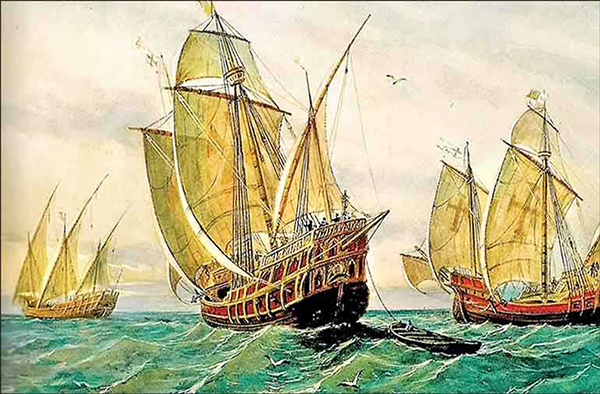
It is one of the great ironies of our time that the countries that had hounded and continue to hound ex-colonies, such as Sri Lanka, wherever possible at every nook and corner of the UN system, are mostly the very same countries which had systematically destroyed the civilisational foundations of the colonies and violated the human rights of the subject people in European colonies in Asia and Africa
Source:FT

18 March the British Parliament will be having a full-scale discussion on the Report of the UN High Commissioner for Human Rights with a view to holding the Government of Sri Lanka, its machinery, and senior officials accountable for alleged war crimes in the last days of the war against terrorism which ended on 18 May 2009.
Someone conversant with the high number of atrocities committed during the British colonial period in Sri Lanka (1796-1948) may not know whether to laugh or cry over this debate in the British Parliament.
It is one of the great ironies of our time that the countries that had hounded and continue to hound ex-colonies, such as Sri Lanka, wherever possible at every nook and corner of the UN system, are mostly the very same countries which had systematically destroyed the civilisational foundations of the colonies and violated the human rights of the subject people in European colonies in Asia and Africa.
In Sri Lanka the three prime European colonial countries are Portugal, the Netherlands and Britain. Each one of these countries is shamelessly evasive when it comes to accountability for the crimes committed by their colonial rulers in Sri Lanka.
Accountability issues should not be made into a one-way street. It will bring both International Law, United Nations and even the British Parliament into disrepute and give rise to credibility issues.
New book
A new book has been just released titled ‘Freedom Struggles of Sri Lanka – Lessons Learned and the Way Forward’ that discusses fairly comprehensively British liability for a range of wrong doings across the board. Published by Godage International Printers, its Chief Editor is Professor C.M. Madduma Bandara, a well-known Cambridge University alumnus. The book contains some useful information and analyses of relevance to the present difficulties faced by Sri Lanka in the international arena.
A Chapter on ‘Colonial Crimes of British Ceylon’ by lawyer Senaka Weeraratna, compiles wide-ranging evidence of crimes against humanity committed by the British colonial rulers. It builds a strong case that can justifiably become the basis for seeking reparations. Among the other chapters, the final ones on the future scenarios and ‘Way Forward’, may undoubtedly prove useful for the present-day political leadership. Its future prognosis is equally powerful since it employs some scenario development methodologies.
The book also unravels some rare historical sources like the ‘British Parliamentary Select Committee Report of 1850’, which had found fault with a British Governor i.e. Viscount Torrington, for his complicity in the brutal and inhumane suppression of the Matale Rebellion in 1848. Hundreds of innocent civilians had lost their lives in the punitive expeditions launched by the Colonial Government under the watch of Torrington in the Kandyan areas.
While valuing such attempts by the British Parliament of the day for their yearning for further inquiry and rectification of colonial wrongs, it also provides many lessons for present-day parliamentarians.
Bogey of human rights
Today, the West preaches human rights, demands accountability and upholding of universally accepted standards on human rights. British human rights campaigners point accusing fingers at Sri Lanka. Yet, a detailed scrutiny of colonial rule in British occupied Ceylon (1796-1948) reveals a sad saga of human rights violation of a gross kind such as tyranny, plunder, divide and rule, and a vicious policy of violence and discrimination directed mainly against Sinhala Buddhists and confiscation of their precious inherited lands.
21st century international legal doctrines need to be availed of to present a case for compensation from the current British Government for genocide and mass murder of people of Uva-Wellassa in 1817-1820. The rectification of historical injustices is a prime duty of any self-respecting nation. Independence is never complete without meting out Justice to those who were wronged by an unjust colonial system.
Sri Lanka’s national patriots such as Keppetipola, Madugalle, Ven. Kudapola Unnanse and several others who were convicted on the footing of a Victor’s (White Man’s) Justice by colonial judges presiding in what was in reality nothing more than Kangaroo Courts, for their leading role in popular uprisings in 1818 and 1848 deserve to be exonerated through public re-trials. The colonial Governors such as Robert Brownrigg, Viscount Torrington, Robert Chalmers and other officials such as George Turnour must be tried posthumously, in a Nuremberg like Trial, for their reprisal killings and drafting harsh laws that were later imitated on a bigger scale by the Third Reich in the massacre of the people of Lidice in Nazi-occupied Czechoslovakia in June 1942. Trial in absentia is a criminal proceeding in a court of law in which the person who is subject to it is not physically present at those proceedings. ‘In absentia’ is Latin for ‘in the absence’.
Land grab in Kandyan areas
British injustice was felt mostly in the enactment of waste land laws. Kandyan peasants were made landless. They were reduced to a landless state by the takeover of their lands for the plantation industry (initially coffee, then tea) under a series of waste land laws commencing with the Crown Lands (Encroachments) Ordinance, No. 12 of 1840.
Kandyan chena which traditionally had no documentary proof of ownership was taken over for plantation agriculture. This is demonstrated by the names of estates with older names ending with hena or chena crop names. This affected the food security of the people. Evidence of starvation sometimes resulting in death is revealed in the writings of authors such as Le Merseur. The British systematically transferred the wealth of the Kandyan region into their own coffers.
An accountability process for these colonial crimes is warranted through an apology, catharsis and adequate reparations. An apology must be particularly directed to the descendants of the Sinhala Buddhist Kandyans who were singled out victims of colonial brutalities. These are the descendants of a highly oppressed group of people who were also deprived of their inheritance by the colonial rulers planting thousands of indentured Indian labour in their lands without their consent. 19th century British official documents reveal how the freedom struggles against British colonial rule were suppressed in a most brutal, genocidal manner in one of the darkest pages of European colonial history.
Wars of independence
There were two major wars for independence from British colonial domination. The first uprising took place in 1818 in Uva-Wellassa and the second uprising took place in Matale (1848). Both insurrections were brutally crushed. Millewa Adikarange Durand Appuhamy (Rebels, Outlaws and Enemies to the British (Colombo: Gunasena, 1990)), comments as follows in respect to the crushing of the Kandyan Sinhala uprising in 1818:
“This brute force was employed in Kandy to reduce the inhabitants to savages and to dehumanise them. Everything was done to wipe out their traditions, customs, culture and religion. Mind you, the Kandyans were promised that this would not happen, and that their customs and traditions would be maintained (cl. 4, 8 of the Convention). However, Kandyan villages and farms were burnt down. Their paddy-fields were scorched. Their cattle slaughtered and their fruit bearing trees were simply chopped down. Starved and ill, they were finished off with the gun as if they were stray dogs in a stranger’s land. British civilians then flocked in to take over their lands, clear the virgin forests, and convert them to cash crops for the benefit solely of the settlers and their financiers in Britain. To the Kandyans, the most concrete and the foremost in value was land. This land not only gave them their daily bread but also their dignity. It was to preserve this land that they fought off successfully three western imperial nations, Britain included. Now having ceded their country to trickery, they remained helpless against the planters who insolently trampled over their lands and their rights to their lands”.
The crushing of the uprising in Matale in 1848 is described in a nutshell in a remarkable critical article ‘English in Ceylon’ published in USA in 1851 (The United States Magazine and Democratic Review. Print: Vol. XXVIII, No. CLV, – 1851 May). It is as follows:
“The history of Lord Torrington’s administration in Ceylon affords an epitome of English rule, wherever throughout the world, by force, or fraud, or violence, she has succeeded in planting her guilty flag. The horrors perpetrated during 1848 in the island-gem of the East, are the counterpart of those of which, from time to time, during a period of seven centuries, the green isle of the West has been the victim”.
Even the animals were destroyed en masse – elephants the mode of transport used by both King and villager alike for cultivation, tanks, religious processions soon became the target of British huntsmen. Samuel Baker headed the elephant slaughter killing 30-40 elephants on a daily basis.
It is estimated that the British decimated over 10, 000 elephants in Ceylon.
Holocaust of elephants by the British Raj in Sri Lanka
No apology nor any compensation has been paid by any of the Western colonial Governments e.g. Portugal, Netherlands and Britain to Sri Lanka for the destruction of both man-made as well as the natural foundations of life in Sri Lanka over a period of nearly 450 years (1505-1948).
The vastness of the British Empire including the jungles of Sri Lanka was made into a hunting ground for Big Game on the part of members of British military families. They hunted not only for pleasure but also as part of their training for battle and display of their male masculinity. It was the fauna and flora of Sri Lanka that paid a huge price for this training which brought out a new genre – hunting narratives.
There is enough evidence to reveal British complicity in the liquidation of a good part of Sri Lanka’s natural forests in the Kandyan areas and the priceless elephant wealth which was until then greatly protected by Sri Lanka’s animal friendly cultural heritage.
English writer Gary Brecher
An English writer Gary Brecher, author of the book ‘War Nerd’ has written a long article on British crimes in Sri Lanka to a website called ‘Exiled on Line’ under the title ‘When Pigs Fly-and Scold: Brits Lecturing Sri Lanka’.
He accuses the British establishment of destroying the Sinhalese people completely. Completely and deliberately, sadistically. Stole their land, humiliated and massacred their government, made it Imperial policy to erase every shred of self-respect the Sinhalese had left. He says, “You can talk about the Nazis all day long, but nothing they did was as gross as what you find out when you actually look into the history of British-Sinhalese relations. If you can even call them relations; I guess a murder-rape is a relation, sort of.”
Making a comparison between Nazi and British atrocities he says that the British were great masters at grabbing some paradise island in the tropics, then using the British Royal Navy to wall it off separating the island from the rest of the world, and crushing the local tribe without any qualms of conscience. If the locals put up a resistance, the Brits would take measures to starve them to death, shoot them down, infect them with smallpox or get them addicted to opium (as in China) – whatever they had to do to gang-rape the locals so bad that they the victims would thereby lose the will to resist.
Brecher points out that the Nazis governed for only one decade but the Brits were able to quietly carry out their extermination programs for 300 years, and to this day they have no remorse nor have any guilty feeling about it.
He further says that by all accounts, the Sinhala/Kandyans were harmless people, who didn’t need or want much from the outside world. All they asked was for people to leave them alone up on their big rocky highlands to indulge in their Buddhist way of life. Unfortunately, that wasn’t British policy. It irked the red coats that Kandy still had a king, an army, all this impudent baggage that went with independence. The British decided to break the Sinhalese completely and crush the whole society”.
By this time, i.e. the early 1800s, the Brits had perfected their techniques in little experiments all over the world. Those Clockwork Orange shrinks were amateurs compared to the Imperial Civil Service. The British Empire knew dozens of ways of undermining and suppressing native kingdoms.
Brecher writing further says that destroying Buddhism was a big part of Brit policy. The Buddhist routine, the temples, begging monks, long boring prayers – it was the glue that kept Kandy together. So, the Brits decided to destroy it. They even said so, in private memos to each other. They weren’t shy in those days. Here’s the Brit governor in 1807: “Reliance on Buddhism must be destroyed. Make sure all [village] chiefs are Christian.”
The British developed ingenious ways of grabbing other people’s lands under various pretexts. For example, the British began invading Australia in 1788, on the footing that it was terra nullius: a land with no owners.
‘Divide and Rule’ colonial policy
European powers like Spain and Portugal depended on bloody conquest and massacres in colonial expansion, especially in South America. Britain was not far behind, given what the British did to Australian Aborigines in Tasmania and mainland Australia. The British were the masters of the game of ‘Divide and Rule’.
The ethnic and religious tensions in Sri Lanka are very much a legacy of colonial rule. If the target country had many ethnic groups or tribes like in India, North America, Fiji, Malaysia, or Sri Lanka, the British first looked for any potential allies that have distinctive differences from other groups, particularly the majority. Then the British undermine the authority of the majority by promoting unfairly selected members of a minority community with a view to creating tension and conflict between various groups.
The appointment of Haji Marikar (Muslim) as the Muhandiram to be in charge of roadways in Wellassa is a case in point. This appointment was resented by the Sinhalese as it undermined the authority of Dissawa Mellewa. This was the spark that led to the 1818 uprising.
British intrigue in Kandy under the directions of successive Governors, namely, North, Maitland and Brownrigg, was also intended to achieve British supremacy in Ceylon as in India, by subduing the Kingdom of Kandy through a vicious campaign of propaganda and character assassination directed against the ruler of the Kandyan Kingdom, King Sri Vikrama Rajasinha. He was demonised. He was accused of being a tyrant. Killer of women and children (of persons who had committed treason). A common punishment for treason in most countries including imperial Britain. A drunkard. And as he was of Indian origin the British discredited his Malabar ancestry as a ploy to alienate him from his Adigars, his chiefs and rejected his right to the throne.
In fairness it must be said that as a young King, Sri Vikrama Rajasinha was popular among the people of his Kingdom. He took charge of the administration which was fair and efficient. He displayed aesthetic sensibility regularly listening to music and commissioned the Royal Architect and Master Craftsman, Devendra Mulachari to design and build the Paththripuwa (1802) and the Kandy Lake (1807), among other novel creations. The King supervised the artists who enlarged and decorated the Kandy City.
Colonialism under three European countries was a dark chapter in the history of Sri Lanka. Much of the problems in the country today particularly ethnic and religious tension have their origin in divisive policies fashioned by the colonial rulers. This Chapter cannot be closed merely because the former colonial countries wish to evade accountability. Reconciliation between the coloniser and colonised can be effective only on the basis of apology, catharsis and reparations for colonial crimes committed in Sri Lanka.
Conclusion
The British Parliament must also listen to the grievances of the Sinhala Buddhist people who resisted colonial invasions more than any other community of the country and for this reason alone were selectively victimised substantially during the era of the Portuguese Inquisition in Ceylon (1505-1658), discriminated against by the Dutch on ground of religion, and made destitute particularly the Kandyan Sinhala peasantry whose lands were grabbed under waste lands laws and denied employment by the import of thousands of Indentured labour from South India to work in tea and coffee plantations of the British.
The people of Sri Lanka still continue to suffer from the cruel legacy of the colonial masters.
Sources
Colonial crimes in British occupied Ceylon during the freedom struggles (1796 – 1948)