



From Ocean Waste to Ocean-Ready: Sri Lanka’s First Surf Fins Made from Recycled Fishing Nets
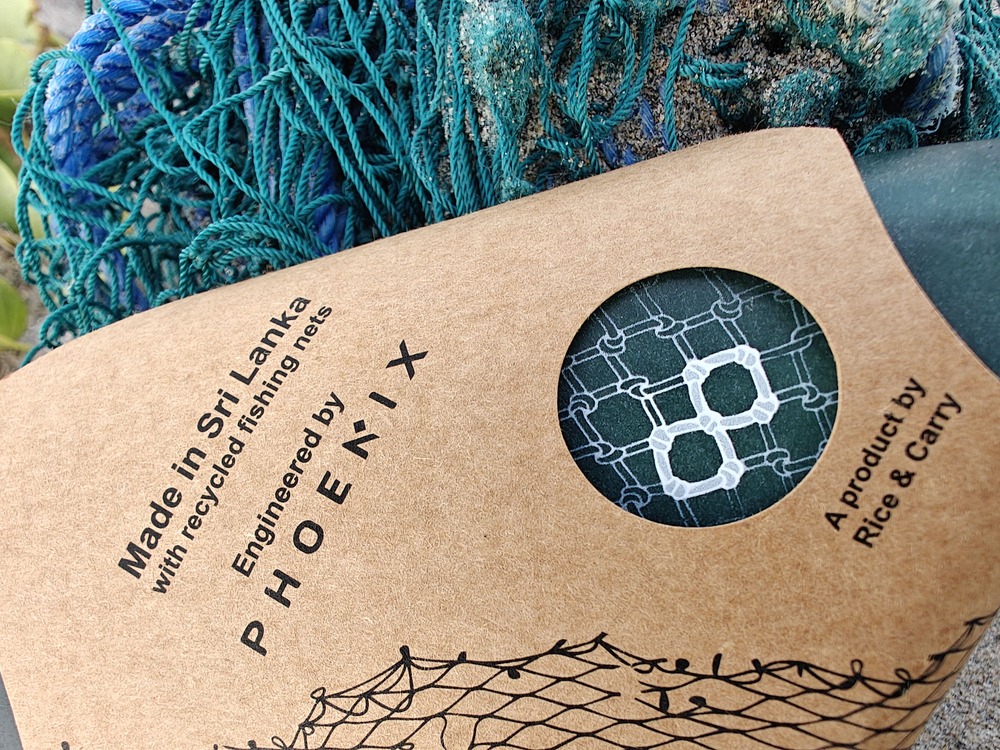
The project brings together Lanka Upcycles’ ocean-conservation work and Phoenix Industries’ manufacturing expertise. Photo credit: Newswire.
Sri Lanka’s east coast is known internationally for its surf breaks, while its coastal communities also experience the effects of marine waste at first hand. A new collaboration between Lanka Upcycles and Phoenix Industries has connected those realities in an unusual way: discarded fishing nets collected locally have been repurposed as material for Sri Lanka’s first surf fins made from recycled fishing nets.
The project, reported by Newswire on 29 October 2026, is an example of local environmental work meeting product-development expertise. It brings together Lanka Upcycles’ commitment to giving discarded ocean waste a new purpose and Phoenix Industries’ experience in material engineering and manufacturing. The fins were launched at the Arugambay Surf Champions 2026 in September.
The initiative does not treat waste recovery as an end in itself. Instead, it asks whether a material that has been collected from the coastline can be transformed into a functional product, with the technical requirements and quality expected of equipment used in the water.
A coastal commitment
Operating along Sri Lanka’s east coast, Lanka Upcycles sees the impact of marine waste on coastal communities and the coastline where its team works. The organisation’s motivation for the project comes from a direct connection to that environment: protecting the ocean is understood not merely as an environmental ambition, but as a responsibility to the community and the place the team calls home.
The collaboration reflects an effort to find practical ways to clean up Sri Lanka’s beaches while giving discarded materials a second life. Fishing nets can be particularly challenging waste materials to repurpose because the material must be collected and processed before it can be considered for a new application. In this project, locally recycled fishing nets provided the starting point for a product closely associated with the ocean itself.
Lanka Upcycles describes the fins as made from 100 per cent locally recycled Sri Lankan fishing nets. The organisation’s account of the project also emphasises that the nets were recycled and the fins manufactured in Sri Lanka, keeping the journey from recovered material to finished product within the country.
For further information about the project, visit Lanka Upcycles’ product news page.
Turning recycled material into surf equipment
Repurposing a waste material is only one part of developing a useful product. Surf fins must meet specific performance requirements, including suitable stiffness, durability and resistance to water absorption. The material therefore had to be evaluated not simply for its recycled content, but for whether it could be refined and manufactured to meet those requirements.
Phoenix Industries’ research and development team worked with Lanka Upcycles over several months, researching, testing and refining material formulations and manufacturing processes. This work addressed the central technical challenge of the project: turning recycled nylon fishing nets into a material capable of performing as a surf fin.
The partnership combined complementary knowledge. Lanka Upcycles brought its vision for the material and its understanding of the surfing community; Phoenix contributed expertise in material engineering, product development and manufacturing. The result depended on collaboration through development and testing, rather than on the material’s recycled origin alone.
That distinction matters. A circular approach aims to keep materials in use by finding new applications for them, but a product also has to be fit for its intended purpose. In this case, the technical work was directed towards the physical demands placed on surf fins, with the teams refining both material formulations and manufacturing processes to reach the required performance.
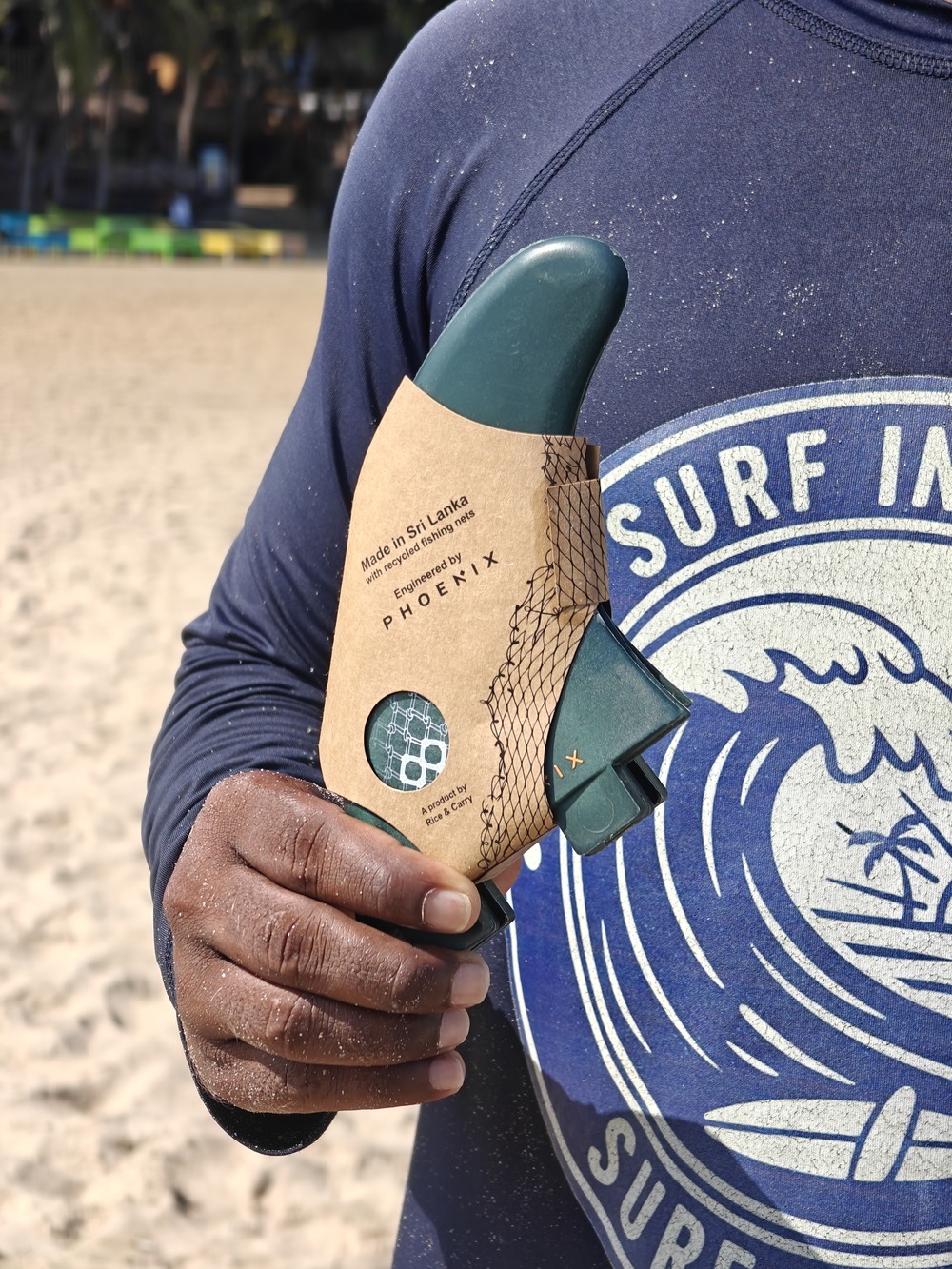
The surf-fin project brought together recycled material and local product development. Photo credit: Newswire.
Manufacturing ingenuity and product design
Phoenix Industries’ involvement reflects the company’s stated commitment to sustainability and recycling. As a Sri Lankan manufacturer, Phoenix sees a responsibility to contribute towards a cleaner Sri Lanka, not only through responsible manufacturing but also by finding innovative ways to recover and repurpose plastic waste.
The collaboration extends that responsibility into product development. Phoenix’s design team supported the presentation of the final product with thoughtfully designed packaging, completing the work from material refinement through to how the fins are presented.
This is a useful aspect of the project’s story: environmental innovation does not end when waste is collected or processed. It also involves designing an application, developing a viable manufacturing method and presenting the finished item as a product with a clear purpose. The surf fins make that process visible, linking local waste recovery to a recognisable piece of surf equipment.
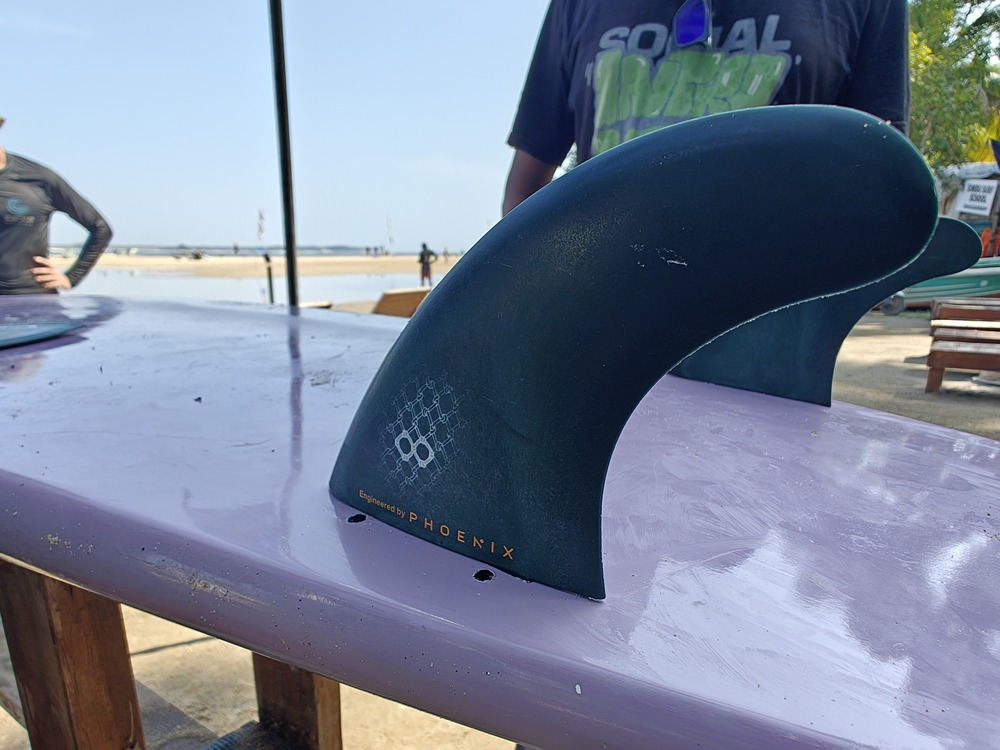
The finished fins represent a new use for locally recycled fishing nets. Photo credit: Newswire.
A launch at Arugambay
The fins were launched at the Arugambay Surf Champions 2026 in September, placing the project within a major local gathering of the surfing community. Lanka Upcycles has described the event as an opportunity to bring the product to the surf setting and offer samples to potential test users.
Arugam Bay is an apt place to introduce equipment developed from fishing nets recovered along Sri Lanka’s coast. The launch connected the product with the people and activity for whom it was designed, while giving the project a public setting in which its materials and purpose could be seen together.
For readers in Sri Lanka and overseas who follow the country’s surf scene, the initiative offers a different perspective on local innovation. It is not only a story about a new product, but also about how conservation-minded organisations and manufacturers can collaborate around a practical challenge.

AI-generated illustration of a surfer at Arugam Bay with surf fins made from recycled fishing nets. The illustration is not a documentary photograph.
A small product with wider possibilities
The project demonstrates how a shared commitment to a cleaner Sri Lanka can open new possibilities for circular innovation. Fishing nets that might otherwise remain discarded have been developed into a product with a clear function, through local collaboration between an organisation working on ocean waste and a manufacturer with the technical capacity to test and produce it.
The significance of the initiative lies in the combination of purpose and process: a coastal concern informed the project, recycled material provided its starting point, and months of development work addressed the performance expected of surf equipment. The launch at Arugambay brought the result back to the surfing community and the coastline that helped inspire it.
The project also offers a reminder that sustainability often depends on partnerships across different kinds of expertise. Community knowledge can help identify a meaningful challenge; engineering and manufacturing can help test whether a proposed solution works; and thoughtful design can help carry the product through to its final presentation.
As Sri Lanka continues to explore ways of recovering and reusing materials, the collaboration between Lanka Upcycles and Phoenix Industries provides one practical example of local innovation. Its contribution is specific and clearly defined: surf fins developed from locally recycled fishing nets, manufactured in Sri Lanka and introduced at an event celebrating the country’s surf culture.
For the global Sri Lankan community, it is a positive story about environmental responsibility and local capability working together. More information about Phoenix Industries is available at phoenix.lk, while eLanka continues to share community, innovation and sustainability stories with readers in Australia and around the world at eLanka.
This article was written based on the source https://www.newswire.lk/business/from-ocean-waste-to-ocean-ready-lanka-upcycles-and-phoenix-industries-develop-sri-lankas-first-surf-fins-from-recycled-fishing-nets/, kindly email us at info@eLanka.com.au if any information needs to be corrected.
At eLanka, we respect the rights of creators. If we have used an image you own and you’d like it removed, please email us at info@elanka.com.au and we’ll handle it promptly.
Thanks.
eLanka team
eLanka Disclaimer
Content published on eLanka may be created by the eLanka team, submitted by contributors or third parties, reproduced or adapted from other sources with appropriate source acknowledgement, or provided as promotional/advertising material by our clients. While eLanka takes reasonable care in preparing and publishing content, we do not warrant its completeness or accuracy. Views expressed are those of the respective authors or contributors and do not necessarily represent the views of eLanka. Third-party contributors, content providers and advertisers are responsible for the accuracy of material they supply and for ensuring they hold the necessary rights and permissions for its publication. Advertising and promotional content should not be regarded as an endorsement by eLanka of any product, service or claim.