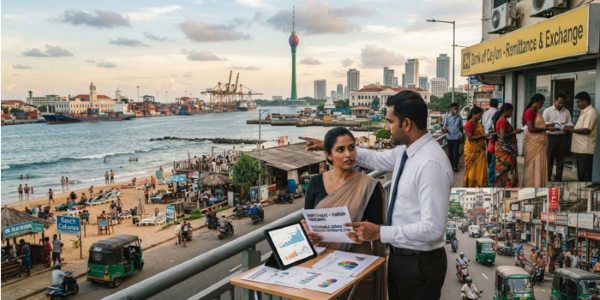
FUTURE OF INDIA AND NORTHERN AND EASTERN PROVINCES OF SRILANKA-by Dr. Gnana Sankaralingam
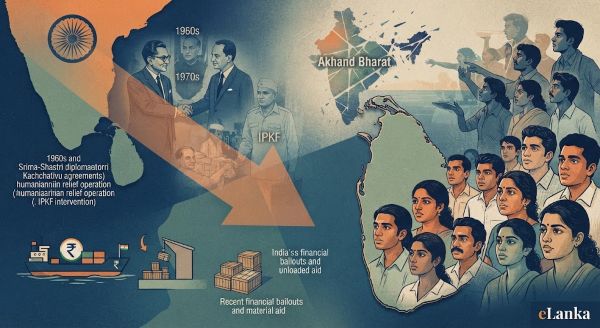
Since independence, India embarked on ambitious projects to create an Akanda Barath and to become a regional super power. First did not make any progress while the second only has limited success. However after liberalising the econmy in 1991, India has become a global economic power. Sriklanka falls within the ambit of both and had been subjected to Indian meddling in internal affairs. Disgrunted Tamil population in Srilanka was an ideal situation for India to use them to bring Srilanka to their knees. Misreading of geopolitics by rulers 40 years ago, resulted in direct Indian intervention with the excuse of safeguarding Tamils from the state of Srilanka on the basis of humanitarian cause. This failed partly due to immature leadership of India which ignored aspirations of Tamils and partly due to Tamil resistence movement being promised support by another agency detrimental to Indian interests. Srima-Shasthri agreement of 1964 and Kachchativu agreement of 1974 demonstrates that India had been going out of the way to please Srilanka. Recent financial bail outs during bankruptcy and material help during cyclonic floods, also show that India wants its influence maintained.
After the debacle of 1987, successive governments in Srilanka have been handling India so as not to antagonise it. But Chinese presence in Hambantota and Colombo port city, have resulted in unpleasantness to India, and to neutralise it, Srilanka had to take measures to offset it, such as not allowing China to use them for military purposes detrimental to Indian interests and to sign defence agreements with India which border on infringement of sovereignty. In this scenario, the request by India to build a bridge across Palk Straits and road and railway connection between Talaimannar and Trincomalee assumes importance. This has received mixed reaction with Tamils and realistic minded Sinhalese welcomimg it, government being wary about it and Sinhala nationalists voicing opposition. By this, India hopes to take over northern province and Trincomalee district north of mahaveli, and to achieve it may create condition for srilanka to agree to it. Recent geo-political handling of India by Maldives and Bangladesh resulting in former caving in and latter sliding into dire straits, when India tightened economic grip, should be an eye opener for Srilanka to act in more tactful manner.
Though outlook of Srilankan economy has improved for the better, it is still not out of the woods. Next year the five year moratorium on debt repayment comes to an end, and unless further restructuring of debt with lenders to defer repayment is successful, foreign exchange reserves could diminish in meeting debt obligation, which would lead to import restrictions and increase in poverty. At this stage Srilanka has no option other than giving into political interests of India to avoid serious consequences. Hence the northern and eastern provinces receive prominence in the Indian agenda. Since the war ended 17 years ago, there had not been any major projects undertaken by successive governments in north and east, and still both provinces remain at the bottom of the list of the most economically backward. This government is not going to do anything substancial other than making empty promises, which gives an ideal situation for India to step in and develop the areas. If India has its way in going through its intended scheme, it could embark on developing the north first and then extending it to the east. By this, India could later dominate these provinces politically as well.
It appears that geo-political rivalry to control Srilanka has begun with repeating of history amid change of players. The recent seminar held in Hong Kong about feasibility of establishment of Eelam is a pointer to this. Like the last time, some Tamils will be drafted into this program to scuttle any move by India in northern and eastern provinces. Former LTTE cadres who have been released after rehabilitation and have no prospect in life, could be an easy pray for foreign agencies. Tamils until now have thwarted moves by China to have a foot hold in northern province, both politically and economically. Attempted infiltration into Jaffna university did not go far and establishment of windmill and sea-cucumber farms were shelved. This did not result in India stepping in to develop Tamil areas, and if India takes Tamils for granted and remain complacent, they could lose the plot to China. In addition to these two powers, US also has a stake especially on Trincomalee harbour, though their plan of Colombo Trincomalee economic corridor was turned down due to opposition. Caught in the middle, this situation poses an uncertainty for northern and eastern provinces.
At the outset it should be emphasised that whatever country has interests on Tamils in particular and northern and eastern provinces in general, it will only be regarding its concerns and benefits. It is important not to make enemies of anyone of them by depending on or supporting of any other. Balancing of power is necessary which may not only help to tide over the present state but also increase bargaining power of Tamils to win their legitimate rights. It appears that India is more concerned about security aspect of the accord, rather than clauses relating to the devolution of power to northern and eastern provinces. That does not mean that India has abandoned Tamils and for Tamils to ally with those inimical to India is foolish. At the same time India cannot pretend showing that they are concerned by meeting self serving Tamil politicians without concrete follow up. If this continues, at one point Tamils could say enough with India and fall for machinations of others. Future of India and northern and eastern provinces rely on quickness and effectiveness of Indian move, rather than use Ealam bogey as leverage and extract concessions from Srilanka.