



International Partnership to Strengthen Hydrogen Higher Education in Sri Lanka as GREEN-HET Launches 10 November

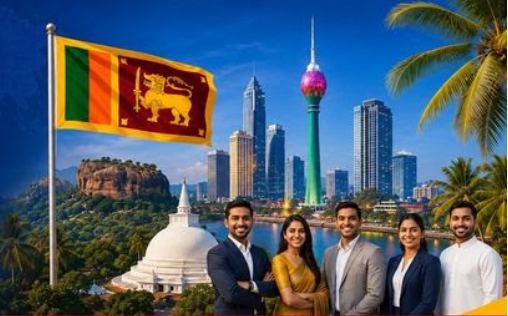
AI-generated illustration; no authentic photograph is embedded.
An international partnership bringing together four Sri Lankan universities and four European institutions is set to strengthen higher education and research in hydrogen technologies, with the Green Hydrogen Enabling Technologies (GREEN-HET) project due to be formally launched in Colombo on 10 November 2026.
The three-year initiative will support the development of a joint Master’s degree programme in Hydrogen Enabling Technologies across four Sri Lankan universities. Funded by the European Union through the Erasmus+ Capacity Building in Higher Education programme, GREEN-HET aims to build national expertise, enhance university capacity and establish sustained collaboration in a field with growing relevance to energy systems and engineering.
The launch will take place at Jetwing Colombo Seven Hotel under the patronage of Prime Minister Dr Harini Amarasuriya, who will attend as Chief Guest. International academic partners and stakeholders from government, industry, the diplomatic community and wider society are expected to come together for the occasion.
The project’s central educational ambition is practical: to create a home-grown postgraduate programme through which Sri Lankan students can pursue advanced study in hydrogen technologies, while connecting local universities with specialist knowledge and experience from Europe.
A four-plus-four university partnership
The Sri Lankan universities participating in the Master’s programme are the University of Jaffna, the University of Moratuwa, the University of Peradeniya and the University of Ruhuna. The University of Jaffna will provide national coordination.
Their European partners are the Western Norway University of Applied Sciences (HVL), the University of Groningen in the Netherlands, OTH Regensburg in Germany, and Virumaa College of Tallinn University of Technology in Estonia. HVL is the applicant institution and overall project coordinator.
This structure gives the initiative both a national academic base and an international framework for collaboration. Rather than relying on a single institution, the programme is designed to draw on the strengths of several Sri Lankan universities, while working with European partners to develop course content, teaching approaches and quality-assurance arrangements.

AI-generated illustration of the hydrogen value chain; the image is illustrative and does not depict project equipment.
Building a programme across the hydrogen value chain
The proposed curriculum is intended to cover the hydrogen value chain, from production to use. Areas of study will include hydrogen production, storage and transportation, fuel cells, and the integration of hydrogen technologies with renewable energy systems.
The programme is also expected to address essential topics that extend beyond engineering equipment. These include hydrogen safety, environmental assessment, techno-economic analysis, policy and regulation, modelling, and digital technologies. Together, these subjects are intended to give students a broad foundation for understanding how hydrogen systems are designed, assessed and applied.
The consortium plans to develop the curriculum jointly, strengthen academic staff competencies and improve laboratory facilities. Shared teaching resources and quality-assurance mechanisms are also part of the project’s work. Academic training programmes and industrial visits in Europe are intended to give Sri Lankan academics opportunities to exchange knowledge with university and industry specialists.
Such collaboration can be instrumental in helping institutions build teaching capacity that continues beyond a single project. Shared resources, staff development and cooperation among the participating universities can also help create a stronger base for future research and postgraduate learning in Sri Lanka.
Relevance to Sri Lanka’s energy ambitions
GREEN-HET is particularly relevant to Sri Lanka’s energy-transition ambitions and the priorities set out in its National Hydrogen Roadmap. With considerable renewable energy potential, the country has opportunities to explore green hydrogen and green ammonia production, alongside questions of energy security and the development of possible domestic and international markets.
Green hydrogen is produced using renewable electricity to separate hydrogen from water. Its potential applications are varied, but assessing where it may be technically, environmentally and economically appropriate requires specialised expertise. The project’s planned curriculum is therefore intended not only to introduce hydrogen technologies, but also to equip students and academics to examine their practical possibilities and limitations.
The partnership does not predetermine the outcomes of that assessment. Instead, its educational and research focus can help develop the local knowledge needed to evaluate opportunities carefully, including the technical requirements, safety considerations, environmental implications and economic conditions associated with hydrogen systems.
A National Hydrogen Forum for wider collaboration
An important part of GREEN-HET will be the establishment of a National Hydrogen Forum. The forum is intended to bring together universities, industry representatives, government authorities and civil society organisations to support dialogue and raise awareness.
By creating a space for these groups to exchange perspectives, the forum can help inform curriculum development and encourage collaboration beyond the university consortium. Its long-term value will depend on sustained participation and cooperation, particularly as the project moves through its three-year period and beyond its funding.
This broader engagement reflects the fact that hydrogen education is not solely an academic matter. Universities can prepare students and conduct research, while industry and public institutions can contribute experience and help identify relevant skills and knowledge needs. Civil society participation can also help widen public understanding of the subject.
Opportunities for students and researchers
For young Sri Lankans, the planned Master’s programme represents an opportunity to study an emerging technology within the country, supported by collaboration among local universities and international academic partners. Students, engineers and researchers in Sri Lanka and abroad may also find the project relevant as it develops new teaching resources and strengthens institutional links.
The work will require sustained effort: curriculum development, staff training, laboratory improvements and quality assurance are all substantial undertakings. Yet the collaboration offers a promising platform for building knowledge across institutions, rather than treating hydrogen education as a narrow specialisation at a single campus.
As the project launches in Colombo, GREEN-HET brings together a clear educational objective and a wider national relevance: supporting Sri Lankan universities as they develop expertise in hydrogen-enabling technologies. Its success will be measured not only by the establishment of a degree programme, but also by the lasting capacity, relationships and learning opportunities it helps create.
This article was written based on the sources https://www.ft.lk/business/International-partnership-to-strengthen-hydrogen-higher-education-in-Sri-Lanka/34-799762, https://eng.jfn.ac.lk/green-het/ and https://www.hvl.no/en/research/projects/green-het/, kindly email us at info@eLanka.com.au if any information needs to be corrected.
At eLanka, we respect the rights of creators. If we have used an image you own and you’d like it removed, please email us at info@elanka.com.au and we’ll handle it promptly.
Thanks.
eLanka team
eLanka Disclaimer
Content published on eLanka may be created by the eLanka team, submitted by contributors or third parties, reproduced or adapted from other sources with appropriate source acknowledgement, or provided as promotional/advertising material by our clients. While eLanka takes reasonable care in preparing and publishing content, we do not warrant its completeness or accuracy. Views expressed are those of the respective authors or contributors and do not necessarily represent the views of eLanka. Third-party contributors, content providers and advertisers are responsible for the accuracy of material they supply and for ensuring they hold the necessary rights and permissions for its publication. Advertising and promotional content should not be regarded as an endorsement by eLanka of any product, service or claim.