



Invasive Species Threaten Anawilundawa’s Fragile Ecosystem-by Risidra Mendis

Source:Ceylontoday
Tall trees and greenery, crystal blue water and the cool breeze sweeping across your face makes you wonder if you are in paradise. This is no paradise, but a bird sanctuary that has stood the test of time.
Situated between the coast and the Chilaw – Puttalam Railway Line in the Puttalam District and within close proximity to three vastly different ecosystems – the coast, the mangroves, and freshwater tanks – is one of the six Ramsar wetlands in Sri Lanka – the Anawilundawa Bird Sanctuary.
With 1,397 hectares, Anawilundawa was declared a sanctuary by the Department of Wildlife Conservation (DWC) on 11 June 1997, under the Fauna and Flora Protection Ordinance (FFPO) and was designated as a Ramsar Wetland of International Importance (especially for migratory water birds) on 3 August 2001.
This is the second Ramsar wetland to be declared in the country. A Ramsar site is a wetland site designated to be of international importance under the Ramsar Convention, also known as ‘The Convention on Wetlands.’

Productive ecosystems
Wetlands are among the most-productive ecosystems in the world. They play an important role by serving as flood retention areas; as filters for sediments, nutrients and pollutants released to the environment and as refuges for many species of vertebrates and invertebrates.
Even though it is a difficult task to manage and protect these valuable ecosystems the Anawilundawa Bird Sanctuary has miraculously survived. Its green vegetation, large trees, cool climate and the sounds of birds at the crack of dawn is proof that this bird sanctuary still stands strong.
This unique bird sanctuary dates back to the 12th century when King Parakramabahu I ruled the country. Seven tanks, Pinkattiya consisting of 140 hectares, Maradankole with 12 hectares, Irakkwela consisting of 14 hectares, Anawilundawa with 40 hectares, Thuruwila with 32 hectares, and Mahaiyawa with 50 hectares can be seen within this bird sanctuary.
But, strangely the seventh tank known as Wellawela has no water and the reason for the tank being empty is a mystery. Some say the tank could be broken or leaking others say it may have dried up over a period of time.
Amazingly, all tanks are connected to each other and the trees that have naturally taken root along the tank bund have created a beautiful natural environment together with the sea close by.
The tanks store water for irrigation and cultivation and act as a natural habitat, nesting and breeding ground and refuge for 150 species of water birds and a few species of threatened fish, amphibians, mammals, and reptiles.

An oasis for nature lovers
For nature lovers this is an oasis where they can take a walk in a calm and peaceful environment, away from the hustle and bustle of city life.
Conservation Biologist, Rajika Gamage is a regular visitor to the Anawilundawa bird sanctuary. An avid bird watcher and nature lover Gamage’s interest in the environment and its biodiversity has made him study the wildlife in the area, as well as document them in the form of photographs.
“This is the first wetland found when migratory birds coming from India, land in Sri Lanka. They arrive on this route. From here they spread to other areas in the country and start feeding and breeding. Having completed their stay in warmer climates, and after the migratory season has ended, they come back to this area, rest for a while and then leave Sri Lanka,” Gamage explained.
The birds of Anawilundawa can be categorised into several groups such as wetland birds (waders, gulls and terns, ducks, herons, egrets and storks, cormorants, kingfishers, and so on), forest birds (woodpeckers, barbets, pigeons, raptors, and so on), scrubland birds (bulbuls, doves, and so on) and grassland birds (munias, prinias, pipits, larks, raptors, and so on). Birds ranging in size from the tiny Pale-billed Flower-pecker to the larger Spot-billed Pelican can be seen at Anawilundawa.
He says some of the species that can be seen at the Anawilundawa Bird Sanctuary are common birds such as the Oriental Darter, Indian Cormorant, Great Cormorant, Little Cormorant, Lesser Whistling Duck, Little Grebe, Common Pygmy Goose, Spot Billed Pelican, Grey Heron, Purple Heron, Little Egret, Intermediate Egret, Great Egret, Indian Pond Heron, Black-crowned Night Heron, White breasted Waterhen, Purple Swamphen, Pheasant Tailed Jacana, Common Coot, Common Moorhen, Grey Headed Fish Eagle, Brahminy Kite and the White Bellied Sea Eagle.
Most endemic and resident birds can be observed right through the year he says while the migrants are best seen between October and April. “They start coming in September, October and November. The Bird Sanctuary is also popular for its butterfly and dragonfly species. Nationally threatened species of butterflies have also been recorded from the sanctuary, Gamage said.

Butterfly species
The common butterflies are the Joker, Plain Tiger, Common Tiger, Common Crow, Baron, Peacock Pansy, Grey Pansy, Chocolate Soldier, Lemon Pansy, Common Evening Brown, Blue Tiger, Dark Blue Tiger, White Four-ring, Common Jay, Common Rose, Crimson Rose, Banded Peacock, Lime Butterfly, Blue Mormon, Common Mormon, Common Albatross, Striped Albatross, Chocolate Albatross, Pioneer, Lemon Emigrant, Mottled Emigrant, Common Gull, Small Salmon Arab, Jezebel, Great Orange Tip Leptosia nina Psyche, Dark Wanderer, Tawny Caster and the Angled Castor.
The undisturbed natural habitat of this unique ecosystem is now under threat – with the rapid spread of invasive species. “The bird sanctuary is undergoing a habitat change due to the spread of invasives. Salvinia, Water Hyacinth and the Water Lettuce have covered a large area of the bird sanctuary. Apart from Salvinia, Water Hyacinth and the Water Lettuce, Guinea Grass, Lantana, Cocklebur and Siam Weed are spreading in Anawilundawa,” Gamage explained.
Before the spread of invasives there were water lilies, lotuses and kumudu in this wetland he says and birds that walked on these leaves and looked for food such as the Pheasant Tailed Jacana and the Common Moorhen are under threat because they cannot walk on Water Hyacinth with their long legs and toes.
“The Pheasant-Tailed Jacana lays eggs on top of lotus leaves and ducks can’t swim on the water surface that are covered with invasives. The Pelicans and Cormorants that swim and get their food are under threat. When completely covered no sunlight seeps to the water and the breeding of fish reduces. The spread of guinea grass in the Muthu Panthiya area has reduced the number of host plants that butterflies use and the breeding of butterflies has also reduced,” Gamage said.
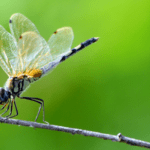
Dragonflies species are also affected. Dragonfly larvae require water to survive, so female adults are always searching for water habitats such as ponds, streams and swamps to lay their eggs. The eggs are laid directly into or close to water. Dragonfly larvae live underwater before emerging as adults and eat a lot of smaller insects and even small fish.

Destructive invasives
“The fisheries area is also affected as people cannot fish in water covered with invasives. Bird watching has reduced and bird tourism is affected. When going to Wilpattu, Anawilundawa is a good stopover on the way. But sadly this area is being destroyed,” Gamage said.
The Water Lettuce is considered an invasive species as well as a mosquito breeding habitat. It floats on the surface of the water, its roots hanging submersed beneath floating leaves. They are found in slow-moving rivers, lakes, and ponds. The species can be introduced to new areas by water dispersal, fragmentation, and hitchhiking on marine transportation or fishing equipment. The invasion of Water Lettuce in the ecosystem can lead to environmental and socio-economic ramifications to the community it serves.
The severe overgrowth of Water Lettuce can block gas exchange in the surface water, creating hypoxic conditions and eliminating or disrupting various native marine organisms. Blocking access to sunlight, large mats of Water Lettuce can shade native submerged plants and alter communities relying on these native plants as a source of food. Its rapid spread causes loss of habitat, a decrease of oxygen levels in the water and sometimes navigation problems for boats.
Under optimal environmental conditions, Water-Lettuce can double its population size in less than three weeks. Seed production makes this plant resilient to adverse environmental conditions such as freezing temperatures and drought.
The common Water Hyacinth, is an aquatic plant native to South America and naturalised throughout the world. One of the fastest-growing plants, Water Hyacinth reproduces primarily by way of runners, which eventually form daughter plants. Each plant additionally can produce thousands of seeds each year, and these seeds can remain viable for more than 28 years.

Water Hyacinth
Common Water Hyacinths are vigorous growers, and mats can double in size in one to two weeks. In terms of plant count rather than size, they are said to multiply by more than a hundredfold in number in a matter of 23 days. It can easily coexist with other invasive plants and native plants in an area.
Water-Hyacinth blocks waterways and limits boat traffic, recreation, flood control and wildlife use. By producing a dense canopy at the water surface, this exotic pest plant shades out native submersed plant species and can uproot native emergent species that are important to wildlife.
Water Hyacinth can completely cover lakes and wetlands, out-competing native aquatic species, reducing oxygen levels for fish, and creating ideal habitat for disease-carrying mosquitoes.
Giant Salvinia; a floating fern from southern Brazil, is currently one of the most problematic aquatic plants. It damages aquatic ecosystems by outgrowing and replacing native plants that provide food and habitat for native animals and waterfowl.
Adult weevils are small and adults can live for several months. They release oxygen too, but since they float all the oxygen goes into the atmosphere. Instead of adding oxygen to the water, they dramatically reduce it in three ways. The thick mats totally shade out the submersed plants and photosynthesis stops.
Salvinia, commonly grows on the surface of still or slow-moving freshwater areas, such as lakes, ponds, and canals and also inhabits brackish water, including swamps, marshes, and wetlands.