News & Community eLanka

eLanka

Thursday, 15 Oct 2026
  • Home
  • Read History
  • Articles
    • eLanka Journalists
  • Events
  • Useful links
    • Obituaries
    • Seeking to Contact
    • eLanka Newsletters
    • Weekly Events and Advertisements
    • eLanka Testimonials
    • Sri Lanka Newspapers
    • Sri Lanka TV LIVE
    • Sri Lanka Radio
    • eLanka Recepies
  • Gallery
  • Contact
Newsletter
Sri lankan news
  • eLanka Weddings
  • Property
  • eLanka Shop
  • Business Directory
eLankaeLanka
Font ResizerAa
Search
  • Home
  • Read History
  • Articles
    • eLanka Journalists
  • Events
  • Useful links
    • Obituaries
    • Seeking to Contact
    • eLanka Newsletters
    • Weekly Events and Advertisements
    • eLanka Testimonials
    • Sri Lanka Newspapers
    • Sri Lanka TV LIVE
    • Sri Lanka Radio
    • eLanka Recepies
  • Gallery
  • Contact
Follow US
© 2005 – 2026 eLanka Pty Ltd. All Rights Reserved.
Home » Goodnews Stories Srilankan Expats » Articles » Portuguese & Dutch Influences On The Modern Sinhala Language by Aysha Maryam Cassim
Articles

Portuguese & Dutch Influences On The Modern Sinhala Language by Aysha Maryam Cassim

admin
Last updated: September 19, 2016 12:11 pm
By
admin
Share
17 Min Read
SHARE
Views: 506

Portuguese & Dutch Influences On The Modern Sinhala Language

Contents
  • Modern Sinhala (13-20 AD)
  • Casados
  • Parangi Names And Titles
  • Portuguese And Dutch Influences On Cities And Street Names
  • Job Titles And Trades
  • Judicial Administration
  • Clothing

by Aysha Maryam Cassim

From the 16th century onwards, the European colonial powers made a significant cultural impact on many aspects of Sri Lankan culture. Modern Sinhala was influenced immensely by its contact with three European languages, the languages of the colonisers: Portuguese, Dutch, and English. Prior to the Colonial invasions, Ceylon’s strategic location at the southernmost part of the sea routes that connected Asia with the Mediterranean Sea brought in many Arab, Persian, and Indian sailors and merchants. They left an indelible cultural imprint on the country by changing the social, cultural, political, economic, and linguistic outlooks of the country.

Abraham Mendis Gunasekara, in his Comprehensive Grammar of the Sinhalese Language (1891) enumerates approximately 400 loan words from Tamil, 231 from Portuguese, 112 from Dutch, and 76 from English. Sannasgala (1976: p. 87) stated that most of the Sinhala words derived from foreign sources were either Portuguese, Dutch, English, Malay/Javanese, Tamil, or Arabic.

Sinhala belongs to the larger umbrella Proto-Indo-European language group, which includes languages of the West like Greek, Latin, German, French, English, Lithuanian, and Russian. The Proto-Indo-European parent group branches off into Indo-Aryan, which includes Sanskrit, P?li, Hindi, Bengali and, of course, Sinhala. The Indo-Aryan language group arose due to the migration of Indo-Aryan speakers from India, as early as 5 BC. Over the centuries, Sinhala has undergone significant phonetic and semantic changes. Since the Sinhala language is a member of the Indo-Aryan family, it is not difficult to connect its vocables with cognate Indo-European forms.
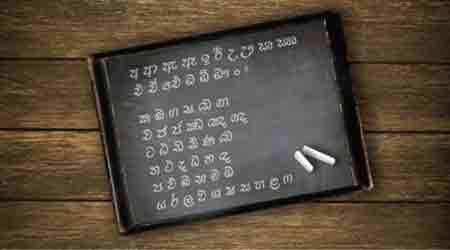
The-Modern-Sinhala-Language--1

The Sinhala language as we know it today has evolved through four different eras. Image courtesy exploresrilanka.lk

The evolution of Sinhala can be divided into four eras (Geiger, 1938) :

  • Sinhala Prakrit (200 BC to 4th century to 5th century AD)
  • Proto-Sinhala (4-5 AD to 8 AD)
  • Medieval Sinhala (8-13 AD)
  • Modern Sinhala (13-20 AD)

Modern Sinhala (13-20 AD)

The modern Sinhala language contains many Portuguese and Dutch terms. It is believed that many Portuguese loans would have entered Sinhala after the departure of the Portuguese from the island in 1658. The Portuguese, unlike the later Dutch and British, integrated well with the locals. They intermarried with the daughters of the land and birthed a new language, Sri Lankan Portuguese Creole, which flourished as a lingua franca in the island for over three and a half centuries.

The Dutch language has also influenced Sinhala considerably in the fields of law, administration, and commerce. This is not surprising, considering the fact that it was the Dutch who introduced the Roman Dutch Law, which survives today as the general law of the land. P.B Sannasgala has cited numerous Dutch loans pertaining not only to legal, administrative, and mercantile matters, but also to food, drinks, clothing, and personal ornamentation, games, household goods, and utensils, etc.

This article seeks to dig a little deeper into the linguistic affinity between Sinhala and other foreign languages by exploring the etymological origins of many loan words borrowed from Portuguese, Dutch, and English. [Sources: Tagus to Taprobane: Portuguese Impact on the Socio-culture of Sri Lanka from 1505 AD by Shihan de Silva Jayasuriya, and Zeylanica: A Study of the Peoples and Languages of Sri Lanka by Asiff Hussein.]

Casados

Casados

Portuguese attire as depicted in the drama Gajaman Puwatha. Image courtesy anuruddhal.wix.com

The Portuguese kings banned women from accompanying navigators to the colonies. This naturally led to intermarriage with the indigenous women of the land. Portuguese ‘casados’ were the married soldiers (soldados in Portuguese) who were permanent residents of Ceylon. The Casados and Topazes (children from Portuguese native marriages) were not part of the regular army. They were only expected to take up arms in defence of their homes or during a major emergency. However, they sometimes volunteered for particular military operations. The Sinhala verb kasada bandinava comes from the Portuguese past participle casado meaning ‘married’. The Portuguesedoucasado was corrupted into dikkasada, Sinhala for divorced.

Parangi Names And Titles
Parangi-Names-And-Titles

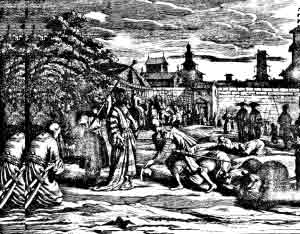
Princess Dona Catherina is welcomed in Kandy. Image courtesy wikipedia.org

As a result of Portuguese intermarriages with the local women, Portuguese surnames and personal names were introduced to Sri Lanka. Many Sri Lankans have Parangi (from ‘Farangi’ meaning ‘foreigner’) surnames like Abrew (Abreu), Almeda (Almeida), Aponso (Afonso), De Mel (Melo), Perera (Pereira), Ruberu (Ribeiro) etc. These people could be descendants of the Portuguese or of those converted to Roman Catholicism who acquired Portuguese names at baptism.

The Sinhalese also had several titles for men and women which were used according to the age, rank and qualities of the person (Knox, 1681 : p. 291). The Portuguese introduced new titles to Sri Lanka. The title of Dom (i.e Sir) and Dona (i.e lady) were bestowed upon chieftains and their wives who converted to Christianity at baptism. Dom and Dona are used as prefixes to personal names. For example, Dona Katarina and Dom Juan. Dona Catherina (also known as Kusumasana Devi) was Queen of Kandy in the sixteenth century who later became the Queen Consort to King Wimaladharmasuriya I after the defeat of King Rajasinhe I. Gajaman Nona was a famous Sri Lankan poet who lived in the south of the country around the time the Dutch rule ended and early British rule began. She was baptised Dona Isabella Koraneliya Perumal. Sri Lankans added Dom or Dona to their names at baptism, to signal their pre-eminence.

Do you remember the famous song by the Gypsies from the late 90s, “Signore” ? The term ‘Senhor’ (lord or gentleman) became ‘Sinno’ in Sinhala and it is used even today in the rural areas of Sri Lanka. The feminine equivalent, Segnora, however, is not used. Instead, Nona is used for younger ladies and nona mahaththaya for older ladies in aristocratic families. According to Nell (1888), even 100 years ago, Sinno (derived from Senhor) was used to address Portuguese-speaking men who wore western clothes and Nona was used to address European and burgher (Eurasian) ladies.

Portuguese And Dutch Influences On Cities And Street Names
Portuguese-And-Dutch-Influences-On-Cities-And-Street-Names

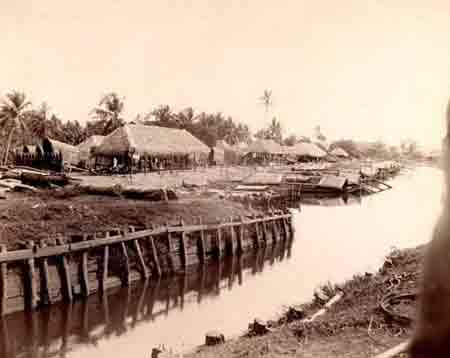
Canal View at Grand-Pass. Image courtesy lankapura.com

Many town and street names used today also find their origins in either the Dutch or Portuguese languages, some examples being:

Gal Bokka (from ‘Galio Boca’, or ‘Galle Buck’)

Santumpitiya (from ‘Sao Tome’, ‘Saint Thomas’), now Gintupitiya

Grandpass (from ‘Grando Passo’) ? In the book Changing Face of Colombo by R.L Brohier, there is an interesting story which explains the origin of the name Grandpass:

“As in the long years of hitherto past, at that period too the Kelani Ganga, which sweeps round north Colombo to roll its waters into the sea was unabridged. The river was at no season of the year fordable and there were two points where ferries were established. The Portuguese bestowed the connotation “Passo Grande” (present Grand-Pass) to the crossing at Nakalagam. The second crossing was called Pasbetal, literally pass of the boats, was not far from Grand-Pass, but neared the mouth of the river.”

Milagiriya (from ‘milagres’, meaning ‘miracles’) (Hettiarachchi, 1965)

Bloemendahl (Vale of Flowers) – In the enclave of the Kelani Ganga and off its left bank, which lay north of the Cinnamon plantation, there were extensive areas of grass fields and swampy land which extend southwards from Bloemendahl. Most of it was once owned by a Hollander, and named after him : “Vender Meyden’s Polder” (Pasture lands reclaimed from the marshes). The name still remains in old deeds to recall the fact that it was in Dutch times drained and used as a model farm.

The language of the colonisers lent their influence to other aspects of Sri Lankan life, too, such as:

Job Titles And Trades

Minindoruva ? Port. medidor, meaning ‘surveyor’

Sapateruva ? Port. sapaeteiro, meaning ‘shoemaker’ (Port. Sapato ? sapattuva, ‘shoe’)

Alugosuva ? Port. algoz, for ‘hangman’ or ‘public executioner’

Peder?ruva ? Port. pedreiro, ‘mason b?s’ (Dut. baas)

Tolka mudalali ? Dut. tolk, ‘interpreter’

Judicial Administration

Sitasiya ? Dut. citacio, ‘citation/court summons’

Kondesiya ? Dut. condicao, ‘conditions’

Notasiya ? Dut. noticia, ‘notice’

Perakadoru ? Dut. procurador, ‘proctor’

Clothing
Clothing

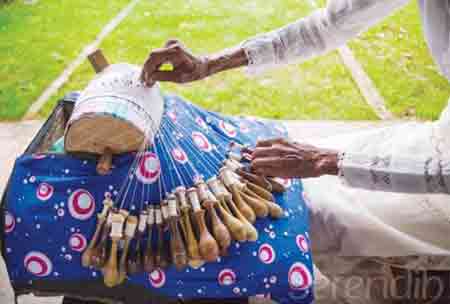
Beeralu weaving. Image courtesy: serendib.btoptions.lk

Jeththukara is an adjective in Sinhala that is used to describe something fancy or fashionable. Jeito in Portuguese means ‘fashion’. As Sri Lankan women married Portuguese men, they adopted the Portuguese style of dress. Their sense of fashion was a hybrid of European origin. We could assume that the conversion to Roman Catholicism might have provided an impetus in Sri Lankans to emulate Portuguese clothes. The Portuguese influence on Sri Lankan attire can be traced through the modern Sinhala lexicon.

Beeralu is a lace-making craft that is still practiced in Southern Province of Sri Lanka. Pillow Lace or Beeralu derives from the Portuguese word bilro (bobbin). The wig/false hair worn by Portuguese women was called cabelleira, havariya in Sinhala. Other attire-related words that find their origins in the Portuguese language include:

  • Avana ? (Port. abano, ‘fan’ )
  • Piyara ? (Port. poeira, ‘powder’)
  • Calesama ? (Port. calcao, ‘trouser’)
  • Bastama ? (Port. bastao, ‘walking stick’)

There are also borrowings from Portuguese describing Sri Lankan jewellery, and terms associated with sewing and cutting, such as:

  • Arungal ? (Port. argolinha, ‘ear-ring’)
  • Bottam Kasiya ? (Port. kasa de botão, ‘button-hole’)
  • Pathorama ? (Port. padrao, ‘pattern’)
  • Mosataraya ? (Port. mostra, ‘design’)
  • Lensuva ? (Port. lenco, ‘handkerchief’)
  • Alpenetiya ? (Port. alfenete, ‘pin’)

Vegetation And Cuisine

Vegetation-And-Cuisine

Yes, even kaju is a word we owe to the Portuguese. Image courtesy: iStock

In many ways, it was the Portuguese who transformed the island into the tropical paradise that Sri Lanka is often described to be. They introduced plants to their colonies during their voyages by transplanting fruits and vegetables from one continent to another: oranges, pineapples, maize, manioc, and tobacco are good examples of this. In 1658, the Portuguese were ousted by the Dutch, who subsequently colonised the coastal regions of Sri Lanka. They were amazed by the variety of vegetation in the island at that time. Among the everyday Sri Lankan food names that were influenced by the Portuguese are:

  • Kaju – (Port. caju, cashew)
  • Anoda – (Port. anona, custard apple)
  • Masan –(Port. maça, apple)
  • Manyokka – (Port. mandioca/tapioca, cassava)
  • Sidaran – (Port. sidrao, citron)
  • Artapal – (Dut. aard-appel, earth apple)
  • Pipinna – (Port. pepino, cucumber)

The Portuguese also introduced many recipes into Sri Lankan cuisine. Even the word kussiya (kitchen) comes from the Portuguese word cozinho.

The Portuguese ‘pudim’ is an egg custard with sauce (Wright, 1969). However, in contemporary Sri Lanka, pudim is a general term that embraces a variety of desserts.

Doce means ‘sweet’ or ‘candy’ in Portuguese. The sugar-glazed melon candy, aka puhul dosi, is a Sri Lankan delicacy loved by nearly everyone.

In Old Portuguese, bread was known as pan. Other food and food-related words influenced by Portuguese include:

  • Peththa ? (Port. fatio, ‘slice’)
  • Forno ? (Port. forno, ‘oven’)
  • Paralu (Paan) ? (Port. farelo, ‘wheat bran’)
  • Keju ? (Port. Quiejo, ‘cake’)
  • Bora (Saw Bora) ? (Port. Boroa, ‘semolina’)

Note: The Portuguese “g” corresponds to “k” in Sinhala, e.g. peekudu (Port. figado, ‘liver’) and vinakiri (Port. vinagre, ‘vinegar’).

Some Sri Lankan kitchen utensils also have Portuguese etyma:

  • Garappuva (Port. garfo, ‘fork’)
  • Guruleththuva (Port. gorgoletta, ‘earthen vessel’) ? the word derives from the old French gargole meaning ‘throat’ or ‘waterspout’, which is perhaps from garg-, imitative of throat sounds.

Other terms:

Good-old-rathinya

Good old rathinya – also a word we use thanks to colonial influence. Image courtesy dupress.com

It is no secret that Sri Lankans love their booze, and whether that was thanks to colonial influences or not is up for debate ? what we do know, however, is that the colonisers did lend us a few interesting words to use in relation to drinking:

  • Bebadda in Sinhala means drunkard. It comes from the Portuguese word bebado. Thabaruma is a tavern/bar which comes from the Portuguese word taberna.

Other words include:

  • Rathinya (Chinese firecrackers) ? this word is likely to have its origins in the Portuguese ratinho meaning ‘little rat’ and was probably so called due its appearance: the fuse for lighting the cracker resembles a rodent’s tail.
  • Kapothi! (finished, destroyed, lost) is a Sinhala expression influenced by the Dutch word kapot meaning ‘broken’.
  • Isthirikkaya (iron) comes from the Portuguese verb esticar and Dutch strikjzermeaning to ‘stretch and extend’.
  • Pagawa ? from the Portuguese paga, meaning bribe/payment.
  • The Negombo fish market (Lellama fish market) is a place where you can haggle with the fishermen. Lellama comes from the Portuguese noun Leilão meaning auction or sale. Keval karanava (to haggle) has origins of (Dutch. kibbel). Vendesiya (public auction) derives from the Portuguese word vendas (sales).
  • Kakkusiya (toilet) is a word that has Dutch origins. The literal translation of the Dutch word Kak-huis is ‘excreta house’.
  • It is believed that the Sinhala verb udav karanna comes from the Portuguese noun ajuda (ayudar in Spanish) meaning ‘help’.
  • Lasti (getting ready/being prepared) is a Sinhala verb which could be a loan word from the Portuguese lesto meaning quick, brisk, or ready.
  • Kenthiya (anger) is a corrupted word of the Portuguese adjective quente which means warm or hot.
  • Ranchuva in Sinhala means ‘a group’ ? the American Spanish rancho is a ‘mess-room’, originally, ‘group of people who eat together’. In Portuguese, rancho bears a similar meaning (Port. rancho, ‘soldiers’ quarters’).
    The language of the colonisers clearly lent their influence to pretty much all aspects of Sri Lankan lifestyles; so much so that we can safely conclude that Sri Lankans are in fact a lot more multicultural than we may have guessed.

Featured image: A 17th-century painting of Dutch explorer Joris van Spilbergen meeting with King Vimaladharmasuriya in 1602. Image courtesy familypedia.wikia.com


TAGGED:Aysha Maryam Cassim
Share This Article
Facebook Whatsapp Whatsapp LinkedIn Email Copy Link Print
Previous Article Elanka Humour – Jokes from the Aussies
Next Article COUNTRY-STYLE
FacebookLike
YoutubeSubscribe
LinkedInFollow
- Advertisement -
eLankaproperty - sell property in Sri Lanka, Sri Lanka property for sale, Sri Lanka real estate, Sri Lanka property listings, property marketplace Sri Lanka, land for sale Sri Lanka, houses for sale Sri Lanka, apartments for sale Sri Lanka, commercial property Sri Lanka, luxury villas Sri Lanka, Sri Lankan property investment, buy property in Sri Lanka, Colombo property for sale, beachfront property Sri Lanka, development land Sri Lanka, investment property Sri Lanka, property advertising Sri Lanka, real estate agents Sri Lanka, property brokers Sri Lanka, overseas Sri Lankan property buyers, Sri Lanka property website, list property online Sri Lanka, affordable property listings Sri Lanka, Sri Lanka homes for sale, Sri Lanka land investment, property developers Sri Lanka, real estate marketplace Sri Lanka, Sri Lanka commercial real estate, sell land in Sri Lanka, sell house in Sri Lanka, Sri Lanka property portal, global property marketplace Sri Lanka, Sri Lankan real estate investment, property management Sri Lanka, buy land Sri Lanka, residential property Sri Lanka, holiday homes Sri Lanka, Sri Lanka investment opportunities, real estate advertising Sri Lanka, eLankaProperty
- Advertisement -
ALTAIR
- Advertisement -
Ad image
eLanka Wedding
Most Read
Liverpool city Council

Liverpool faces $1.8 million funding cut as city grows

What Everyone with Diabetes Should Know-eLanka

What Everyone with Diabetes Should Know: The Truth-by Harold Gunatillake

Ashoka Colombage

Ashoka Colombage-by Gamini Kariyawasam

Digampathana-The Day the Navy Was Shattered – Sri Lanka Guardian

Digampathana: The Day the Navy Was Shattered – Sri Lanka Guardian-by Ravindra C Wijegunaratne

Shemara Wikramanayake: Sri Lankan Roots to Macquarie CEO

Shemara Wikramanayake: From Sri Lankan Beginnings to Leading Macquarie Group on the Global Stage

Related News
Navi Pillay Honoured
Articles

Navi Pillay Honoured: A Legacy of Peace, Justice and Human Rights

Sandika Hemakumari
Articles

Sandika Hemakumari to Captain Sri Lanka’s Women’s Sevens Squad at the Colombo Leg of the Asia Rugby Sevens Series

Sri Lankan junior tennis players
Articles

Three Sri Lankan Girls Reach the ATF Under-16 Quarter-Finals in Colombo

Otherland Galle Opens on Sri Lanka’s Southern Coast With a Locally Built Approach to Hospitality AI-generated illustration based on source material. No authentic photograph of the Otherland Galle property is embedded in this article. Otherland Hotels opened its first property, Otherland Galle, on 12 October 2026, introducing a 66-key lifestyle hotel that brings together accommodation, dining, music and locally curated experiences on Sri Lanka’s southern coast. The opening adds a new hospitality concept to a region known for its beaches, historic Galle Fort and established surf culture, with the hotel’s programme designed to encourage visitors to engage with the wider destination as well as the property. Located on Matara Road, Otherland Galle is approximately 400 metres from Dewata Beach and 2.8 kilometres from Galle Fort, the UNESCO World Heritage Site. The hotel draws on the area’s culinary traditions, creative communities and coastal way of life, positioning local experiences as a central part of its offer rather than an optional addition to a conventional hotel stay. Founded by Rishi Sreedharan, Samarth Gowda and Emanuel Siddhartha in partnership with Beryll Group, Otherland Hotels is built around the philosophy “Never the Same Twice”. Its approach combines private rooms and suites with shared accommodation and communal spaces intended for different kinds of travellers, from couples and groups of friends to solo visitors and culturally curious guests. The co-founders, pictured from left: Emanuel Siddhartha, Rishi Sreedharan and Samarth Gowda. Source photograph: Lanka Business News. A design-led mix of rooms and shared spaces Designed by Studio Camarada, led by Andre Camara, the hotel has been arranged as a series of interconnected spaces rather than a conventional sequence of corridors and separate facilities. Its interiors draw on the colours and materials of the southern coast, including sandy neutrals, ocean blues and earthy tones, alongside rattan, ash, hand-tufted textiles and marble finishes. The 66-key accommodation comprises 24 Ocean Rooms, 25 Terra Rooms, 12 suites and five dormitories. Room sizes range from 27 square metres to the 70-square-metre Patio Suite, while the property also includes rooms designed for guests with disabilities. The mix offers a range of accommodation formats within one property, including shared dormitory options alongside private rooms and suites. At ground level, Bar-kery combines several functions: reception, coffee shop, bakery, aperitivo counter and informal co-working space. Its Vinyl Corner invites guests to browse records and choose music, giving the communal area a more participatory character. Colombo Coffee Company has developed an exclusive signature blend for the hotel. AI-generated illustrative image based on the reported design approach; it is not a photograph of Otherland Galle. The rooftop venue Creatures brings together a restaurant, cocktail bar, infinity pool and music space, with 270-degree views of the Indian Ocean. It is intended to serve as a daytime dining and swimming venue as well as an evening social space, linking the hotel’s food and music programmes with its coastal setting. Sri Lankan flavours, music and a sense of place The food programme is led by Chef Rajeev Kumar and draws on Sri Lankan culinary traditions, alongside international influences and contemporary techniques. Dishes listed for the menu include King Coconut Ceviche, Yellowfin Tuna Tataki, Lankan Fish Cutlets and Devilled Pork Ribs glazed with kithul treacle. A Watalappam Brûlée brings a familiar Sri Lankan dessert into a contemporary format. Arijit Bose leads the cocktail programme, while Aneesha Thapa manages day-to-day operations. Music is another part of the hotel’s identity, with programming across Afro, R&B, folk, funk, jazz fusion, house, techno and electronica. The combination of food, music and shared spaces is intended to make the property relevant to both visitors and people from the surrounding area. Co-founder Samarth Gowda described the approach as one intended to make the hotel feel accessible and personal: > “Otherland Galle should feel like yours from the moment you walk in. Luxury has often come with a sense of distance, with places appearing impressive because they do not feel accessible to everyone. That is not what we are building. Everything here is designed around who you are and how you want to spend your time.” AI-generated illustration of ingredients associated with Sri Lankan culinary traditions; not a photograph of the hotel’s kitchen or menu. The Other Side: experiences created with local communities A key element of the concept is The Other Side, an experiences programme developed in collaboration with local surfers, fishermen, artisans, guides, chefs and musicians. The activities are designed to connect guests with people and places beyond the hotel, while drawing on knowledge and skills already present in the Galle region. The programme includes curry masterclasses, guided walks through Galle Fort and surf lessons at Dewata Beach. Further afield, guests can take whale-watching excursions off Mirissa or kayak through the mangroves of Koggala Lake. Rooftop sunset sessions, arrack tastings, beach cricket and tuk-tuk bar crawls are among the social activities described as part of the offer. This community-led model gives local participants a role in shaping and delivering visitor experiences, rather than presenting the area only as a backdrop for sightseeing. Its longer-term value will depend on how consistently these partnerships are sustained and how directly local contributors benefit from the activity they help create. Co-founder Rishi Sreedharan said: > “At Otherland, curiosity is the operating principle. We measure success by whether guests leave with a real sense of Galle. The surfers, fishermen, chefs and craftspeople who live here have helped build these experiences, and they are the ones bringing them to life.” AI-generated coastal illustration based on the article’s setting; it does not depict a verified view from the property. A new option for visitors to Galle The opening marks the first phase of Otherland Galle’s development. A gym, wellness centre and banquet facilities are planned for a subsequent phase. The property’s initial offer, however, is already structured around more than its room inventory: its communal areas, food and beverage venues, music programme and locally developed activities form a connected hospitality concept. For Sri Lankans abroad planning a visit home, the opening provides another option near Galle, with a programme that brings together coastal recreation, local food, heritage and community knowledge. For the Galle area, the approach places local contributors at the centre of the visitor experience. Whether the model makes a lasting contribution will be measured not only by the facilities it offers, but also by the strength and continuity of those relationships. The launch also reflects a wider interest among culturally curious travellers in experiences that extend beyond accommodation and conventional sightseeing. In Galle, where historic landmarks sit alongside a living coastal culture, the opportunity is to create hospitality that is carefully designed while remaining connected to the people and traditions that give the destination its character. Sources: Lanka Business News; Colombo Times; Hiru News Gold FM; SoulofHospitality. This article was written based on the source https://www.lankabusinessnews.com/otherland-hotels-makes-its-debut-in-galle/ and corroborated by https://colombotimes.net/otherland-hotels-makes-its-debut-in-galle/, https://hirunews.lk/goldfmnews/493932/otherland-galle-opens-with-66-rooms-introduces-dormitories-to-luxury-hotel-mix and https://www.soulofhospitality.com/business/hotel-openings/otherland-hotels-enters-sri-lanka-with-a-new-approach-to-lifestyle-hospitality, kindly email us at info@eLanka.com.au if any information needs to be corrected. Click here to receive your free copy of the eLanka Newsletter twice a week delivered directly to your inbox! At eLanka, we respect the rights of creators. If we have used an image you own and you'd like it removed, please email us at info@elanka.com.au and we’ll handle it promptly. Thanks. eLanka team eLanka Disclaimer Content published on eLanka may be created by the eLanka team, submitted by contributors or third parties, reproduced or adapted from other sources with appropriate source acknowledgement, or provided as promotional/advertising material by our clients. While eLanka takes reasonable care in preparing and publishing content, we do not warrant its completeness or accuracy. Views expressed are those of the respective authors or contributors and do not necessarily represent the views of eLanka. Third-party contributors, content providers and advertisers are responsible for the accuracy of material they supply and for ensuring they hold the necessary rights and permissions for its publication. Advertising and promotional content should not be regarded as an endorsement by eLanka of any product, service or claim.
Articles

Otherland Galle Opens on Sri Lanka’s Southern Coast With a Locally Built Approach to Hospitality

Dilmah SIAL Paris 2026
Articles

Dilmah’s Three Innovations Selected for SIAL Paris 2026 as Company Named a Top Five SIAL For Change Finalist

  • Quick Links:
  • Articles
  • DESMOND KELLY
  • Dr Harold Gunatillake
  • English Videos
  • Sri Lanka
  • Sinhala Videos
  • Obituaries
  • eLanka Newsletters
  • Sunil Thenabadu
  • Trevine Rodrigo
  • Dr. Harold Gunatillake
  • Tamil Videos
  • Sinhala Movies
  • eLanka Newsletter
  • Photos

eLanka

Your Trusted Source for News & Community Stories: Stay connected with reliable updates, inspiring features, and breaking news. From politics and technology to culture, lifestyle, and events, eLanka brings you stories that matter — keeping you informed, engaged, and connected 24/7.
Kerrie road, Oatlands , NSW 2117 , Australia.
Email : info@eLanka.com.au / rasangivjes@gmail.com.
WhatsApp : +61402905275 / +94775882546
  • About eLanka
  • Terms & Conditions

Disclaimer:
eLanka is committed to sharing positive and community-focused stories. We do not publish or endorse political, religious, or ethnic viewpoints. The content published on eLanka, including articles and newsletters, reflects the opinions and views of the respective authors and not those of eLanka. eLanka accepts no responsibility or liability for the accuracy, completeness, or consequences of any content provided by contributors.

(c) 2005 – 2025 eLanka Pty Ltd. All Rights Reserved.