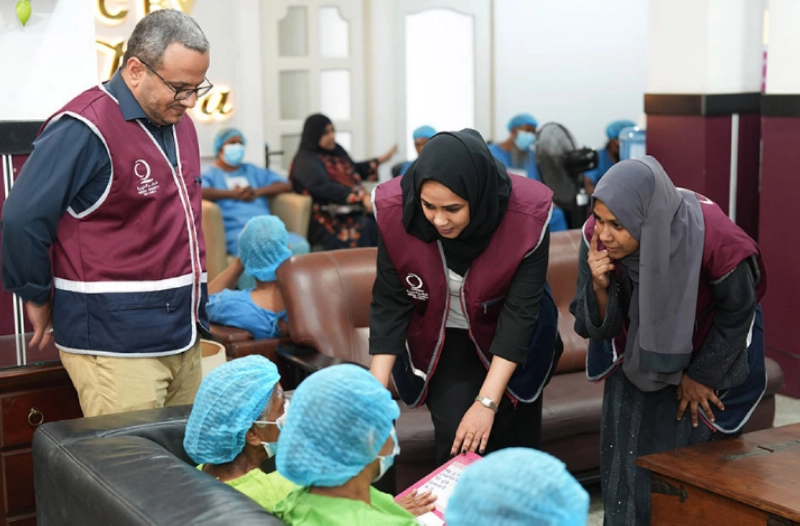
A vision-care initiative completed by Qatar Charity’s Sri Lanka Office has provided free treatment and corrective eyewear to hundreds of people, enabling 300 cataract surgeries and the distribution of 555 prescription spectacles to beneficiaries across the country.
The programme was implemented under Qatar Charity’s global health activities as part of the Challenge 27 Campaign, with support delivered through partnerships involving qualified medical professionals and healthcare institutions. According to a report published by Gulf Times on 23 August 2026, the initiative was designed to assist low-income families, elderly people affected by cataracts and schoolchildren whose education had been hindered by uncorrected vision problems.

Free examinations, surgery and spectacles
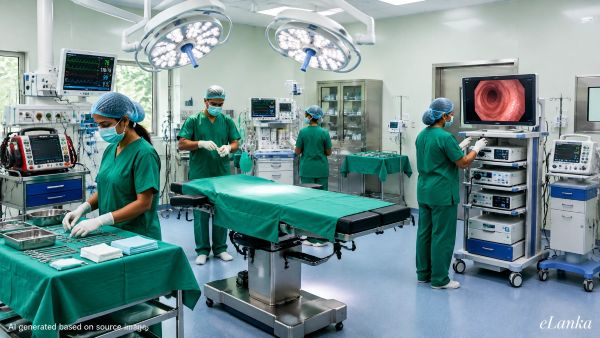
The project combined several stages of vision care, rather than focusing solely on surgical treatment. Beneficiaries were provided with eye examinations to identify their needs, cataract surgery where clinically appropriate and prescription spectacles for those requiring vision correction.
This integrated approach is particularly significant in communities where the cost of consultations, surgery or glasses may prevent people from seeking treatment. For elderly patients, cataracts can gradually interfere with mobility, household responsibilities and social participation, while for children, untreated vision difficulties can affect reading, classroom engagement and general educational progress.
By making the services available without charge, the initiative helped remove a substantial financial barrier for families with limited resources. The support was also directed towards people whose eye conditions could otherwise have continued to restrict their daily lives, thereby demonstrating the practical value of charitable healthcare partnerships.
The report stated that the project cost QR 282,480, representing a targeted investment in medical services and vision correction. Although the financial figure provides an indication of the scale of the programme, its wider importance is reflected in the number of people who received access to treatment that might otherwise have remained beyond their reach.
Support for schoolchildren
A total of 150 school students were included among those receiving vision support through prescription spectacles. This component gave the initiative a strong educational dimension, as clear vision is fundamental to reading textbooks, viewing classroom materials and participating confidently in school activities.

Vision problems in childhood are not always immediately recognised, particularly when a student adapts gradually to blurred sight or assumes that other pupils experience the classroom in the same way. Access to screening and corrective eyewear can therefore be instrumental in identifying difficulties before they become a persistent obstacle to learning.
The provision of spectacles does not merely represent the distribution of a physical item. It can also restore a student’s ability to read from a board, complete written work and engage more fully with lessons. In this respect, the school-based assistance formed an important part of a broader effort to protect educational opportunity among children from financially vulnerable households.
The initiative also illustrates how health programmes can produce benefits beyond the clinic. Cataract surgery may assist an older person in regaining independence, while prescription spectacles may help a child approach schoolwork with greater confidence. These outcomes demonstrate why accessible healthcare remains closely connected to family wellbeing, education and community participation.
Responding to preventable vision difficulties
Cataracts are associated with a clouding of the eye’s natural lens, which can result in increasingly blurred vision and difficulty carrying out ordinary activities. When suitable treatment is not accessible, the condition may become a serious limitation, particularly for older people.
The Qatar Charity programme responded to this need by linking patients with medical professionals and healthcare institutions capable of providing the required examinations and procedures. The use of institutional partnerships was important because effective vision care depends on more than goodwill; it requires clinical expertise, appropriate facilities, patient assessment and follow-up arrangements.
The initiative’s emphasis on free treatment also helped ensure that assistance was directed towards people for whom medical costs might have created an insurmountable obstacle. Low-income families and elderly patients were identified as important beneficiary groups, while students with uncorrected vision received targeted support through spectacles.

Part of a wider health programme
The vision-care project forms part of Qatar Charity’s broader health programme in Sri Lanka. The Gulf Times report noted that other activities include support for malnutrition initiatives involving children under five and pregnant women, together with assistance for chronic disease treatment.
Collectively, these health-related initiatives have benefited more than 2,000 cases, with a combined budget of QR 988,680, according to the report. The wider programme therefore extends beyond a single medical condition, addressing several areas in which timely assistance can improve the health and resilience of vulnerable communities.
Such work is particularly valuable when charitable organisations, medical professionals and local institutions operate in coordination. Medical partnerships can provide technical capacity, while community-level connections can help identify people who require support but may not otherwise approach formal services. The result is a more inclusive model of assistance in which resources are directed towards practical needs.
The programme also reflects the constructive role that international charitable organisations can play in supporting Sri Lankan communities. When such assistance is delivered through accountable medical channels and focused on clearly identified beneficiaries, it can complement existing healthcare services while extending access to people facing economic hardship.
A meaningful contribution to community wellbeing
The completion of 300 cataract surgeries and the distribution of 555 prescription spectacles represent a substantial contribution to public wellbeing in Sri Lanka. The figures indicate the reach of the initiative, while the inclusion of school students highlights the importance of addressing vision problems across different stages of life.
For older beneficiaries, restored sight may make everyday tasks more manageable and help preserve personal independence. For children, corrected vision can support classroom participation and reduce one avoidable barrier to educational progress. For families, free treatment can ease the financial pressure associated with essential healthcare.
The initiative stands as a positive example of how focused charitable action can create benefits at both individual and community levels. It also underlines the continuing value of health projects that combine early assessment, professional treatment and practical follow-up support.
eLanka regularly shares positive stories concerning Sri Lankan communities, humanitarian work and institutions that contribute to social progress. Related community and health-focused material can be found in the eLanka article archive, including a profile of a Sri Lankan medical professional in “His Humaneness Went Hand in Hand with His Expertise as a Surgeon”.
Source: https://www.gulf-times.com/article/731671/qatar/qatar-charity-restores-sight-for-hundreds-in-sri-lanka
This article was written based on the source https://www.gulf-times.com/article/731671/qatar/qatar-charity-restores-sight-for-hundreds-in-sri-lanka, kindly email us at info@eLanka.com.au if any information needs to be corrected.
(adsbygoogle = window.adsbygoogle || []).push({});
At eLanka, we respect the rights of creators. If we have used an image you own and you’d like it removed, please email us at info@elanka.com.au and we’ll handle it promptly.