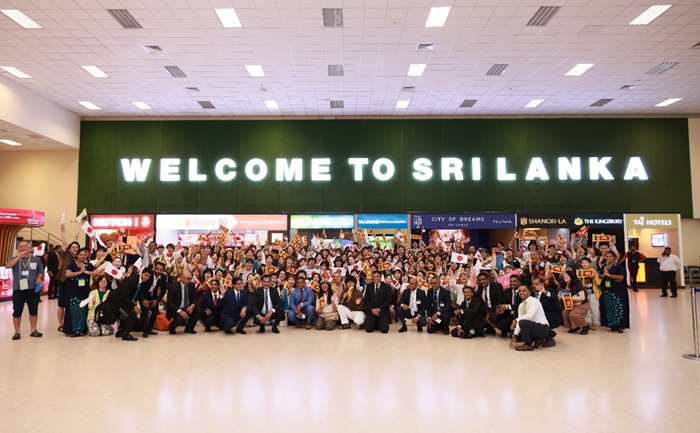
The largest-ever Japanese tourist group to visit Sri Lanka was warmly welcomed at Bandaranaike International Airport on 31 August 2026. Image: Newswire.
Sri Lanka has welcomed what Newswire has described as the largest-ever Japanese tourist group to visit the country, with 250 Japanese tourists arriving at Bandaranaike International Airport on Monday, 31 August 2026, in an occasion that represented a notable moment for the island’s tourism sector and a further opportunity for people-to-people connections between Japan and Sri Lanka.
The arrival was marked by a warm cultural reception at Bandaranaike International Airport, where a traditional Kandyan dance performance was organised by the Sri Lanka Tourism Promotion Bureau. The presentation provided an immediate introduction to one of Sri Lanka’s most recognisable artistic traditions, while also conveying the courtesy, colour and hospitality for which the island is widely known.
As part of the welcome, the visitors were presented with packs of Ceylon Tea sponsored by the Sri Lanka Tea Board. The gesture connected the arrival ceremony with one of Sri Lanka’s most enduring national industries, allowing the visiting group to receive a small but meaningful representation of the country’s tea heritage.
A significant welcome at Bandaranaike International Airport
The arrival of 250 Japanese tourists was significant not merely because of the size of the group, but also because it created a formal setting in which Sri Lankan cultural identity could be shared from the moment the visitors entered the country.
Bandaranaike International Airport, situated at Katunayake in the Western Province, serves as Sri Lanka’s principal international gateway, and the reception demonstrated how an airport welcome can become more than a routine arrival procedure when it is shaped around cultural presentation and mutual respect. The Kandyan dance performance introduced the visitors to a living tradition that has been preserved through generations, while the presentation of Ceylon Tea added a familiar and tangible expression of Sri Lankan hospitality.
The welcome was therefore replete with symbolic value. Music, movement, costume and tea were brought together in a concise presentation that reflected several dimensions of the island’s identity, without requiring an elaborate programme or a lengthy formal ceremony.

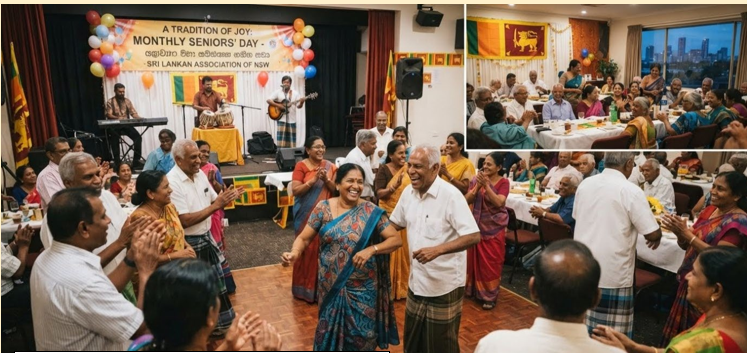
Traditional Kandyan dance remains an important expression of Sri Lanka’s cultural heritage and ceremonial hospitality. AI-generated based on source image.
Kandyan dance as a cultural bridge
Kandyan dance occupies an important place within Sri Lanka’s cultural heritage, having developed through traditions associated with the central hill country and later becoming recognised nationally as a powerful form of ceremonial and artistic expression.
Its distinctive movements, costumes and rhythmic patterns provide audiences with an immediate visual connection to Sri Lanka’s history. In an international welcome, the performance functions as both an artistic presentation and a cultural bridge, enabling visitors to encounter an element of Sri Lankan heritage through a form that is accessible, disciplined and visually compelling.
The performance organised by the Sri Lanka Tourism Promotion Bureau was particularly appropriate for the occasion because it placed culture at the centre of the welcome. The visiting Japanese group was not simply received as an arriving party; it was welcomed through a presentation that acknowledged the importance of shared understanding between nations.
Japan and Sri Lanka have maintained long-standing links across education, commerce, cultural exchange and community relationships. Such links are strengthened when visitors are introduced to the traditions, products and everyday forms of hospitality that give a country its character. In this context, the airport performance represented a modest yet instrumental contribution to a broader relationship between the two countries.
Ceylon Tea carries Sri Lanka’s story
The packs of Ceylon Tea sponsored by the Sri Lanka Tea Board added another important dimension to the reception. Tea is not only a major Sri Lankan product; it is also closely connected with the country’s geography, agricultural history and international reputation.
Sri Lanka’s tea-growing regions are associated with highland landscapes, carefully maintained estates and a production culture in which cultivation, processing and presentation have been refined over many decades. The name “Ceylon Tea” continues to carry a distinct identity in markets around the world, linking the modern product with the historical name by which Sri Lanka was known.
The presentation of tea packs at the airport was consequently both practical and symbolic. It offered the visitors a product that could be taken home, shared and remembered, while representing the work of growers, producers and institutions that sustain the national tea industry.

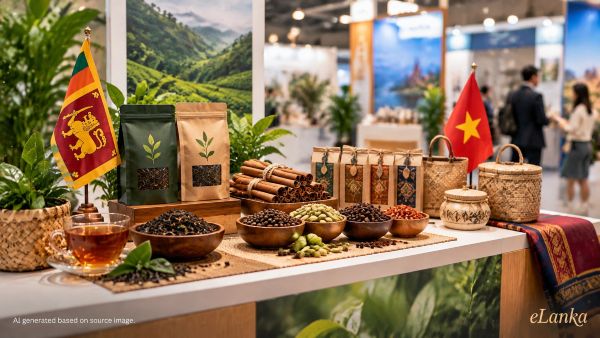
A cultural still life representing the enduring place of Ceylon Tea in Sri Lanka’s national identity. AI-generated based on source image.
The gesture also reflected a well-established principle in cultural exchange: a meaningful welcome often consists of details that can be experienced directly. A dance performance may introduce a tradition through sight and sound, while tea allows a visitor to carry a small part of that experience beyond the point of arrival.
Strengthening Japan–Sri Lanka people-to-people links
Large organised visits can create valuable opportunities for direct contact, particularly when the welcome is designed to acknowledge the cultural background of the host country. The arrival of this Japanese group offered Sri Lanka an opportunity to share hospitality in a manner that was both formal and personal.
People-to-people relationships are often built through repeated moments of goodwill rather than through a single event. A respectful greeting at an airport, a cultural performance and a locally recognised gift can contribute to positive impressions that continue beyond the visit itself. Such occasions also provide a platform through which Sri Lankan institutions can communicate the country’s openness and cultural confidence.
For Japanese visitors, the reception presented a concise introduction to Sri Lanka’s traditions. For Sri Lankan communities living in Australia, the United Kingdom, Canada, New Zealand and the United States, the occasion also offered a positive reminder of the cultural assets that continue to connect Sri Lankans worldwide with their heritage.
The significance of the event therefore extends beyond the airport. It reflects the potential for tourism, culture and national products to work together in creating stronger international understanding, while demonstrating that Sri Lankan hospitality can be expressed through carefully considered and authentic details.

An editorial representation of cultural exchange through shared hospitality and tea. AI-generated based on source image.
A positive moment for Sri Lanka’s cultural image
The welcome arranged for the 250 Japanese tourists highlighted the value of presenting Sri Lanka through its own cultural strengths. Kandyan dance and Ceylon Tea are established national symbols, but their continued use in contemporary international welcomes demonstrates that heritage remains relevant when it is presented with care and purpose.
The event also illustrated the importance of collaboration between public institutions. The Sri Lanka Tourism Promotion Bureau organised the cultural performance, while the Sri Lanka Tea Board sponsored the tea packs, allowing the airport reception to combine tourism promotion with the representation of a nationally important export industry.
Such cooperation could be viewed as an encouraging model for future cultural engagements, particularly where visitors are introduced to Sri Lanka through experiences that are authentic, concise and memorable. The most effective presentations are often those that avoid unnecessary embellishment and allow the country’s own traditions and products to speak for themselves.
For Sri Lankan expatriates and friends of Sri Lanka abroad, the occasion provides a welcome good-news story about the country’s continuing ability to build international connections through culture and hospitality. It also reinforces the importance of sharing positive developments that place Sri Lanka’s heritage, creativity and national products in an international setting.
eLanka continues to serve as a digital bridge for the global Sri Lankan community by sharing news, cultural stories, community developments and positive achievements from Sri Lanka and overseas. Readers can explore further heritage and community features through the eLanka Sri Lankan history collection, discover Sri Lankan cultural and community stories, and subscribe to the eLanka Newsletter for regular updates.
The arrival of Sri Lanka’s largest-ever Japanese tourist group, accompanied by Kandyan dance and Ceylon Tea, stands as a positive example of how cultural confidence and gracious hospitality can help strengthen the enduring relationship between two countries.
Source: https://www.newswire.lk/2026/09/01/sri-lanka-welcomes-largest%e2%80%91ever-japanese-tourist-group/
This article was written based on the source https://www.newswire.lk/2026/09/01/sri-lanka-welcomes-largest%e2%80%91ever-japanese-tourist-group/, kindly email us at info@eLanka.com.au if any information needs to be corrected.
(adsbygoogle = window.adsbygoogle || []).push({});
At eLanka, we respect the rights of creators. If we have used an image you own and you’d like it removed, please email us at info@elanka.com.au and we’ll handle it promptly.