


Sri Lanka’s Blue Swimming Crab Becomes the Country’s First MSC-Certified Fishery

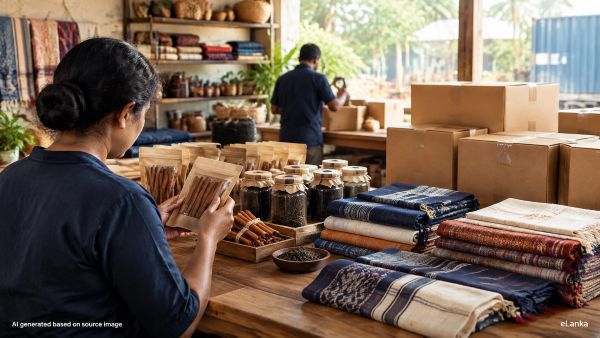
AI-generated illustration, displayed at 600px wide. It depicts a fishing scene and is not an authentic photograph of the fishery; an authentic Newswire image of crab processing appears below.
Sri Lanka’s North-Western blue swimming crab fishery has become the country’s first fishery to achieve certification against the Marine Stewardship Council (MSC) Fisheries Standard, marking a significant milestone for the coastal communities, seafood businesses and public institutions that have worked together for more than a decade to strengthen sustainable fishing practices.
Announced by the MSC on 5 November 2026, the certification recognises the fishery’s performance against an internationally recognised standard for environmental sustainability in fishing. The certification took effect on 4 November, according to Newswire. For Sri Lanka’s seafood sector, the achievement represents both a conservation milestone and an opportunity to build stronger connections with international buyers seeking responsibly sourced products.
A fishery rooted in Sri Lanka’s north-west
The certification covers the blue swimming crab, Portunus pelagicus, caught in two areas off Sri Lanka’s north-western coast: Palk Bay and the Gulf of Mannar. In these waters, small-scale fishers operate from traditional boats and small motorised vessels, using bottom-set gillnets to harvest crab for seafood markets in North America and Europe.
The fishery forms part of a wider coastal economy. Thousands of small-scale fishers depend on crab fishing for income, while collection centres and labour-intensive processing facilities connect landings with export markets. Those facilities employ thousands of women in the preparation of crab meat for export, making the health of the fishery important not only to fishing households but also to workers and families across its supply chain.

Authentic image supplied by Newswire. The photograph depicts crab processing; it is not a photograph of fishing activity.
More than a decade of shared work
The path towards certification began in 2013, when the Seafood Exporters’ Association of Sri Lanka, with support from the National Fisheries Institute Crab Council, brought stakeholders together to improve scientific understanding of crab stocks, assess fishing impacts on marine habitats and strengthen fisheries management.
Progress depended on sustained collaboration among fishing communities, seafood exporters, government authorities and other partners. Improved data collection over the past decade supported more robust scientific stock assessments and informed the development of harvest strategies and fishery management plans. Measures were also introduced to minimise impacts on non-target species and vulnerable marine life.
A further step was the introduction of a minimum legal purchasing size of 100 grams, approximately 117 millimetres, to help protect juvenile crabs. Taken together, these improvements reflect a gradual effort to build a stronger evidence base and make responsible management part of the fishery’s everyday practice.
Dr Steve Creech, Sri Lanka Blue Swimming Crab Fishery Improvement Project (FIP) Coordinator and Executive Director of pelagikos pvt ltd, described the partnership behind the result:
> “The success of the fishery improvement project in achieving MSC certification is built on a three-way partnership that promotes responsible harvesting by fishers, responsible purchasing by the seafood supply chain and collaborative fisheries management by the Department of Fisheries. Central to this approach has been the continuous collection and analysis of data on crab stocks and ecological impacts, and fisheries management. The scientific evidence gathered by pelagikos in collaboration with FIP members has been instrumental in enabling the two units of assessment (UoAs) to meet the MSC’s Standard.”
The emphasis on data, responsible harvesting and cooperation is central to the achievement: certification has followed years of coordinated work rather than a single intervention.
Livelihoods and market opportunity
Timothy O’Reilly, Co-Founder and Managing Director of Taprobane Seafoods Pvt Ltd, representing the client group, reflected on the long process and the prospects for the industry:
> “It’s remarkable to reflect that we began this journey shortly after the end of Sri Lanka’s 30-year civil conflict. Years of dedication and collaboration have brought us to this important milestone for the fishing communities we work with and Sri Lanka’s blue swimming crab industry. With leading global retailers committed to sourcing seafood from fisheries certified to the MSC Fisheries Standard, we now have an exciting opportunity to share our story, build new partnerships and supply regional and global markets with responsibly sourced Sri Lankan blue swimming crab carrying the MSC ecolabel.”
The MSC ecolabel helps identify seafood from a certified fishery to buyers and consumers, provided the product is handled through the required certified supply chain. For exporters, this can support engagement with retailers and food-service businesses that seek independently certified seafood. For Sri Lanka, the recognition strengthens the profile of a locally harvested product in competitive international markets.
John D. Paterson, Director of CM Blue Crab Pvt Ltd and co-client on the MSC certificate, highlighted the connection between investment, communities and the fishery’s future:
> “When we established our processing facility in Mannar in 2016, we invested in the long-term future of the fishery and its communities. MSC certification reflects years of dedicated collaboration to protect crab stocks while creating lasting livelihood opportunities for families in Mannar and Jaffna, and connecting local seafood production to international markets.”
The milestone is therefore significant beyond the export value of crab. Sustainable fishing practices are closely connected to the continued availability of the resource on which fishers, processing workers and seafood businesses rely. The work in Mannar and Jaffna illustrates how local livelihoods and sound management can be pursued together.
Susantha Kahawatte, Director General of Sri Lanka’s Department of Fisheries and Aquatic Resources, said:
> “The MSC certification of Sri Lanka’s blue swimming crab stocks mark an important milestone in our commitment to sustainable fisheries management through science-based decision-making, responsible fishing practices and collaboration between government, industry and coastal communities. This achievement supports the conservation of marine resources, safeguards fishing livelihoods and strengthens Sri Lanka’s position in international seafood markets. MSC certification demonstrates our commitment to the long-term sustainability and competitiveness of the fisheries sector.”
A regional example
Edouard le Bart, MSC Regional Director, congratulated the fishery’s participants and noted that Sri Lanka’s experience could offer useful lessons to other fisheries working towards improvements. He pointed to blue swimming crab Fishery Improvement Projects in neighbouring India, Thailand, Indonesia, Vietnam and the Philippines, adding that knowledge-sharing and stronger regional cooperation can help advance sustainable management across shared marine ecosystems.
For readers in Sri Lanka and overseas who follow the country’s seafood, sustainability and export sectors, the certification is a notable example of patient collaboration producing an internationally recognised result. It acknowledges improvements made over many years, while placing continued responsibility on the fishery and its partners to sustain those practices.
The achievement also highlights the potential of Sri Lanka’s coastal industries when scientific monitoring, community participation and market requirements are brought together. The blue swimming crab fishery’s first MSC certification is an important step for the sector, and a milestone whose lasting value will depend on maintaining the stewardship and cooperation that made it possible.
Sources:
- Marine Stewardship Council: https://www.msc.org/media-centre/press-releases/press-release/sri-lankan-blue-swimming-crab-fishery-achieves-msc-certification-following-decade-of-collaboration
- Newswire: https://www.newswire.lk/business/sri-lankas-blue-swimming-crab-becomes-the-countrys-first-msc-certified-fishery/
This article was written based on the source https://www.msc.org/media-centre/press-releases/press-release/sri-lankan-blue-swimming-crab-fishery-achieves-msc-certification-following-decade-of-collaboration and https://www.newswire.lk/business/sri-lankas-blue-swimming-crab-becomes-the-countrys-first-msc-certified-fishery/, kindly email us at info@eLanka.com.au if any information needs to be corrected.
At eLanka, we respect the rights of creators. If we have used an image you own and you’d like it removed, please email us at info@elanka.com.au and we’ll handle it promptly.
Thanks.
eLanka team
eLanka Disclaimer
Content published on eLanka may be created by the eLanka team, submitted by contributors or third parties, reproduced or adapted from other sources with appropriate source acknowledgement, or provided as promotional/advertising material by our clients. While eLanka takes reasonable care in preparing and publishing content, we do not warrant its completeness or accuracy. Views expressed are those of the respective authors or contributors and do not necessarily represent the views of eLanka. Third-party contributors, content providers and advertisers are responsible for the accuracy of material they supply and for ensuring they hold the necessary rights and permissions for its publication. Advertising and promotional content should not be regarded as an endorsement by eLanka of any product, service or claim.