The Story Behind Ceylon’s Arrack
The etymology of the word ‘arrack’ has always left room for some doubt ‒ partly because it has been around for a very long time. What’s more, the word is also used in different parts of South and Southeast Asia, to describe local beverages made from the fermented sap from various sources ‒ fruit, sugarcane, grain etc. ‒ depending on the country in question. In Sri Lanka, ‘arrack’ is the much-loved local drink, distilled from the sap of the coconut flower.
Diverse Origins

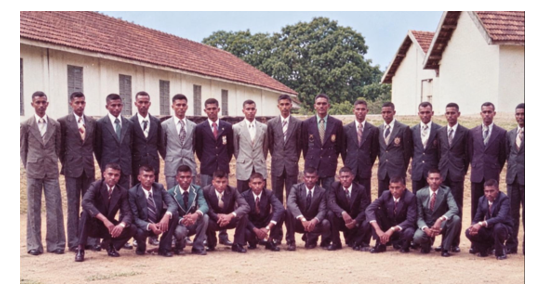
The Toddy Tappers of Sri Lanka – believed by some to be the inventors of Ceylon arrack, Sri Lanka’s much-loved local beverage.
Indian philologers believed the name derived from the areca nut, a palm seed originating from India that was used in the production of multiple varieties of arrack. The Arabs, too, meanwhile, claim credit for the invention of arrack, stating that the word arrack was derived from the Arabic word araq, which translates to ‘perspiration’ in English. Others believe that Sri Lankans were the creators of arrack, which was discovered when tapping for toddy; thus, the word arrack was believed to have derived from the Sinhalese word arrakku. The difference between arrack and toddy lies in the production process, as toddy is converted to arrack when it undergoes distillation. Whatever the origins of this beverage may be, Sri Lanka has a rich history of tapping for toddy and today Sri Lanka is the main palm sap-based arrack exporter in the world.
Historical records of toddy and arrack can be traced back to 5th century A.D, however it is safe to assume that the spirit has been around for much longer. Although there are no written records of this, oral tales and paintings have told stories of Kings in Sri Lanka who indulged in toddy and it was also believed to be a popular choice of drink amongst ancient warriors. The Kings had small coconut plantations of their own, and were producing their own toddy and arrack for personal consumption. Internationally, the conversion of fruit to alcohol requires adding yeast, but the Sri Lankans of long ago fermented their toddy differently. The sap of the coconut was extracted and stored in the morning, letting the heat of the day spark the airborne yeast, resulting in fermentation. Therefore, fermentation of arrack already existed prior to colonisation, without the use of additional yeast or other ingredients used by the Dutch and the British.
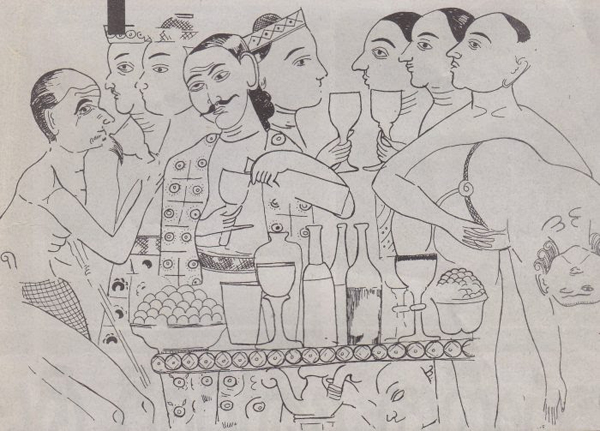
Artwork depicting Sri Lankans of long ago enjoying arrack after a battle. Image courtesy:
The Effects Of Colonisation
Interestingly, it was the colonisation of Sri Lanka under the Dutch rule in 1658 that resulted in the development of the arrack industry. By the time the British took over in 1802, the entire coastal plain was dedicated to coconut plantations for the production of toddy and arrack, and arrack was already being exported to Penang, Singapore, Madras, Bombay, Malabar and the Coromandel Coasts. The British encouraged the export of arrack in 1810-1802 from 37,500-93,000 gallons per year to 790,397 in 1802-1813. In 1813, the arrack industry saw a steady decline due to restrictions, tariffs, and excise duties levied by importing countries and by 1910 the export of arrack came to a complete stop.
The period between 1834 and 1924 saw the biggest change in the local arrack industry. In 1834, the Excise Ordinance of Ceylon gradually created an excise system for the entire country, tightening laws and preventing the manufacture of arrack without a permit. In 1924, the Excise Department of Ceylon established new policies which controlled the manufacturing process of arrack to improve its quality. The government policies slowly pushed out the small manufacturers of arrack and the industry was controlled by eight large distilleries. No longer was arrack fermented in copper pots; it was now produced on a large scale using up-to-date machinery.
Post-Colonisation
After the changes in regulations and the departure of the British, the State Distilleries Corporation was incorporated in 1974, and it took over the production of alcohol, while the Excise Department remained a monitoring body. This resulted in a government monopoly in the sale of arrack. In 1989, the Premadasa Cabinet, the central Government during this time, made a decision to convert the State Distillery Corporation to a limited company and the ownership was taken over by the Colombo Stock Exchange (CSE) in 1992. The privatisation of the State Distilleries Corporation improved the production and the supply of arrack around island, and the volume of liquor produced increased from 14,888,965 liters to 38,456,990 liters between 1991 and 2007.
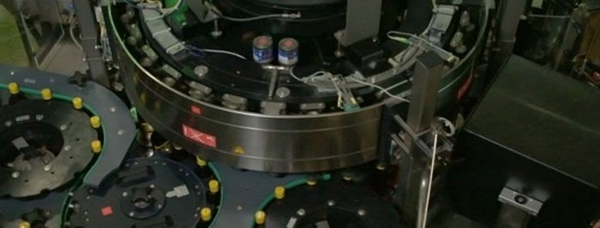
The privatisation of the State Distillery Corporation, the increase of alcohol consumption and production, as well as other factors, resulted in the government introducing policies to control, reduce, and perhaps eliminate the consumption of alcohol in Sri Lanka. In 1998, the government at the time introduced a National Alcohol Policy that included a ban on alcohol-related advertising on television, print, and radio. Another policy under National Alcohol Policy introduced a permit for sale of alcohol at bars, restaurants, and hotels. Furthermore, the government introduced taxes on the consumer for both alcohol and tobacco related products. Though the taxes were introduced, the consumption of alcohol did not reduce as much as expected. This was mostly due to illegal, private alcohol production.

Arrack Today
Today, in Sri Lanka, alcohol consumption has become a growing health issue, especially amongst men. There are also concerns that more adolescents and young adults will take on this habit in spite of the legal drinking age being 21. In the recent past, going by sales records, beer was believed to be the most consumed alcoholic beverage amongst Sri Lankans. In 2003, 19.3 million litres of beer was produced in the country and in 2007 there was a 53 percent increase in sales. The trend was is correlation to the price of the alcoholic beverage, as it was one of the cheaper alcoholic beverages in Sri Lanka. To reduce the consumption of beer, in 2016 the current Government implemented a 27 percent tax increase on mild beer and a 32 percent tax increase on strong beer. By the end of 2016, there was another increase, resulting in a 70 percent increase overall. This resulted in a fall in beer sales; however, tax on arrack, Sri Lanka’s famous local alcoholic beverage, although possessing a higher alcohol concentration, was only increased by 24 percent. Taxes notwithstanding, there has been a 10 percent increase in arrack sales.
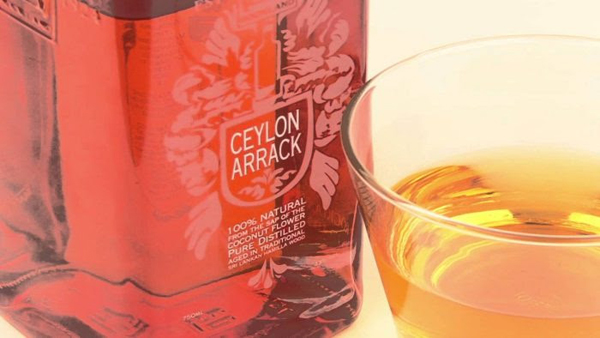
With a rich history and a creative art of production, Ceylon arrack is now loved internationally. It is fascinating indeed, how a beverage of ancient times has remained popular to this day.