



Students from 27 Universities Take Centre Stage as Sri Lanka AI Week 2026 Kicks Off
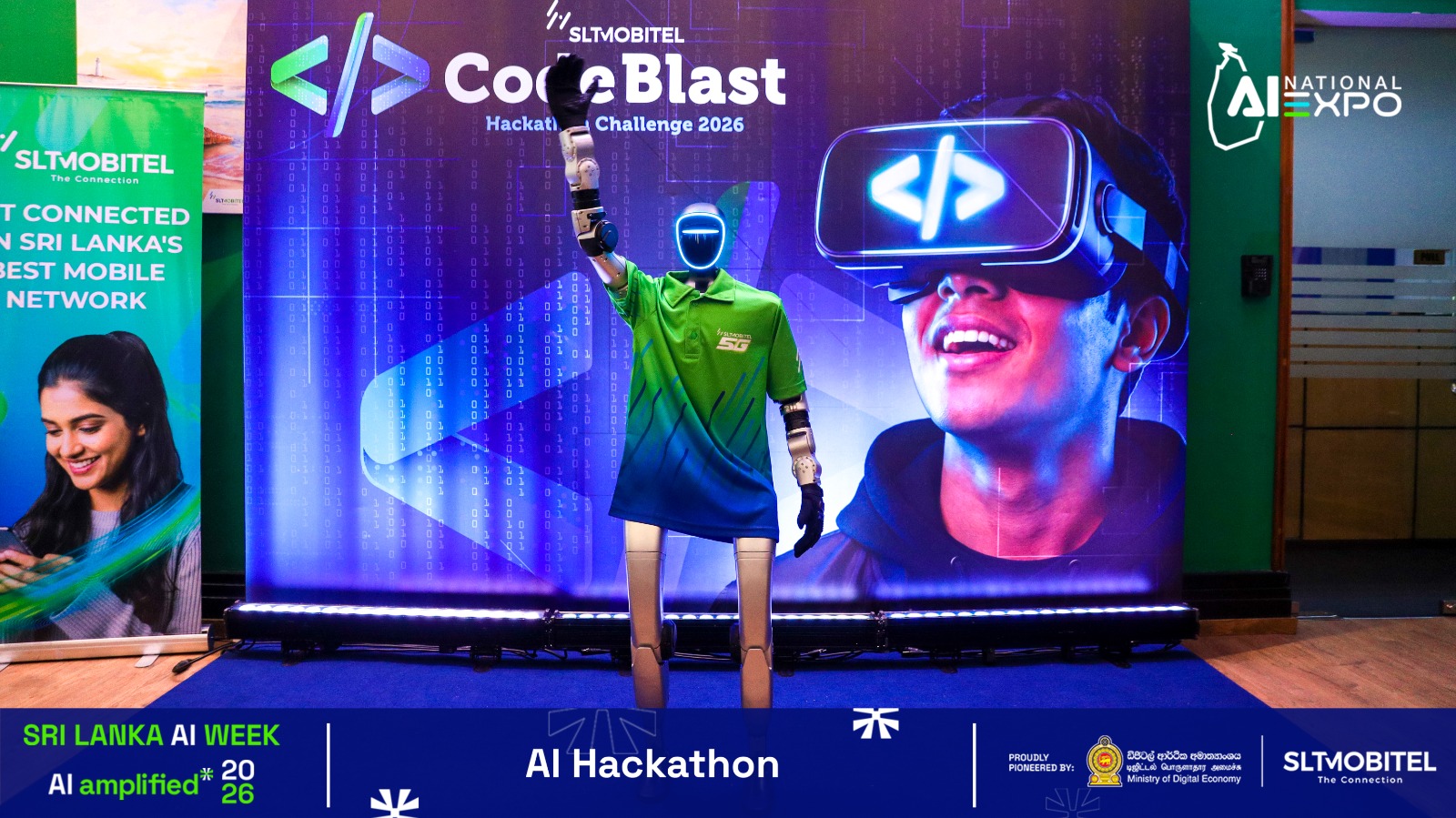
Sri Lanka has placed its universities at the centre of a national effort to develop artificial intelligence capability, with students from 27 public and private universities participating in an AI hackathon as Sri Lanka AI Week 2026 begins across Colombo.
Organised by the Ministry of Digital Economy and SLT-MOBITEL under the theme “AI Amplified”, the programme is taking place from 25 to 30 September 2026, bringing together students, educators, technology companies, innovators, public institutions and members of the wider community. The opening hackathon is intended to demonstrate the creativity, technical knowledge and practical problem-solving abilities of Sri Lanka’s emerging technology talent.
The initiative represents a constructive attempt to connect higher education with the fast-changing requirements of the digital economy, while also introducing the public to the ways in which artificial intelligence is already being applied, or could be applied, in everyday life.

AI-generated illustration based on the source image. The supplied illustrations from the source article could not be embedded, so no authentic photograph is used in this article.
A national platform for young technology talent
The AI hackathon marks the beginning of Sri Lanka AI Week 2026 and gives university students an opportunity to work on practical challenges rather than engage solely with artificial intelligence as a theoretical subject.
Hackathons generally bring participants together for a concentrated period of experimentation, teamwork and solution development. Students are expected to combine their academic knowledge with creativity, research and technical judgement, while learning how to explain their ideas in a setting that includes peers, mentors and representatives of the technology sector.
The participation of 27 universities gives the programme a significant national dimension. Talent development cannot depend on one campus, one faculty or one specialist group, particularly when artificial intelligence is expected to influence many parts of the economy. Students from different institutions may bring different academic backgrounds, regional experiences and ideas about how technology can respond to local needs.

AI-generated illustration: a small student team working on an artificial intelligence project in a Colombo university setting.
This broad participation also provides universities with an opportunity to observe the interests and capabilities of their students, while enabling employers and technology organisations to see how young people approach real problems. Courses and academic research can remain separate from industry unless students are given opportunities to work with practical challenges and employers are able to understand what emerging graduates can contribute.
AI Amplified and Sri Lanka’s digital ambitions
Sri Lanka AI Week 2026 has been presented as a platform for innovation, collaboration and talent development, with the broader objectives of increasing public awareness of artificial intelligence opportunities and supporting the country’s emerging digital and technology ecosystem.
The organisers have also identified the ambition of positioning Sri Lanka as an artificial intelligence hub in South Asia. That remains an objective rather than an outcome already achieved, and the distinction is important. A week of events can create visibility, encourage dialogue and establish useful connections, but it cannot by itself create a mature national technology sector.
Sri Lanka’s progress will ultimately depend on whether the relationships formed during AI Week continue through university courses, research partnerships, internships, entrepreneurship programmes and commercial projects. The event therefore serves as a valuable starting point, but its long-term contribution will be determined by the quality and continuity of the work that follows.
Artificial intelligence is increasingly being used to analyse information, assist customer services, improve planning and support decision-making. It is also being examined in sectors such as agriculture, healthcare, education, banking and financial services. For Sri Lanka, this creates an opportunity to develop solutions suited to local languages, local operating conditions and the needs of businesses and public institutions.
Public exhibition to showcase practical applications
Following the hackathon, the AI Week programme will expand to an AI exhibition at Monarch Imperial Colombo on 29 and 30 September.
The exhibition is scheduled to be open to the public from 8:00 a.m. to 8:00 p.m., with more than 35 exhibitors expected to participate. International technology brands including Huawei, ZTE, Google and Microsoft are expected to be represented, giving visitors the opportunity to view examples of artificial intelligence applications beyond the boundaries of university laboratories.

AI-generated illustration: an illustrative public exhibition showing the potential uses of AI in education, agriculture, healthcare and financial services.
The public-facing nature of the exhibition is significant because artificial intelligence can often appear distant or highly technical when discussed only through specialist terminology. Demonstrations connected to ordinary activities may help visitors understand how the technology can support teachers, farmers, medical professionals, financial institutions and small businesses.
The exhibition is also expected to encourage wider discussion about the limits and responsibilities associated with artificial intelligence. Public awareness should not be based only on excitement about new tools; it should also include an understanding of reliability, privacy, security, fairness and the importance of human oversight.
Building lasting capability beyond one week
The participation of 27 universities is encouraging, but Sri Lanka’s education system will need more than a single national programme to build lasting artificial intelligence capability.
Universities require teachers with current knowledge, access to suitable computing resources, opportunities for research and connections with organisations capable of testing ideas in real settings. Students also need sustained access to laboratories, software, data and mentors, as well as opportunities to continue developing their skills after a competition has ended.
Strong artificial intelligence education should include more than the use of specialised tools. It should be built on basic digital skills, mathematics, data understanding and careful testing, while also teaching students to consider privacy, safety and fairness. An individual who understands how to generate an output but cannot assess its accuracy or consequences is not yet fully prepared to use the technology responsibly.

AI-generated illustration: responsible artificial intelligence education focused on data literacy, testing, privacy and fairness.
The same principles apply to businesses. Organisations may use artificial intelligence to organise information, identify patterns, support service teams or improve resource planning, but effective adoption requires reliable data, suitable systems and employees who can check whether an output is appropriate.
A stronger local talent pool could help Sri Lankan companies adapt technology to local customer needs and develop new products within the country. However, those benefits will depend on continuing investment, meaningful cooperation between universities and employers, and the creation of professional opportunities for graduates with relevant skills.
A positive beginning with realistic expectations
Sri Lanka AI Week 2026 provides an important opportunity for students to demonstrate their abilities while allowing universities, technology companies and public institutions to consider how a stronger national artificial intelligence ecosystem might be built.
The presence of students from 27 public and private universities signals that the development of technology talent is being approached as a national concern rather than as the responsibility of a single institution. The hackathon gives young people a platform, while the exhibition is designed to make artificial intelligence more visible and understandable to the public.
The wider ambition of making Sri Lanka an AI hub in South Asia is considerable, and it will require sustained effort in education, research, infrastructure, business development and responsible regulation. Nevertheless, the decision to place young people and universities at the centre of the programme is a constructive step.
Sri Lanka AI Week 2026 is therefore best understood as the beginning of a longer process. Its immediate value lies in encouraging students to solve practical problems, helping institutions form new connections and showing the public how artificial intelligence may affect different areas of life. Its lasting importance will be measured by what students, universities, businesses and public institutions are able to build together after the week concludes.
eLanka continues to share positive stories about Sri Lankan education, innovation and professional achievement through its latest news and articles, while its business directory provides a platform for organisations serving the global Sri Lankan community.
Source: https://www.newswire.lk/business/sri-lankas-next-generation-of-ai-talent-takes-centre-stage-as-ai-week-2026-kicks-off/
This article was written based on the source https://www.newswire.lk/business/sri-lankas-next-generation-of-ai-talent-takes-centre-stage-as-ai-week-2026-kicks-off/, kindly email us at info@eLanka.com.au if any information needs to be corrected.
At eLanka, we respect the rights of creators. If we have used an image you own and you’d like it removed, please email us at info@elanka.com.au and we’ll handle it promptly.
Thanks.
eLanka team
eLanka Disclaimer
Content published on eLanka may be created by the eLanka team, submitted by contributors or third parties, reproduced or adapted from other sources with appropriate source acknowledgement, or provided as promotional/advertising material by our clients. While eLanka takes reasonable care in preparing and publishing content, we do not warrant its completeness or accuracy. Views expressed are those of the respective authors or contributors and do not necessarily represent the views of eLanka. Third-party contributors, content providers and advertisers are responsible for the accuracy of material they supply and for ensuring they hold the necessary rights and permissions for its publication. Advertising and promotional content should not be regarded as an endorsement by eLanka of any product, service or claim.