The Changing Faces of Galle Face

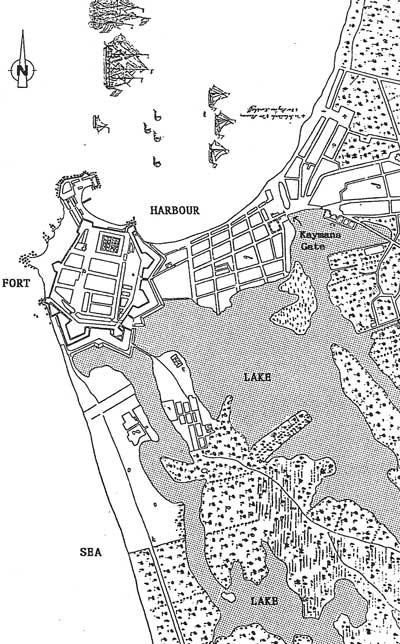
On the other hand, the British, who succeeded the Dutch in 1789, spent their efforts in reclaiming much of the lake area, believing that this would alleviate the flooding of Colombo’s low-lying areas. The original open stretch on the Southern side of the Fort (now known as Galle Face Esplanade) somehow gained more
 land around its periphery. Many of the new buildings that adorn the skyline of Slave Island (which owes its name to the slave tenements confined to a moat-surrounded land mass during the Dutch period) are in this reclaimed area of the Beira Lake.The open “Green” stretch was only seldom used for recreation under the Portuguese and Dutch occupations. This changed during the first decades of the 19th century, when it came into its own as the amusement, exercise, and sports venue that it is used as today.
The Galle Face Burial Grounds
Galle Face hosted the site of the first British burial grounds for over half a century from 1803, until the tombstones were translocated to the General Cemetery at Kanaththa in 1877. This land may have been a part of the site that was reclaimed by the Dutch Administration of the East India Company around 1700-1750.
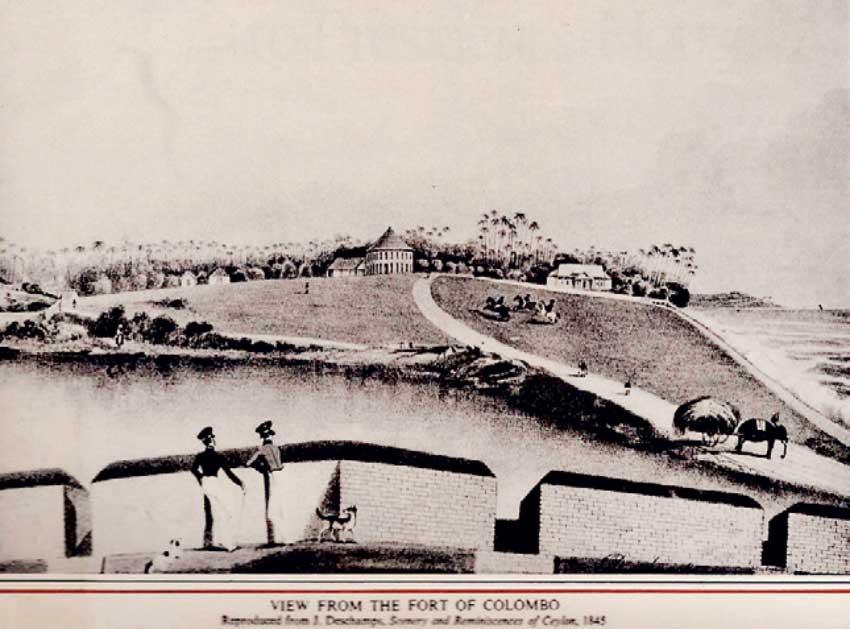
VIEW OF THE FORT OF COLOMBO – JOHN DESCHAMPS 1845
[See Map of Colombo, 1750]. The timber palisade enclosing the cemetery and the tombstones are clearly indicated in the views of the Galle Face in the colored engravings by John Deschamps [1848]. The burials were necessitated by the British army’s heavy military casualties from the wars with the King of Kandy during the administration of Governor North between 1801-1805.
For years, the Galle Face Cemetery was known as the “Padre Bailey’s Godown,” after the Archdeacon Bailey who officiated at the burials. J. P. Lewis’s “Tombstones and Monuments of Ceylon,” records the inscriptions on the headstones.
The open stretch of land outside the South Gate of the Colombo Fort was the site of military executions. In close proximity, at the northern end of the current esplanade, featured a guardhouse and a large block of wood: a “whipping post” where punishments were administered by public flogging.
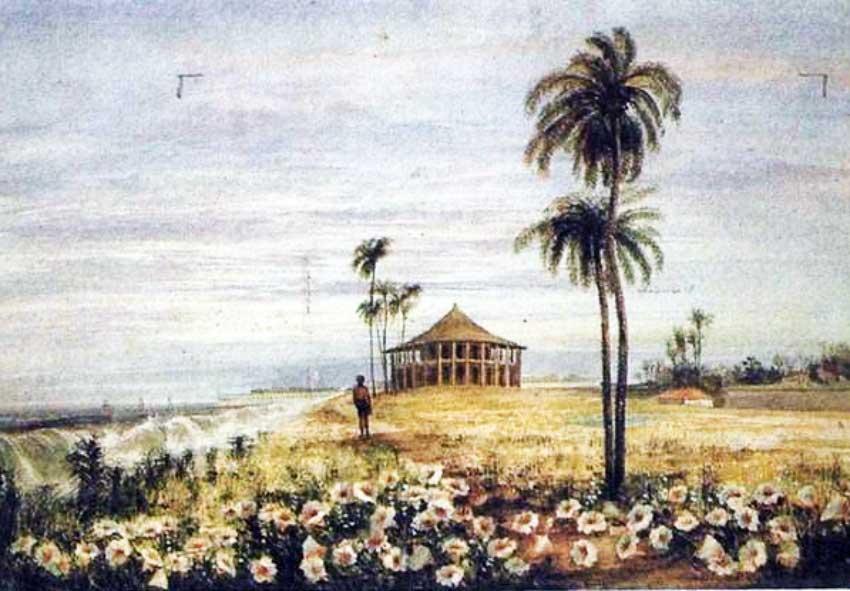
ANDREW NICHOLL 1804-1886 -WATERCOLOR OF GALLE FACE
The Esplanade and the Recreation Galle Face Green
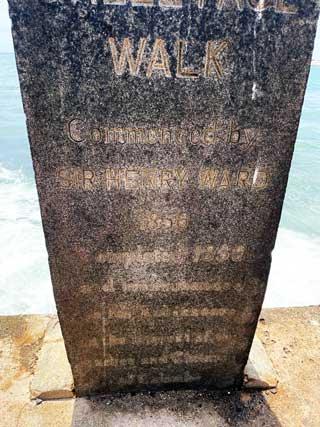
In 1853, the sea-front walk of the Galle Face was constructed by Governor Henry Ward. An inscription on the pillar midway through the walk still stands; it reads “Galle Face Walk completed in 1856 and recommended to his successors in the interest of the Ladies and Children of Colombo.”
Henry Charles, the author of “Ceylon and the Cingalese” compared Galle Face Green to Hyde Park in London. “At half past five the “Galle Face, or the Hyde Park of Colombo, begins to wear an animated appearance, there being many vehicles and horses in motion. Every description of conveyance to be seen driving around the Galle Face, from the Long Acre Built carriages of the Governor, the dashing phaeton of the wealthy merchant, the unassuming gig, the country- built palanquin and the humble bandy.”
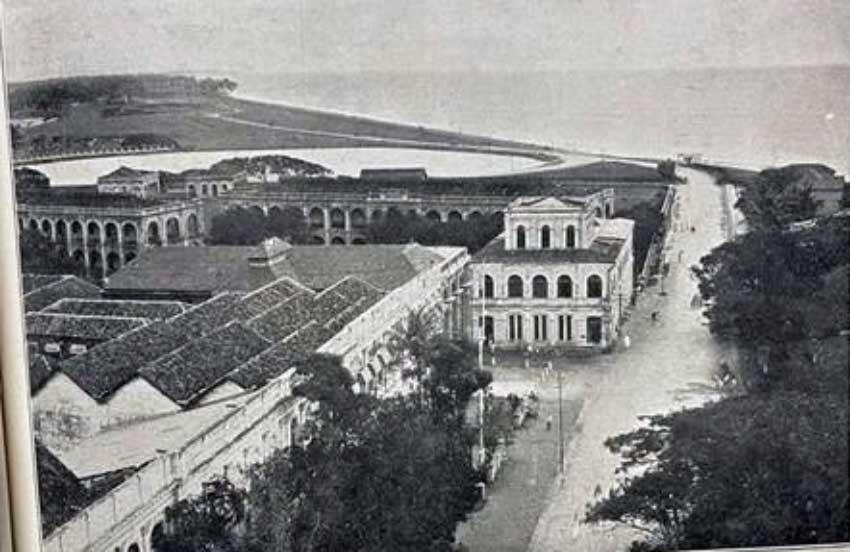
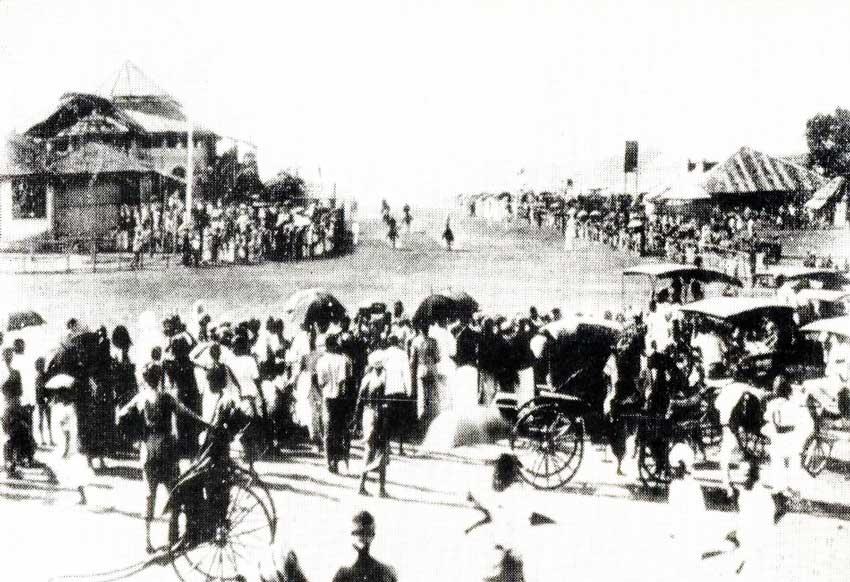
THE GALLE FACE EARLY 20TH CENTURY PROMENADE
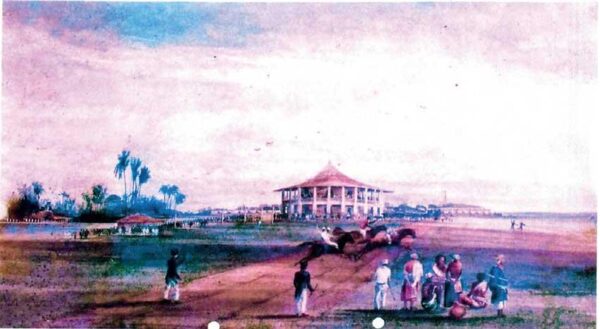
The Galle Face Esplanade by John Deschamps shows the view from the ramparts of the Fort of Colombo facing the Galle Face Green. In the foreground are two Royal Military officers enjoying the scene. The Beira Lake, which was used for aquatic sports, the Round Pavilion, and Grand Stand of the Race Course are also in the background. The large bungalow towards the right of their view is the building that was later replaced by the Galle Face Hotel. The country house in the distant far right is the home of Governor Maitland, which later became the Mount Lavinia Hotel. The Race Bungalow, as the Grand Stand was later called, became The Colombo Club and still exists within the premises of the Taj Hotel.
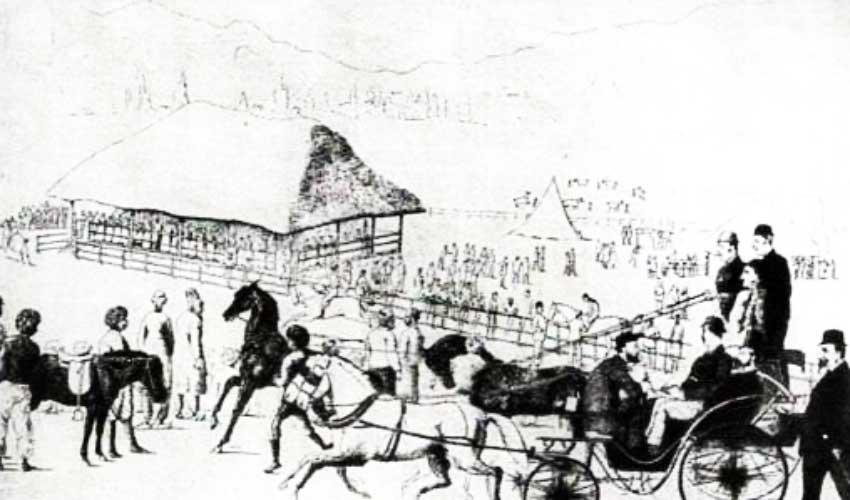
In 1829, Sir Edward Barnes introduced horse racing at Galle Face after leveling a mile and a quarter of the grounds. While the upper floor of the conical-roofed race stand had the best views of the horse racing, it was also the venue for grand balls. The verandahs of the ball room were used for card playing, darts, and other favorite past times. By the 1830s, cricket and a whole host of Victorian sports and leisure activities were introduced and enjoyed by both the British and middle class locals, making it the most popular space in Colombo. 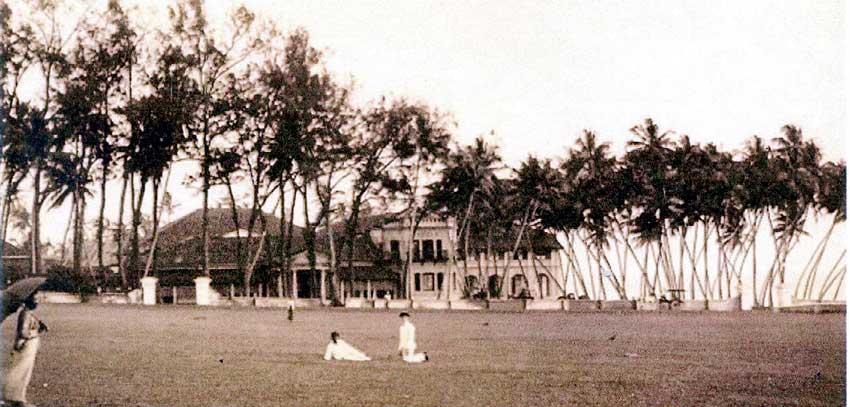
THE BUNGALOW THAT EXISTED AT THE SITE OF THE CURRENT GALLE FACE HOTEL
The Galle Face Railway Line Controversy (1873-75)
The railway line from Fort to the coast was originally planned to cut through the Galle Face Green. The Railway authorities set out an intended rail track from Maradana (the first railway station in Ceylon), Colombo Fort to Moratuwa cutting across Galle Face created a major controversy which involved the public, the legislative council, and the Governor of Ceylon.
The Times of Dec 4, 1873 stated – It is intended “to carry a line from a station to be constructed in the vacant plot near the Lotus Pond road, where passengers and goods from the Fort may be loaded, and where trains may run in connection with the railway station at Maradana; from the Fort Station, the line will diverge at the Police Station on the Galle Face, and skirt the sea-beach as far as Mount Lavinia”.
Public discontent at the impending desecration of the Galle Face walk soon became articulate; but the official trace by the railway planners did not appear to admit any change. On October 14, 1874, the Governor gave another version where he stated, “Inconvenience has been apprehended from trains running so near the road of the Galle Face, but care shall be taken that the train shall not run during evening.”
Some of the members of the Council were still discontent and by January 6, 1875 the tender notices for the construction of the Southern Line were published in the public press. The debate continued. The Government was prominently reminded of Sir Henry Ward’s recommendation of Galle Face to the Women and Children of Colombo by the Council and the public refused to be reconciled of this infringement. Yet the notices calling for tenders did not weaken the effort to save the Galle Face Walk.
The Council reminded the Governor of Galle Face’s dedication to the public and refused that it be desecrated and rendered unsafe by the “snorting and rattling and smoking vapors of the railway train.” The Governor responded by accepting the protest, since they represented the ladies of Colombo who were afraid that they will be deprived of their drive, and stated “I feel there is a good deal in this objection.”
On March 13, 1875, the Government took serious notice of the protests and assured the public that an alternate route will be used, which prompted the Observer in proclaiming in its issue of 15th March, 1875: “GALLE FACE SAVED.”
Subsequently, the railway line from Fort as we see it today is connected to Compani Vidiya via an underground tunnel to the coast at Kollupitiya, honoring the decision to leave Galle Face Green untouched.
The public recreation space and sacredness of Galle Face was saved, and allowed Sri Lankans to witness the historic mass independence rally on February 4th 1948, Radio Ceylon broadcasts that were heard as far as Mount Everest, legendary school cricket matches, and most recently, the peaceful protests of the Aragalaya. The current legislators should learn their history and maintain the freedom and sanctity of this earth lung that is the only true free space in Colombo.