News & Community eLanka

eLanka

Thursday, 15 Oct 2026
  • Home
  • Read History
  • Articles
    • eLanka Journalists
  • Events
  • Useful links
    • Obituaries
    • Seeking to Contact
    • eLanka Newsletters
    • Weekly Events and Advertisements
    • eLanka Testimonials
    • Sri Lanka Newspapers
    • Sri Lanka TV LIVE
    • Sri Lanka Radio
    • eLanka Recepies
  • Gallery
  • Contact
Newsletter
Sri lankan news
  • eLanka Weddings
  • Property
  • eLanka Shop
  • Business Directory
eLankaeLanka
Font ResizerAa
Search
  • Home
  • Read History
  • Articles
    • eLanka Journalists
  • Events
  • Useful links
    • Obituaries
    • Seeking to Contact
    • eLanka Newsletters
    • Weekly Events and Advertisements
    • eLanka Testimonials
    • Sri Lanka Newspapers
    • Sri Lanka TV LIVE
    • Sri Lanka Radio
    • eLanka Recepies
  • Gallery
  • Contact
Follow US
© 2005 – 2026 eLanka Pty Ltd. All Rights Reserved.
Home » Goodnews Stories Srilankan Expats » Articles » ‘There is no money left’: Covid crisis leaves Sri Lanka on brink of bankruptcy
Articles

‘There is no money left’: Covid crisis leaves Sri Lanka on brink of bankruptcy

eLanka admin
Last updated: January 6, 2022 6:42 pm
By
eLanka admin
ByeLanka admin
Follow:
Share
9 Min Read
SHARE
Views: 36

‘There is no money left’: Covid crisis leaves Sri Lanka on brink of bankruptcy

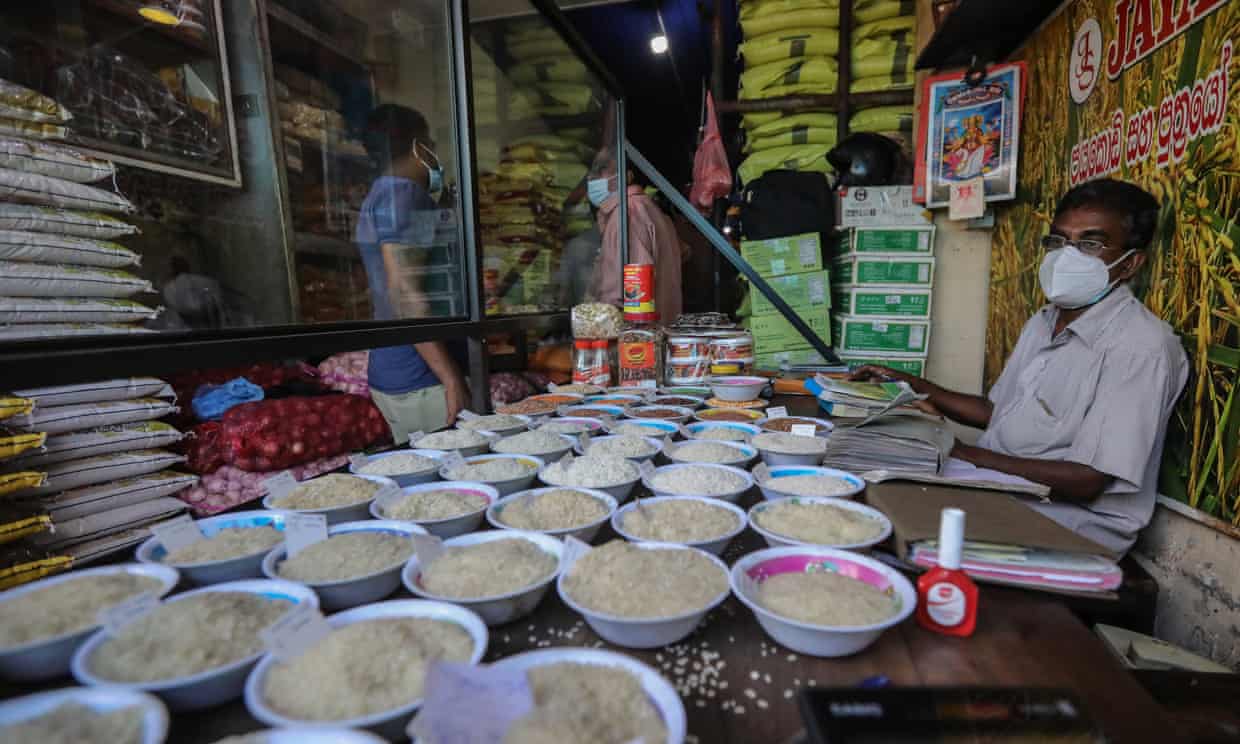
A rice wholesaler

A rice wholesaler plies his trade in Pettah, a commercial hub in Colombo, Sri Lanka. The military has been given power to control prices of food essentials, such as rice. Photograph: Chamila Karunarathne/EPASource:Theguardian

Half a million people have sunk into poverty since the pandemic struck, with rising costs forcing many to cut back on food

  • Coronavirus – latest updates
  • See all our coronavirus coverage

Sri Lanka is facing a deepening financial and humanitarian crisis with fears it could go bankrupt in 2022 as inflation rises to record levels, food prices rocket and its coffers run dry.

The meltdown faced by the government, led by the strongman president Gotabaya Rajapaksa, is in part caused by the immediate impact of the Covid crisis and the loss of tourism but is compounded by high government spending and tax cuts eroding state revenues, vast debt repayments to China and foreign exchange reserves at their lowest levels in a decade. Inflation has meanwhile been spurred by the government printing money to pay off domestic loans and foreign bonds.

The World Bank estimates 500,000 people have fallen below the poverty line since the beginning of the pandemic, the equivalent of five years’ progress in fighting poverty.

Inflation hit a record high of 11.1% in November and escalating prices have left those who were previously well off struggling to feed their families, while basic goods are now unaffordable for many. After Rajapaksa declared Sri Lanka to be in an economic emergency, the military was given power to ensure essential items, including rice and sugar, were sold at set government prices – but it has done little to ease people’s woes.
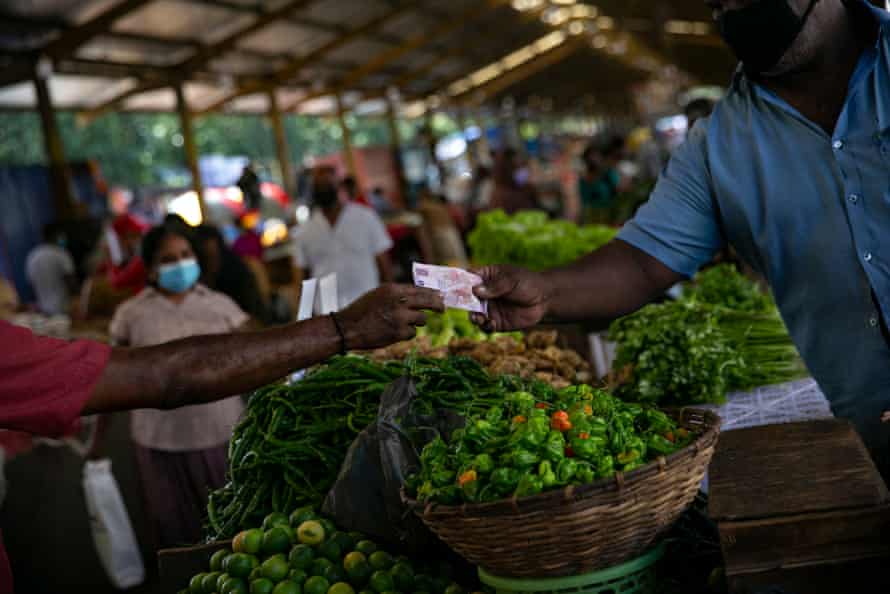
A man pays for vegetables at a market in Colombo.
A man pays for vegetables at a market in Colombo. Escalating prices have left those who were previously well off struggling to feed their families. Photograph: Allison Joyce/Getty Images

Anurudda Paranagama, a chauffeur in the capital, Colombo, took on a second job to pay for rising food costs and cover the loan on his car but it was not enough. “It is very difficult for me to repay the loan. When I have to pay electricity and water bills and spend on food, there is no money left,” he said, adding that his family now eats two meals a day instead of three.

He described how his village grocer was opening 1kg packets of milk powder and dividing it into packs of 100g because his customers could not afford the whole packet. “We now buy 100g of beans when we used to buy 1kg for the week,” said Paranagama.

The loss of jobs and vital foreign revenue from tourism, which usually contributes more than 10% of GDP, has been substantial, with more than 200,000 people losing their livelihoods in the travel and tourism sectors, according to the World Travel and Tourism Council.

The situation has got so bad that long queues have formed at the passport office as one in four Sri Lankans, mostly the young and educated, say they want to leave the country. For older citizens, it is reminiscent of the early 1970s when import controls and low production at home caused severe shortages of basic commodities and caused long queues for bread, milk and rice.
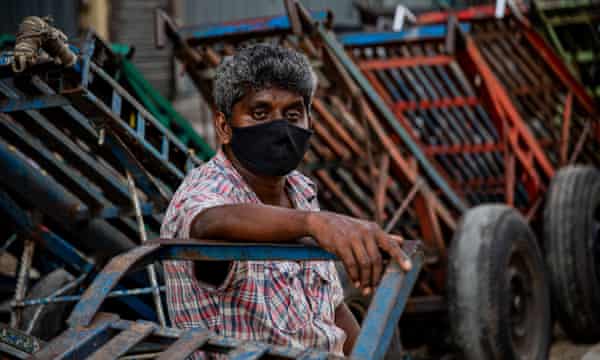
A man working outdoors in Colombo
One of the most pressing problems for Sri Lanka is its huge foreign debt burden. Photograph: Vimukthi Embuldeniya/Pacific Press/Rex/Shutterstock

The former central bank deputy governor WA Wijewardena warned the struggles of ordinary people would exacerbate the financial crisis, which would in turn make life harder for them. “When the economic crisis deepens beyond redemption, it is inevitable that the country will have a financial crisis too,” he said. “Both will reduce food security by lowering production and failing to import due to foreign exchange scarcities. At that point, it will be a humanitarian crisis.”

One of the most pressing problems for Sri Lanka is its huge foreign debt burden, in particular to China. It owes China more than $5bn in debt and last year took an additional $1bn loan from Beijing to help with its acute financial crisis, which is being paid in instalments.

In the next 12 months, in the government and private sector, Sri Lanka will be required to repay an estimated $7.3bn in domestic and foreign loans, including a $500m international sovereign bond repayment in January. However, as of November, available foreign currency reserves were just $1.6bn.

In an usual approach, government minister Ramesh Pathirana said they hoped to settle their past oil debts with Iran by paying them with tea, sending them $5m worth of tea every month in order to save “ much needed currency”.

The opposition MP and economist Harsha de Silva recently told parliament that foreign currency reserves would be -$437m by January next year, while the total foreign debt to service would be $4.8bn from February to October 2022. “The nation will be totally bankrupt,” he said.

Central Bank Governor Ajith Nivard Cabraal made public assurances that Sri Lanka could pay off its debts “seamlessly” but Wijewardena said the country was at substantial risk of defaulting on its repayments, which would have catastrophic economic consequences.

Meanwhile, Rajapaksa’s sudden decision in May to ban all fertiliser and pesticides and force farmers to go organic without warning has brought a formerly prosperous agricultural community to its knees as many farmers, who had become used to using – and often overusing – fertiliser and pesticides, were suddenly left without ways to produce healthy crops or combat weeds and insects. Many fearing a loss decided not to cultivate crops at all, adding to the food shortages in Sri Lanka.
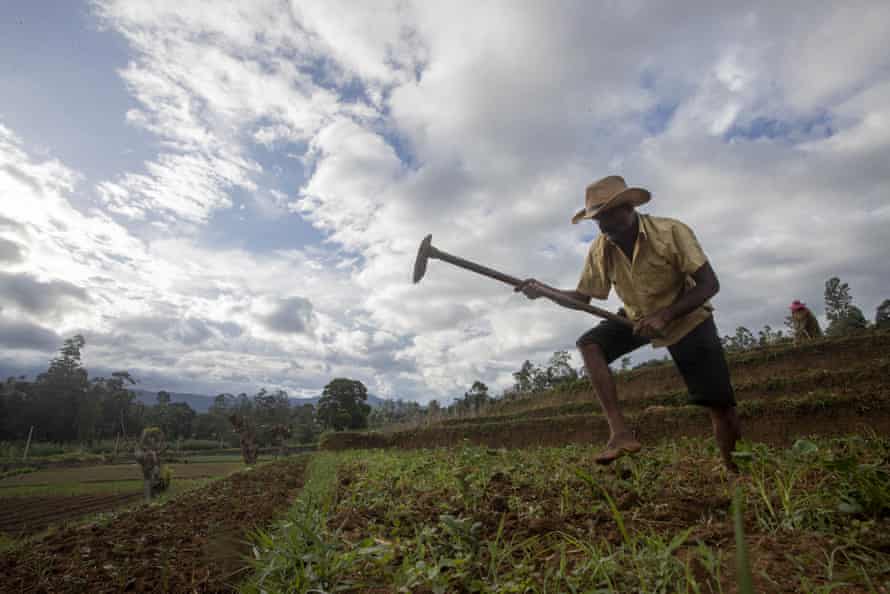
A vegetable farmer removes weeds in his potato field in Keppetipola.
A government decision in May to ban all fertiliser and pesticides has forced farmers to go organic without warning. Photograph: Eranga Jayawardena/AP

The government made a dramatic U-turn in late October and farmers are now struggling to cover the high costs of imported fertiliser without help.

“The costs of cultivating paddy [rice] have gone up astronomically … The government has no money for fertiliser subsidies. Many of us farmers are reluctant to invest money because we don’t know if we will make any profit,” said one farmer, Ranjit Hulugalle.

In an attempt temporarily to ease the problems and stave off difficult and most likely unpopular policies, the government has resorted to temporary relief measures, such as credit lines to import foods, medicines and fuel from its neighbouring ally India, as well as currency swaps from India, China and Bangladesh and loans to purchase petroleum from Oman. However, these loans provide only short-term relief and have to be paid back quickly at high interest rates, adding to Sri Lanka’s debt load.

Anushka Shanuka, a personal trainer, was among those who used to have a comfortable life but now is struggling to get by. “We can’t live the way we used to before the pandemic,” he said, saying the prices of vegetables had gone up by more than 50%.

“The government promised to help us but nothing came, so we are just managing the best we can. I don’t know how much longer we can go on like this.”

 This article was amended on 6 January 2022. “Cultivating paddy” refers to rice, not wheat as an earlier version said.
TAGGED:Ajith Nivard CabraalChamila KarunarathneRanjit Hulugalle
Share This Article
Facebook Whatsapp Whatsapp LinkedIn Email Copy Link Print
Previous Article Sri Lanka will be bankrupt by January: Harsha -BY Shenal Fernando Sri Lanka will be bankrupt by January: Harsha -BY Shenal Fernando
Next Article NARAMA (නෑරම) Official Music Video NARAMA (නෑරම) Official Music Video – Sandun Perera Ft Smokio | Chamath Sangeeth
FacebookLike
YoutubeSubscribe
LinkedInFollow
- Advertisement -
eLankaproperty - sell property in Sri Lanka, Sri Lanka property for sale, Sri Lanka real estate, Sri Lanka property listings, property marketplace Sri Lanka, land for sale Sri Lanka, houses for sale Sri Lanka, apartments for sale Sri Lanka, commercial property Sri Lanka, luxury villas Sri Lanka, Sri Lankan property investment, buy property in Sri Lanka, Colombo property for sale, beachfront property Sri Lanka, development land Sri Lanka, investment property Sri Lanka, property advertising Sri Lanka, real estate agents Sri Lanka, property brokers Sri Lanka, overseas Sri Lankan property buyers, Sri Lanka property website, list property online Sri Lanka, affordable property listings Sri Lanka, Sri Lanka homes for sale, Sri Lanka land investment, property developers Sri Lanka, real estate marketplace Sri Lanka, Sri Lanka commercial real estate, sell land in Sri Lanka, sell house in Sri Lanka, Sri Lanka property portal, global property marketplace Sri Lanka, Sri Lankan real estate investment, property management Sri Lanka, buy land Sri Lanka, residential property Sri Lanka, holiday homes Sri Lanka, Sri Lanka investment opportunities, real estate advertising Sri Lanka, eLankaProperty
- Advertisement -
ALTAIR
- Advertisement -
Ad image
eLanka Wedding
Most Read
Liverpool city Council

Liverpool faces $1.8 million funding cut as city grows

What Everyone with Diabetes Should Know-eLanka

What Everyone with Diabetes Should Know: The Truth-by Harold Gunatillake

Ashoka Colombage

Ashoka Colombage-by Gamini Kariyawasam

Digampathana-The Day the Navy Was Shattered – Sri Lanka Guardian

Digampathana: The Day the Navy Was Shattered – Sri Lanka Guardian-by Ravindra C Wijegunaratne

Shemara Wikramanayake: Sri Lankan Roots to Macquarie CEO

Shemara Wikramanayake: From Sri Lankan Beginnings to Leading Macquarie Group on the Global Stage

Related News
Navi Pillay Honoured
Articles

Navi Pillay Honoured: A Legacy of Peace, Justice and Human Rights

Sandika Hemakumari
Articles

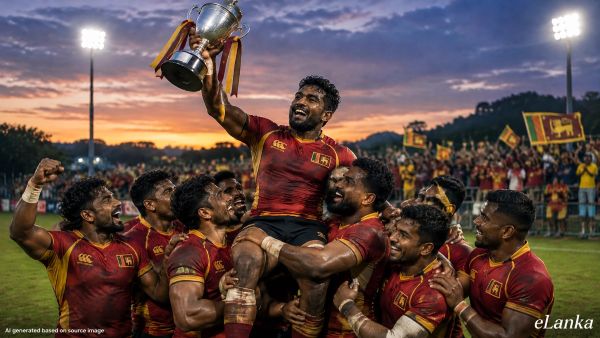
Sandika Hemakumari to Captain Sri Lanka’s Women’s Sevens Squad at the Colombo Leg of the Asia Rugby Sevens Series

Sri Lankan junior tennis players
Articles

Three Sri Lankan Girls Reach the ATF Under-16 Quarter-Finals in Colombo

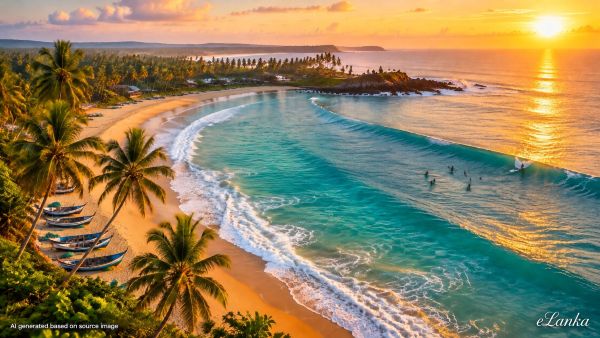
Otherland Galle Opens on Sri Lanka’s Southern Coast With a Locally Built Approach to Hospitality AI-generated illustration based on source material. No authentic photograph of the Otherland Galle property is embedded in this article. Otherland Hotels opened its first property, Otherland Galle, on 12 October 2026, introducing a 66-key lifestyle hotel that brings together accommodation, dining, music and locally curated experiences on Sri Lanka’s southern coast. The opening adds a new hospitality concept to a region known for its beaches, historic Galle Fort and established surf culture, with the hotel’s programme designed to encourage visitors to engage with the wider destination as well as the property. Located on Matara Road, Otherland Galle is approximately 400 metres from Dewata Beach and 2.8 kilometres from Galle Fort, the UNESCO World Heritage Site. The hotel draws on the area’s culinary traditions, creative communities and coastal way of life, positioning local experiences as a central part of its offer rather than an optional addition to a conventional hotel stay. Founded by Rishi Sreedharan, Samarth Gowda and Emanuel Siddhartha in partnership with Beryll Group, Otherland Hotels is built around the philosophy “Never the Same Twice”. Its approach combines private rooms and suites with shared accommodation and communal spaces intended for different kinds of travellers, from couples and groups of friends to solo visitors and culturally curious guests. The co-founders, pictured from left: Emanuel Siddhartha, Rishi Sreedharan and Samarth Gowda. Source photograph: Lanka Business News. A design-led mix of rooms and shared spaces Designed by Studio Camarada, led by Andre Camara, the hotel has been arranged as a series of interconnected spaces rather than a conventional sequence of corridors and separate facilities. Its interiors draw on the colours and materials of the southern coast, including sandy neutrals, ocean blues and earthy tones, alongside rattan, ash, hand-tufted textiles and marble finishes. The 66-key accommodation comprises 24 Ocean Rooms, 25 Terra Rooms, 12 suites and five dormitories. Room sizes range from 27 square metres to the 70-square-metre Patio Suite, while the property also includes rooms designed for guests with disabilities. The mix offers a range of accommodation formats within one property, including shared dormitory options alongside private rooms and suites. At ground level, Bar-kery combines several functions: reception, coffee shop, bakery, aperitivo counter and informal co-working space. Its Vinyl Corner invites guests to browse records and choose music, giving the communal area a more participatory character. Colombo Coffee Company has developed an exclusive signature blend for the hotel. AI-generated illustrative image based on the reported design approach; it is not a photograph of Otherland Galle. The rooftop venue Creatures brings together a restaurant, cocktail bar, infinity pool and music space, with 270-degree views of the Indian Ocean. It is intended to serve as a daytime dining and swimming venue as well as an evening social space, linking the hotel’s food and music programmes with its coastal setting. Sri Lankan flavours, music and a sense of place The food programme is led by Chef Rajeev Kumar and draws on Sri Lankan culinary traditions, alongside international influences and contemporary techniques. Dishes listed for the menu include King Coconut Ceviche, Yellowfin Tuna Tataki, Lankan Fish Cutlets and Devilled Pork Ribs glazed with kithul treacle. A Watalappam Brûlée brings a familiar Sri Lankan dessert into a contemporary format. Arijit Bose leads the cocktail programme, while Aneesha Thapa manages day-to-day operations. Music is another part of the hotel’s identity, with programming across Afro, R&B, folk, funk, jazz fusion, house, techno and electronica. The combination of food, music and shared spaces is intended to make the property relevant to both visitors and people from the surrounding area. Co-founder Samarth Gowda described the approach as one intended to make the hotel feel accessible and personal: > “Otherland Galle should feel like yours from the moment you walk in. Luxury has often come with a sense of distance, with places appearing impressive because they do not feel accessible to everyone. That is not what we are building. Everything here is designed around who you are and how you want to spend your time.” AI-generated illustration of ingredients associated with Sri Lankan culinary traditions; not a photograph of the hotel’s kitchen or menu. The Other Side: experiences created with local communities A key element of the concept is The Other Side, an experiences programme developed in collaboration with local surfers, fishermen, artisans, guides, chefs and musicians. The activities are designed to connect guests with people and places beyond the hotel, while drawing on knowledge and skills already present in the Galle region. The programme includes curry masterclasses, guided walks through Galle Fort and surf lessons at Dewata Beach. Further afield, guests can take whale-watching excursions off Mirissa or kayak through the mangroves of Koggala Lake. Rooftop sunset sessions, arrack tastings, beach cricket and tuk-tuk bar crawls are among the social activities described as part of the offer. This community-led model gives local participants a role in shaping and delivering visitor experiences, rather than presenting the area only as a backdrop for sightseeing. Its longer-term value will depend on how consistently these partnerships are sustained and how directly local contributors benefit from the activity they help create. Co-founder Rishi Sreedharan said: > “At Otherland, curiosity is the operating principle. We measure success by whether guests leave with a real sense of Galle. The surfers, fishermen, chefs and craftspeople who live here have helped build these experiences, and they are the ones bringing them to life.” AI-generated coastal illustration based on the article’s setting; it does not depict a verified view from the property. A new option for visitors to Galle The opening marks the first phase of Otherland Galle’s development. A gym, wellness centre and banquet facilities are planned for a subsequent phase. The property’s initial offer, however, is already structured around more than its room inventory: its communal areas, food and beverage venues, music programme and locally developed activities form a connected hospitality concept. For Sri Lankans abroad planning a visit home, the opening provides another option near Galle, with a programme that brings together coastal recreation, local food, heritage and community knowledge. For the Galle area, the approach places local contributors at the centre of the visitor experience. Whether the model makes a lasting contribution will be measured not only by the facilities it offers, but also by the strength and continuity of those relationships. The launch also reflects a wider interest among culturally curious travellers in experiences that extend beyond accommodation and conventional sightseeing. In Galle, where historic landmarks sit alongside a living coastal culture, the opportunity is to create hospitality that is carefully designed while remaining connected to the people and traditions that give the destination its character. Sources: Lanka Business News; Colombo Times; Hiru News Gold FM; SoulofHospitality. This article was written based on the source https://www.lankabusinessnews.com/otherland-hotels-makes-its-debut-in-galle/ and corroborated by https://colombotimes.net/otherland-hotels-makes-its-debut-in-galle/, https://hirunews.lk/goldfmnews/493932/otherland-galle-opens-with-66-rooms-introduces-dormitories-to-luxury-hotel-mix and https://www.soulofhospitality.com/business/hotel-openings/otherland-hotels-enters-sri-lanka-with-a-new-approach-to-lifestyle-hospitality, kindly email us at info@eLanka.com.au if any information needs to be corrected. Click here to receive your free copy of the eLanka Newsletter twice a week delivered directly to your inbox! At eLanka, we respect the rights of creators. If we have used an image you own and you'd like it removed, please email us at info@elanka.com.au and we’ll handle it promptly. Thanks. eLanka team eLanka Disclaimer Content published on eLanka may be created by the eLanka team, submitted by contributors or third parties, reproduced or adapted from other sources with appropriate source acknowledgement, or provided as promotional/advertising material by our clients. While eLanka takes reasonable care in preparing and publishing content, we do not warrant its completeness or accuracy. Views expressed are those of the respective authors or contributors and do not necessarily represent the views of eLanka. Third-party contributors, content providers and advertisers are responsible for the accuracy of material they supply and for ensuring they hold the necessary rights and permissions for its publication. Advertising and promotional content should not be regarded as an endorsement by eLanka of any product, service or claim.
Articles

Otherland Galle Opens on Sri Lanka’s Southern Coast With a Locally Built Approach to Hospitality

Dilmah SIAL Paris 2026
Articles

Dilmah’s Three Innovations Selected for SIAL Paris 2026 as Company Named a Top Five SIAL For Change Finalist

  • Quick Links:
  • Articles
  • DESMOND KELLY
  • Dr Harold Gunatillake
  • English Videos
  • Sri Lanka
  • Sinhala Videos
  • Obituaries
  • eLanka Newsletters
  • Sunil Thenabadu
  • Trevine Rodrigo
  • Dr. Harold Gunatillake
  • Tamil Videos
  • Sinhala Movies
  • eLanka Newsletter
  • Photos

eLanka

Your Trusted Source for News & Community Stories: Stay connected with reliable updates, inspiring features, and breaking news. From politics and technology to culture, lifestyle, and events, eLanka brings you stories that matter — keeping you informed, engaged, and connected 24/7.
Kerrie road, Oatlands , NSW 2117 , Australia.
Email : info@eLanka.com.au / rasangivjes@gmail.com.
WhatsApp : +61402905275 / +94775882546
  • About eLanka
  • Terms & Conditions

Disclaimer:
eLanka is committed to sharing positive and community-focused stories. We do not publish or endorse political, religious, or ethnic viewpoints. The content published on eLanka, including articles and newsletters, reflects the opinions and views of the respective authors and not those of eLanka. eLanka accepts no responsibility or liability for the accuracy, completeness, or consequences of any content provided by contributors.

(c) 2005 – 2025 eLanka Pty Ltd. All Rights Reserved.