


Three years with “BOYS”—an inside look
Channa Wickramasekara
Image Source:Noelnadesan
Many books and papers have examined the causes, course, and end of the civil war in Sri Lanka, covering almost every aspect. The main events of the war are well known, along with some details. Much of the work is written by academics, journalists and other civilian figures, while there is also a growing literature of first-person accounts by military personnel. Autobiographical works by those who were involved in the war on the side of the Tamil militants are rare, at least in English, not least because few survived the war.
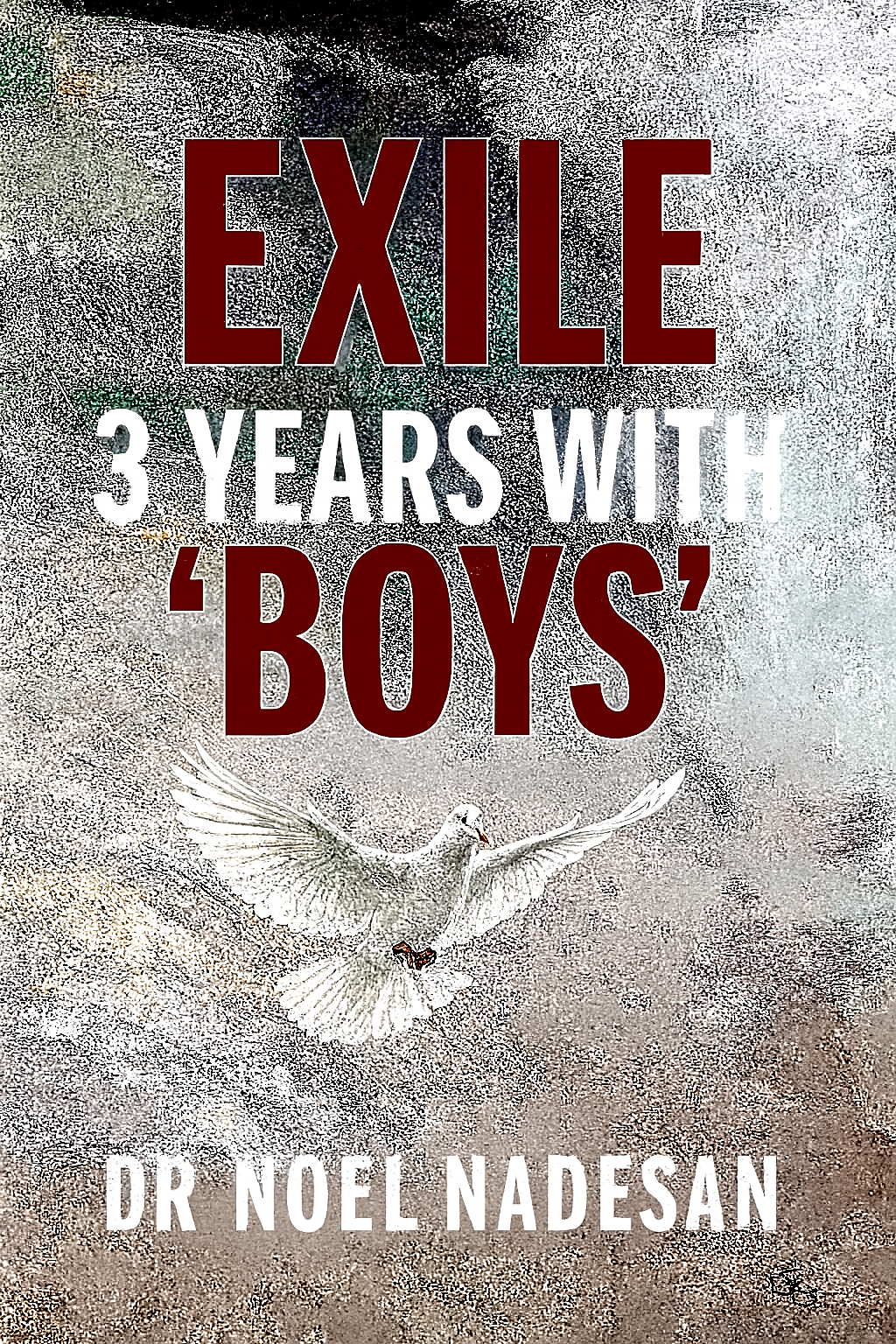
Noel Nadesan’s Exile is a little autobiographical work that fills this space, not with a bang, but with gentle strides. In its pages, readers hear the voice of someone who lived through the Tamil struggle in its early days. Noel was one of the people operating in Tamil Nadu at the time, working closely with many militant groups and, therefore, privy to the movement’s internal politics. As such, the work is both autobiographical and a valuable firsthand account of those early, hectic days of the militant movement, written in a simple yet elegant style, immensely readable, and refreshingly free of ideological posturing. It is a pleasure to hear such a voice tell us about a time now fast receding into history.
Noel offers us some colourful vignettes of the early Tamil struggle in Sri Lanka, when the weapons were mainly words, and the occasional stone thrown at a building or the police. We are also made privy to the fawning servility of the ordinary Tamil voter who obsequiously informs the Tamil leader Chelvanayakam that they would vote for a log of palmyrah if it was placed under the symbol of the Tamil Arasu Kachchi. But tensions are also rising. The tragic police baton-charge and shooting that led to the deaths of several people in the crowd at the Fourth International Tamil Research Conference in Jaffna in 1974 turned the early rumblings into a loud roar. Noel is sparing in his description of the events but leaves the reader in no doubt about the horror that unfolded on that fateful day: ‘That night, I couldn’t eat—only drank milk before bed.’
Much of what Noel describes is presented in this fashion, through pithy, short sketches that appear like brief flashes of light illuminating the past. They reveal events and personalities that shaped Tamil militant politics during the crucial 1980s. Much of Noel’s work focuses on his life in India, where he fled after ethnic tensions intensified in the early 1980s – hence the title of the book. There we see him fully immersed in the life of an activist, working to set up rehabilitation resources for the Tamil refugees that kept flowing into Tamil Nadu following the anti-Tamil riots in Sri Lanka in July 1983 and the rampages by the Sri Lankan military in 1984. Noel’s life begins to revolve around his humanitarian and political work with the various Sri Lankan Tamil groups in Tamil Nadu. He is closely associated with the creation of the Tamil rehabilitation organisation (TRO), one of the key organisations working with Tamil refugees in Tamil Nadu. His life becomes a cycle of meetings and discussions amid the struggle for survival, the tension and monotony broken by the occasional visit to the movie theatre. Again, colourful sketches of events and characters abound. Noel describes with wry humour his encounter with a Tamil Nadu minister who feels belittled by Noel’s refusal to bow! His association with EPIC, the information centre of the Eelam People’s Revolutionary Liberation Front (EPRLF), is interesting. The EPRLF was a militant organisation that gained its ideological sustenance from Marxism. Noel is drawn to it, but not enough to embrace the ideology. We also see vignettes of colourful characters moving in and out of the pages of Exile, including politicians, activists, and militants.
Amid the struggles to feed and house refugees and raise funds, there was also the struggle to keep the movement together. One great misconception about the Tamil militancy is that, from its infancy, the Tamil militant movement was a monolithic entity. Noel’s offers valuable insight that challenges this notion, showing how several Tamil militant groups operated in the 1980s, working more or less autonomously towards the same goal of Tamil independence. All of them had bases in neighbouring India that supported the Tamil groups for their own geopolitical reasons. India was the secure ‘rear base’ from which the militants could dart back and forth between India and Sri Lanka, taking advantage of a woefully under-resourced Sri Lankan navy.
After the anti-Tamil riots of July 1983, all the groups’ operations in India intensified, now boosted by the influx of refugees from Sri Lanka. The militant groups busied themselves organising support networks and services for the desperate people. It was also a period of intense debate and squabbling. The groups distrusted each other and jockeyed for primacy, sometimes with tragic results.
Noel’s work vividly brings out the tension and despair of this period. We see a movement pulled in different directions by the leaders’ egos and conflicting agendas. And the conflicts are brutal. Noel describes the ruthlessness with which the groups eliminate dissidents and rivals. The number of victims of this internecine war is quite staggering:
By July 1987, as I was getting ready to leave India, my Sri Lankan passport had expired for almost three years. I renewed it with help from an Indian intelligence officer I knew. One day, he showed me a secret list of assassinations carried out by Tamil groups in India.
According to that list, PLOT was responsible for more than 250 killings. The LTTE had committed 32; TELO, 18. The list had no data for EPRLF or EROS. Around the same time, I heard that EROS had killed four people in Madurai—an incident also recorded in the officer’s notes. Many other killings likely went undocumented.
In many ways, these early bloodlettings within the movement contained the seeds of its end. The movement that began with high ideals degenerated into bloody feuding or primacy between groups, paving the way for the most ruthless and authoritarian among them to triumph and lead the struggle to complete defeat. The internecine struggles also saw the demise of some of the more principled, idealistic leaders, leaving the field clear for the Fascists and the maniacs in the movement.
An early warning of this is sounded when one leading activist from the LTTE, Visvanathan Master explains the crude, if pragmatic, tactics of the organisation:
They’re okay, but only Naba is a decent guy. The others just waste time discussing unnecessary communism. Take the Tigers — do they mention Marxism or communism? They understand precisely how to target a Sinhalese to make an impact.”
Noel considers the massacre of Buddhist devotees at Anuradhapura to be the moment the movement dug its own grave. Until then, the militant movement had held the moral high ground, having not descended to the depths of targeting civilians. This is a point to ponder. It is arguable whether this was the first massacre of civilians by the militants, as Noel contends. In late 1984, the occupants of the Dollar and Kent farms in the East were brutally massacred. But this did not resonate the way the Anuradhapura massacre did. The Dollar and Kent Farms were in the dead of the night in remote areas, and those massacred were ex-prisoners, not strictly fitting the definition of ‘innocent civilians’ in the eyes of the general public. But the Anuradhapura massacre was carried out in broad daylight in the heart of the city most sacred to the Sinhalese Buddhists, and the victims were Buddhist devotees. If the massacres at the Dollar and Kent farms could be fobbed off as a blow against Sinhalese settlers planted in the Tamil homeland, the massacre of civilians at Anuradhapura was a calculated, blatant attempt to shock and outrage. It shattered the militant movement’s image as a freedom movement and invited the label of terrorism to be firmly planted on their lapels. As Noel’s Sinhalese Leftist comrade Joe Seneviratne so eloquently explains:
Attacking Sinhalese civilians diminishes your fight. This isn’t about liberation—it’s about revenge—and it risks destroying the entire cause. Most Sinhalese civilians, especially the poor, are not involved in the conflict. Even we, a small group, saw your struggle as just and supported you. However, turning the conflict into a race will ensure you never succeed.
Exile will certainly contribute meaningfully to the growing literature on the ethnic conflict in Sri Lanka. It is a small volume, but within its pages echo a big story, a story of courage, sacrifice, horror, tragedy and sadness, the story of how a movement that began with laudable ideals lost its way and descended into the abyss of self-destruction.
Book available with Sarasaviya Publication, Sri Lanka
Courtesy: Colombo Telegraph
At eLanka, we respect the rights of creators. If we have used an image you own and you’d like it removed, please email us at info@elanka.com.au and we’ll handle it promptly.
Thanks.
eLanka team
eLanka Disclaimer
Content published on eLanka may be created by the eLanka team, submitted by contributors or third parties, reproduced or adapted from other sources with appropriate source acknowledgement, or provided as promotional/advertising material by our clients. While eLanka takes reasonable care in preparing and publishing content, we do not warrant its completeness or accuracy. Views expressed are those of the respective authors or contributors and do not necessarily represent the views of eLanka. Third-party contributors, content providers and advertisers are responsible for the accuracy of material they supply and for ensuring they hold the necessary rights and permissions for its publication. Advertising and promotional content should not be regarded as an endorsement by eLanka of any product, service or claim.