What Is “Airspace Disease” After Pneumonia?-by Harold Gunatillake


This article is written in response to a concern raised by a Sri Lankan friend of mine living abroad, who has been affected by the disease and wanted to share his worries. I hope this explanation helps our readers better understand the situation.
Pneumonia is a common and sometimes serious lung infection that many Sri Lankans experience at least once in their lifetime. After treatment—antibiotics, rest, steam inhalation, and good hydration—most people hope to feel completely normal again.
Sometimes, however, when the follow-up X-ray or CT scan is done, the report includes a term that can be quite worrying: “airspace disease.” The word sounds heavy and alarming, and many people immediately wonder, “Do I have another serious illness?” The
good news is that airspace disease is NOT a disease by itself. It’s simply a description of what the doctor sees on the scan.
What Does “Airspace Disease” Mean?
Our lungs are made up of millions of tiny air sacs called alveoli, which are normally filled with air, helping us breathe easily.
When we talk about airspace disease, it means these little sacs are filled with other things instead of air, like:
- Fluid
- Mucus
- Pus
- Inflammatory cells
- Mild scar tissue (especially in long-standing cases)
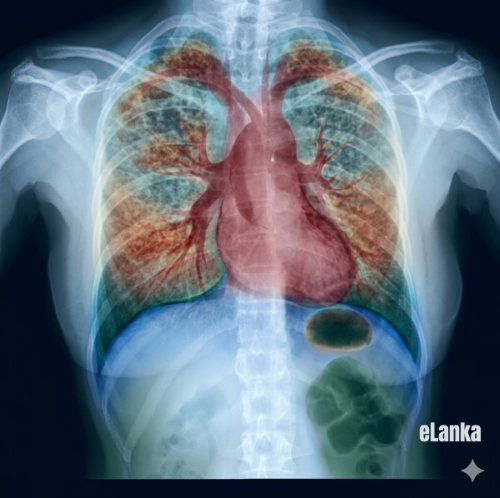
When you look at an X-ray or CT scan, these areas show up as white patches.
Why does this happen after pneumonia?
Many people in Sri Lanka, especially older adults, smokers,
and those working outdoors, find that it can take several weeks to recover fully. There are a few common reasons for issues in the lungs after pneumonia:
- Leftover inflammation: Even after the infection clears, some fluid and inflammatory cells may still be present in the air sacs.
- Mucus blocking the
airways: Thick mucus can block small air passages, making it hard for air to reach the tiny alveoli.
- A small area of lingering infection: Sometimes, a tiny patch of infection takes a little longer to
- Organising pneumonia (a healing phase): This is part of the lungs’ natural healing It might look serious on a scan, but it isn’t cancer, and it often gets better with the right treatment.
- Mild scarring might result from inflammation that lasts for a while, leaving behind tiny patches of scar
What Symptoms Might Continue?
Even after the main pneumonia has started to clear up, some people still experience lingering effects. These can include a persistent cough, mild shortness of breath, feeling more tired than usual, a sense of heaviness in the chest, or a decreased ability to walk quickly or climb stairs. Please remember, these symptoms can last anywhere from 6 to 12 weeks, but with time and proper care, they usually improve.
Here’s how doctors typically check on lung recovery:
- They might do a repeat X-ray after 6–8
- A CT scan could be needed for a closer
- Blood tests can help check for signs of
- Sputum tests look for bacteria that might be
- Lung function tests help measure how well you’re
All these steps help your healthcare team see whether your lungs are healing well or if there’s anything else they need to address.
Remember, they’re here to support you every step of the way!
How Is It Treated?
There is no single treatment for airspace disease. Treatment depends on the cause:
- Inhalers to reduce airway inflammation
- Short courses of anti-inflammatory medicines for certain conditions
- Breathing exercises or physiotherapy to clear mucus
- Antibiotics only if a new infection is confirmed
- Lifestyle changes such as avoiding dust, smoke, and cold air A doctor should guide all treatment
Here’s what you can generally expect during recovery:
- – 2–4 weeks: You’ll notice symptoms starting to
- – 6–8 weeks: Most of the inflammation begins to settle
- – 3 months: Your lungs often get close to their normal
- – 6 months: The majority of people experience full Older adults, smokers, and those with severe pneumonia may take longer.
Here’s some helpful information:
Airspace disease after pneumonia is usually a normal part of the healing process. It shows temporary changes in your lungs, rather than a new illness. With consistent follow-up, gentle breathing exercises, and your doctor’s guidance, most people can make a full recovery.
Every adult Sri Lankan, living locally or abroad, should read this article, even if not affected.
Pneumonia and other lower respiratory infections continue to be a significant public health challenge in Sri Lanka. Although the country’s strong healthcare system has made great progress in reducing deaths over the years, pneumonia still leads to many hospital stays and remains a major cause of death among children.
End