Lanka’s southern waters hide a gravity anomaly that baffles scientists
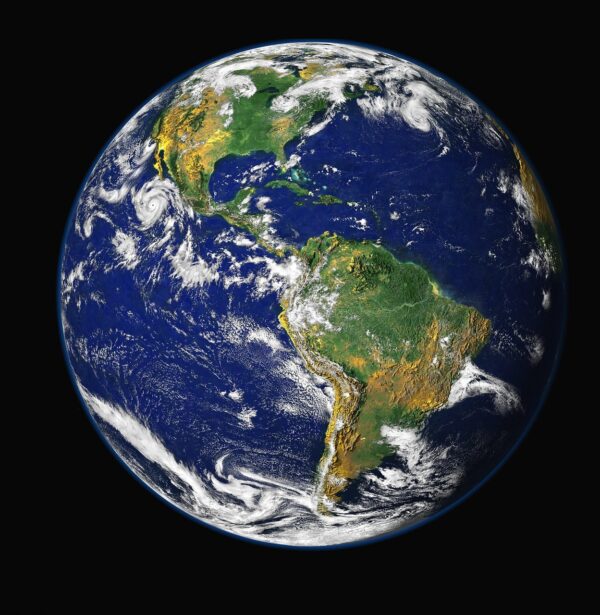
The Earth beneath your feet is far from still. While we understand quite a bit about the Earth’s surface, the interior remains a mystery. (CREDIT: International Centre for Global Earth Models / Wikimedia, CC BY 4.0)
Source:Island
One of the most puzzling phenomena lies beneath the Indian Ocean, south of Sri Lanka, where a massive gravity anomaly known as the Indian Ocean Geoid Low (IOGL) has confounded researchers for decades, said a report published by The Brighter Side News.
It said that this anomaly, marked by a dramatic 106-meter drop in the ocean’s surface, is the lowest geoid anomaly on Earth. Its origin remains a mystery, making it one of the most intriguing unresolved problems in Earth sciences. “The existence of the Indian Ocean Geoid Low is one of the most outstanding problems in Earth Sciences,” says Prof. Attreyee Ghosh, an assistant professor at the Centre for Earth Sciences, Indian Institute of Science, Bangalore.
It said: The ground beneath you may seem stable, but the Earth is in a state of constant motion. While we have a solid understanding of the Earth’s surface, its interior remains largely unexplored. Even with all our technological advancements, we still haven’t developed probes capable of reaching the Earth’s crust, which is just 35 kilometers deep. To uncover the mysteries of the Earth’s core and mantle, we rely on indirect methods.
Though the Earth may look like a perfect blue sphere from space, it’s actually more like a lumpy, misshapen potato. This uneven shape is due to the non-uniform distribution of matter inside the planet, which creates variations in gravity. The movement of tectonic plates, which form mountains and valleys, also contributes to these deformations.
Oceans cover 71% of the Earth’s surface, so these irregularities also affect the shape of the ocean. Without tides and currents, the ocean water would settle into a smooth, wave-like form called a geoid. This geoid rises in areas where gravity is strong and sinks where gravity is weak. These variations in the ocean’s surface, known as “geoid anomalies,” are caused by the distribution of mass deep within the Earth.
One of the most intriguing geoid anomalies is located south of Sri Lanka. Known as the Indian Ocean Geoid Low (IOGL), this massive area is characterized by a significant drop in gravity, causing the ocean surface to dip 106 meters. This “gravity hole” has puzzled scientists for decades.
In a recent study published in Geophysical Research Letters, Prof. Ghosh and her colleagues, along with researchers from the GFZ German Research Centre for Geosciences, investigated the missing mass causing the geoid low.
Past studies attributed it to a remnant of an ancient plate that dived into the mantle beneath another plate millions of years ago, but there had been no convincing explanation until now.
Using numerical models of mantle convection, the researchers explained the mass deficit. Mantle convection involves movement within the Earth’s mantle, where hotter, lighter material rises, and cooler, denser material sinks due to gravity. This movement was driven by seismic tomography models, which use seismic waves to create a 3-dimensional picture of the Earth’s interior.
The researchers discovered that ‘low-density anomalies’—the presence of lighter materials in the upper to mid-mantle beneath the IOGL—caused the gravity low in this region. Mantle plumes, or rising abnormally hot rock, can result in low-density anomalies.
However, no known mantle plume exists beneath the IOGL. Instead, they found hot material rising from the African large low-shear-velocity province (LLSVP) or the African superplume, near the IOGL, which gets deflected eastward and terminates beneath the IOGL. The deflection is possibly due to the fast motion of the Indian plate.
The researchers used supercomputers to simulate how the area could have formed, going as far back as 140 million years. “The Earth is basically a lumpy potato,” said Ghosh. “Technically, it’s not a sphere, but what we call an ellipsoid, because as the planet rotates, the middle part bulges outward.”
To find a potential answer, Ghosh and her colleagues used computer models to set the clock back 140 million years in order to see the big picture, geologically. “We have some information and some confidence about what the Earth looked like back then,” she said. “The continents and the oceans were in very different places, and the density structure was also very different.”
From that starting point, the team ran 19 simulations up to the present day, recreating the shifting of tectonic plates and the behaviour of magma inside the mantle. In six scenarios, a geoid low similar to the one in the Indian Ocean formed. The distinguishing factor in all six models was the presence of plumes of magma around the geoid low, believed to be responsible for the formation of the “gravity hole.”
The plumes themselves originated from the disappearance of an ancient ocean as India’s landmass drifted and eventually collided with Asia tens of millions of years ago. “India was in a very different place 140 million years ago, and there was an ocean between the Indian plate and Asia. India started moving north and as it did, the ocean disappeared, and the gap with Asia closed,” Ghosh explained.
As the oceanic plate went down inside the mantle, it could have spurred the formation of the plumes, bringing low-density material closer to Earth’s surface.
“A geoid low or a negative geoid anomaly would be caused by a mass deficit within the deep mantle. Our study explains this low with hotter, lighter material stretching from a depth of 300 km up to ~900 km in the northern Indian Ocean, most likely stemming from the African superplume,” says Prof. Ghosh.