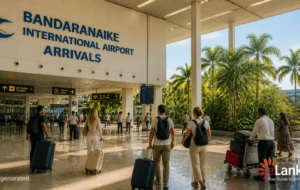
The landscape of international travel for Australian citizens has undergone a monumental transformation as the Sri Lankan government formally implements a waiver of the Electronic Travel Authorisation (ETA) fees, a strategic initiative designed to bolster arrival numbers and fortify the island’s standing as a premier destination for the oceanic region. In a move that has been met with considerable enthusiasm by the travel industry, the requisite fee, previously situated at approximately $70 per individual, has been rescinded for nationals of forty designated countries, including both Australia and New Zealand, thereby facilitating a more accessible entry process for those seeking to explore the multifaceted cultural tapestry of the Pearl of the Indian Ocean.
While the financial barrier of the entry fee has been effectively dismantled, it remains an imperative requirement for all prospective travellers to secure an ETA prior to their arrival via the official government portal, a procedural necessity highlighted by Sue Badyari, the chief executive officer of World Expeditions. The implementation of this policy, which took effect in late May 2026, serves as a testament to the institutional commitment to revitalising the tourism sector, which has recently experienced a notable surge, with booking trajectories indicating a year-on-year growth ranging between 7 and 12 per cent.
The Economic Significance of the Fee Waiver
The removal of the $70 tariff is regarded as instrumental in repositioning Sri Lanka as a value-driven choice for Australian families and couples, particularly during a period when global economic considerations frequently dictate holiday selections. As noted by Sean Martin, the managing director of G Adventures, a travelling couple now stands to retain approximately $140 within their discretionary budget, a sum that is replete with potential when utilised within the local Sri Lankan economy. Given the inherent affordability of local transport and high-quality culinary offerings, these reclaimed funds are sufficient to facilitate several traditional meals, a curated guided excursion, or multiple nights of accommodation in boutique local guest houses.
This subtle yet impactful financial adjustment is viewed not merely as a cost-cutting measure, but as an invitation for visitors to deepen their engagement with the local environment. When the fiscal weight of entry documentation is removed, the propensity for travellers to extend their stays or invest in more sophisticated, community-based experiences is significantly enhanced, thereby ensuring that the economic benefits of tourism are distributed more equitably across the various provinces of the island.
A Paradigm Shift Toward Immersive Exploration
Modern travel trends among Australians are increasingly characterised by a rejection of the superficial, with a distinct preference emerging for what is frequently termed “slow travel” or immersive cultural engagement. No longer content with a cursory glance at historical monuments, visitors are now seeking to integrate themselves into the daily rhythms of Sri Lankan life, a sentiment echoed by Brett Mitchell, the managing director ANZ for Intrepid Tours. The demand for authentic interactions, ranging from communal lunches in the homes of Tamil tea workers to arduous yet rewarding hikes through the verdant plantations of the hill country, has reached unprecedented levels.

The geographical diversity of Sri Lanka, condensed within a relatively compact landmass, allows for a comprehensive itinerary that encompasses the ancient UNESCO-listed majesty of Sigiriya’s Lion Rock, the spiritual serenity of Kandy, and the rugged coastline of the south. This versatility is particularly appealing to the Australian demographic, which possesses a long-standing historical affinity with the island, often rooted in shared sporting passions and a mutual appreciation for Commonwealth traditions.
Navigating the New Entry Protocols
Despite the absence of a fee, the institutional process for entry must be navigated with precision to avoid the pitfalls of unofficial third-party platforms that may seek to impose auxiliary charges. Travellers are encouraged to utilise the official government channels and to ensure that passport details are meticulously recorded well in advance of their scheduled departure. This ensures a seamless transition through the ports of entry, allowing visitors to immediately begin their journey through the lush tea gardens and ancient ruins that define the national identity.
For those seeking to further their understanding of the various regions or to connect with reputable service providers, the eLanka Business Directory remains an invaluable resource, offering a bridge between global travellers and the local expertise required to craft a truly bespoke itinerary. Furthermore, the eLanka News and Articles section continues to provide real-time updates on cultural festivals and community events that may align with travel dates.

Conclusion: A Resilient Destination Poised for Growth
The confluence of simplified entry requirements, enhanced direct aviation routes from major Australian hubs, and an unparalleled wealth of biodiversity positions Sri Lanka as a formidable contender in the global tourism market for the 2026 season. The resilience of the island’s tourism infrastructure, coupled with the inherent warmth of its people, ensures that each visitor is met with an experience that is both profound and transformative. As more Australians take advantage of the free 30-day ETA, the cultural exchange between these two nations is set to flourish, further strengthening the bonds that have been carefully cultivated over many decades.
For anyone who has historically maintained Sri Lanka on their travel aspirations list, the current climate represents the antithesis of hesitation; it is a moment of unparalleled opportunity to witness the historical milestones and modern-day observations of an island that continues to reward the curious and the adventurous.
Source: https://www.canberratimes.com.au/
This article was written based on the source https://www.canberratimes.com.au, kindly email us at info@eLanka.com.au if any information needs to be corrected.
At eLanka, we respect the rights of creators. If we have used an image you own and you’d like it removed, please email us at info@elanka.com.au and we’ll handle it promptly.