




Shameful Bellies Sri Lankans Carry-by Harold Gunatillake


Having a flat abdomen in one’s sixties is an unequivocal indicator of good health. Among Sri Lankans, one in three individuals over the age of sixty displays a protruding abdomen, often regarded with pride rather than shame. Many believe that such a physique signifies prosperity, and some assert that the prominence of the abdomen is correlated with a higher financial standing.
Conversely, in more affluent nations, the prevailing image is that individuals, particularly women, are
highly conscious of maintaining an aesthetically pleasing, contoured body.
Such profiles are primarily attributable to a type of adipose tissue known as ‘visceral fat,’ which develops deep within the abdominal region,
encasing the internal organs. The accumulation is notably observed in the apron-like membrane called the greater omentum, often referred to as the ‘policeman’ of the abdomen.
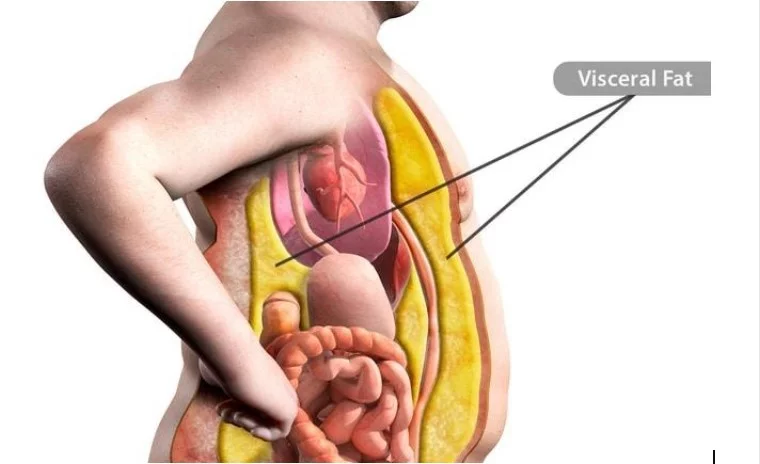
Image Source:Quantum
Too much of this fat is like living close to a volcano – an eruption can give you many serious illnesses unknowingly.
The question arises: why is abdominal fat considered detrimental to health? Abdominal fat, also known as visceral fat, can lead to an excessive influx of fatty acids into the bloodstream. This elevation heightens the risk of cardiovascular disease, Alzheimer’s disease, and hypercholesterolemia. These fatty acids are transported in the blood as triglycerides.
This suggests that the accumulation of abdominal fat results from overconsuming fats and carbohydrates, with the excess stored in adipocytes, including visceral adipocytes.
Excess body fat may also contribute to insulin resistance and the development of type 2 diabetes.
Suppose an individual has a prominent abdominal area and is diagnosed as pre-diabetic. In that case, the primary approach to managing the condition involves weight reduction, which can result in a flatter abdomen, rather than direct treatment for diabetes itself.
Visceral fat also contains proteins that may cause inflammation of body tissues and constriction of blood vessels, potentially elevating blood pressure. Proteins secreted by visceral fat can impact various aspects of health, including insulin resistance, blood pressure regulation, and inflammatory responses.
Specifically, visceral fat expresses proteins such as retinol-binding protein 4 (RBP4), which has been associated with increased insulin resistance.
Fatty liver disease, particularly non-alcoholic fatty liver disease (NAFLD), exhibits a strong association with excess visceral adiposity. This visceral fat is metabolically active and may facilitate the onset and progression of NAFLD by transporting free fatty acids (FFAs) to the liver, among other mechanisms. Reducing
visceral adiposity through lifestyle modifications, such as dietary adjustments and physical activity, is vital in the prevention and management of fatty liver disease.
Can visceral fat cause cancer?
What is the relationship between obesity and cancer? | MD Anderson Cancer Centre
Prolonged inflammation resulting from excess visceral fat can compromise your health and elevate the risk of developing cancer.
Persistently elevated levels of resistant insulin over a period may contribute to the onset of diseases such as diabetes and cancer.
How can one determine the presence of excessive visceral fat? In females, a waist circumference exceeding 35 inches indicates excess visceral fat, whereas in males, a measurement exceeding 40 inches indicates excess visceral fat.
Dear readers, as I have previously mentioned, by reading this article, you are unknowingly on a ticking time bomb. The health issues caused by visceral fat are all life-threatening. I urge you to take this matter seriously and to consider all necessary steps to lose weight, including reducing visceral fat.
Lean, flat-bellied people may also have visceral fat. Doctors call this “Thin Outside, Fat Inside”
Please pass this article on to all your fat-bellied friends. End