Image Source : www.ft.lk
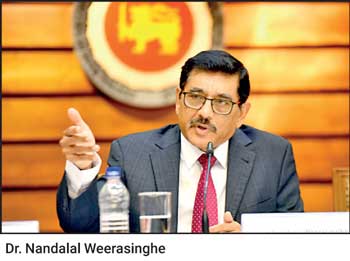
Sri Lanka’s economic recovery is expected to continue despite challenging global conditions, with Central Bank Governor Dr Nandalal Weerasinghe describing the country’s growth outlook as steady and stable during an interview with Bloomberg.
The Governor’s comments were broadcast in the business segment of the Ada Derana First at 9 bulletin dated 18 August 2026, following his participation in the Invest Sri Lanka forums in Sydney and Melbourne. His assessment presented a cautiously constructive picture: economic activity is continuing to expand, inflation is expected to move gradually towards the Central Bank’s target, and improving stability may create opportunities for investors, businesses and Sri Lankan professionals at home and overseas.
A continuing recovery, with growth expected to remain positive
According to Dr Weerasinghe, Sri Lanka has recorded economic growth of approximately 5 per cent for three consecutive years following the crisis. The statement indicates that economic activity has not merely returned to expansion for a short period, but has maintained a comparatively consistent rhythm as households, businesses and institutions adjust to a more stable macroeconomic environment.
The Governor also indicated that growth during the second half of 2026 could moderate to between 4 and 5 per cent. This expectation was attributed to tighter monetary conditions and higher prices, both of which can influence consumer spending, business costs and investment decisions.
Such moderation should not be interpreted as a prediction of a renewed contraction. Rather, Dr Weerasinghe described the projected pace as part of an adjustment process, with the economy expected to remain on a stable footing while inflationary pressures are managed. He further indicated that growth could return to its normal potential of approximately 5 per cent from 2027 onwards, although this remains a forecast rather than a guaranteed outcome.
For businesses, steady growth can provide a more predictable basis for planning. Companies may be better positioned to assess recruitment, inventory, technology investment and expansion when economic conditions are less volatile. For families, a stable growth environment can support employment opportunities and business confidence, although the benefits of economic expansion generally emerge progressively and can vary between sectors and regions.
Inflation remains a central consideration
Inflation was a significant part of the Governor’s discussion, particularly because price stability is closely connected to household purchasing power and business confidence.
Dr Weerasinghe stated that inflation, which had remained comparatively low earlier in the year, had risen towards the upper band of the Central Bank’s target range. He explained that energy and transport prices were important influences, particularly because Sri Lanka is a net energy-importing country and remains substantially dependent on thermal power.
Energy costs affect the economy through several channels. Higher fuel and electricity prices can increase transport expenses, manufacturing costs, logistics charges and the cost of delivering goods to consumers. They can also influence the operating expenses of small enterprises, retailers, restaurants, farms and service providers.
The Governor said the baseline scenario assumes that oil prices remain around US$80 per barrel over the relevant period. If external conditions remain manageable, inflation is expected to move back towards the Central Bank’s 5 per cent target by the end of 2026 or early 2027.
That projection is conditional. Dr Weerasinghe acknowledged that unexpected movements in international energy prices could create additional pressure, meaning that the path towards lower inflation could be uneven. Nevertheless, the expectation of a gradual return towards the target provides a constructive indication for consumers and businesses seeking greater clarity over future costs.
Lower and more stable inflation can assist families in managing household budgets, while businesses may gain greater confidence when setting prices, negotiating contracts and assessing investment returns. It can also help preserve the real value of wages and savings, provided that other economic conditions remain supportive.
Opportunities for investors
The Bloomberg interview took place alongside the Invest Sri Lanka forums in Sydney and Melbourne, which were intended to promote Sri Lanka’s investment potential to an international audience, including Sri Lankan businesspeople and investors living in Australia.
Dr Weerasinghe said Sri Lanka had managed external shocks and that the recovering economy was moving towards a higher growth path. He presented the current period as an opportunity for investors to consider the country’s developing economic prospects.
The Governor’s message reflects the potential value of investment during a period of stabilisation. Businesses that enter a market during its recovery may be able to participate in new demand, support modernisation and contribute to the creation of employment. Investors, however, are expected to conduct their own assessment of regulations, market conditions, financing, foreign exchange exposure and sector-specific risks before making decisions.
For Sri Lankan Australians and other Sri Lankans living overseas, the investment outlook may be relevant in several ways. Some may consider partnerships with companies in Sri Lanka, while others may explore opportunities in tourism, information technology, logistics, renewable energy, manufacturing, education, professional services and consumer industries.
A more stable economic environment can also encourage the transfer of knowledge and expertise. Professionals based overseas may contribute through mentoring, consulting, joint ventures, technology services and international market connections, even when they are not making a direct financial investment.
The importance of external resilience
Sri Lanka’s economic prospects remain connected to global developments, particularly movements in energy prices and other imported costs. As an energy-importing country, Sri Lanka is exposed to changes in international fuel markets, and such changes can influence inflation, transport and production.
Dr Weerasinghe’s comments suggest that the country’s ability to manage these external pressures will remain an important part of the recovery. The Governor expressed confidence that the current situation could be managed under the baseline assumptions, while also recognising that unexpected external developments could alter the outlook.
This emphasis on resilience is significant for investors and businesses because economic recovery is not assessed solely through headline growth. The strength of foreign exchange management, inflation control, fiscal discipline and institutional confidence also influences whether growth can be sustained.
Sri Lanka has not been described as having achieved full economic recovery. Instead, the Governor’s assessment points to an economy that is recovering, stabilising and working towards a more durable growth path. Continued progress will depend on disciplined policy implementation, productive investment and the ability to withstand external disruptions.
Progress under the IMF programme
Dr Weerasinghe also said that the IMF programme was progressing, with the next review expected around November–December 2026. He indicated that the extended programme is scheduled for completion in the second half of 2027.
The Governor’s comments place the programme within a broader process of economic stabilisation. For businesses and investors, progress under an internationally monitored programme can provide an additional reference point when evaluating policy direction and financial conditions.
Completion of scheduled reviews remains subject to the relevant requirements and assessments. Therefore, the Governor’s comments should be understood as an indication of the expected timetable rather than a guarantee that every future stage will proceed without change.
A cautiously positive outlook
The overall message from Dr Weerasinghe’s Bloomberg interview was cautiously positive. Sri Lanka’s economy is expected to continue growing, although expansion may slow moderately during the second half of 2026 as tighter monetary conditions and higher prices influence activity.
Inflation is expected to move towards the Central Bank’s 5 per cent target by the end of 2026 or early 2027 if international energy prices and other external conditions remain manageable. At the same time, the Governor’s comments highlighted the importance of maintaining policy discipline and strengthening the country’s ability to absorb future shocks.
For businesses, the outlook may support careful expansion and long-term planning. For investors, it may signal that opportunities are emerging as economic conditions become more predictable. For families, improving price stability could gradually assist household budgeting and purchasing power. For Sri Lankans living in Australia and other countries, the recovery may create new possibilities for investment, professional collaboration and commercial partnerships with Sri Lanka.
The recovery remains a work in progress, but the combination of continued growth, an anticipated easing of inflation and progress under the IMF programme offers a constructive basis for measured confidence.
Source: https://youtu.be/ny-9RBH5c1k?si=_7iGMhLVjAa-vb0j
This article was written based on the source https://youtu.be/ny-9RBH5c1k?si=_7iGMhLVjAa-vb0j, kindly email us at info@eLanka.com.au if any information needs to be corrected.
(adsbygoogle = window.adsbygoogle || []).push({});
At eLanka, we respect the rights of creators. If we have used an image you own and you’d like it removed, please email us at info@elanka.com.au and we’ll handle it promptly.