Mental well-being, Nations ,Impacts and Remedies By Nisal Rukshan
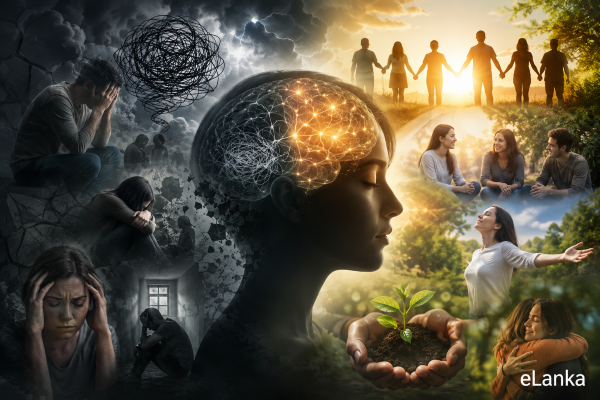
Human life encompasses a range of situations, emotions, eras, changes, and circumstances. Within this diversity, individuals exhibit distinct patterns of thoughts, feelings, and behaviors in response to various experiences. These patterns reflect the unique cognitive abilities, skills, and capacities of each person.
The inabilities or malfunctioning in thoughts, feelings, and behavior that are harmful to self and others based on thoughts, feelings, and behavior are referred to as mental disorders in a very simple definition. As per the elaboration of the World Health Organization data of 2021 (WHO), “Nearly 1 in 7 people in the world live with a mental disorder”.
The underlying causes of mental disorders are not always clearly identifiable. However, prominent contributing factors include genetics and environmental influences, often described as nature and nurture.
Awareness of mental disorders provides significant benefits at both individual and societal levels. Such knowledge empowers individuals to understand the impact of mental health on themselves and their communities. Importantly, untreated mental disorders can severely disrupt daily functioning and result in long-term suffering.
According to the World Health Organization (WHO), the following mental disorders and associated statistics illustrate the global context of mental health
Anxiety Disorders
In 2021, 359 million people were living with an anxiety disorder, including 72 million children and adolescents.
Depression
In 2019, 280 million people were living with depression, including 23 million children and adolescents.
Bipolar disorder
In 2021, 37 million people experienced bipolar disorder, including 3.8 million adolescents aged 10–19 years.
Post-Traumatic Stress Disorder (PTSD)
Schizophrenia
Schizophrenia affects approximately 23 million people or 1 in 345 people worldwide.
Eating disorders
In 2021, 16 million people experienced eating disorders, including almost 3.4 million children and adolescents.
Disruptive behaviour and dissocial disorders
In 2021, 41 million people, including children and adolescents, were living with conduct-dissocial disorder.
Some of these data are more than five years old, and significant changes in prevalence may have occurred since their collection.
Beyond prevalence statistics, it is essential to consider the broader impact of mental disorders and individual mental well-being on national outcomes.
According to the WHO, the following represent major challenges posed by mental disorders at the national level.
Economic and Workplace Costs
- Lost productivity: Employees may miss workdays or experience reduced concentration as a result of stress, anxiety, or depression.
- Financial loss: Billions of dollars are lost globally each year due to reduced workforce capacity.
- Income reduction: Families may experience financial difficulties when a primary earner is unable to maintain consistent employment.
Healthcare and Social Strain
- Hospital costs: The treatment of chronic mental health conditions requires significant resources, including space, funding, and personnel in healthcare facilities.
- Caregiver burden: Family members may need to reduce work hours or sacrifice personal time to provide care for relatives with mental health conditions.
- Premature mortality: Severe mental health conditions are associated with increased suicide rates and reduced overall life expectancy.
In conclusion, mental disorders present significant challenges for all nations. Potential solutions include upgrading healthcare services by integrating primary care, utilizing task shifting, and enhancing digital care. Implementing social and institutional programs, such as school-based initiatives, workplace regulations, and suicide prevention programs, as well as addressing the root causes of socioeconomic issues by strengthening economic safety nets, funding public awareness campaigns, and protecting vulnerable groups, can be effective when applied through targeted strategies.
Nisal Rukshan, MHRM, PGDip HSC , B.A. (Defence), BSc (Hons.) Counselling Psychology, DCPsy, DOSH, (Visiting lecture Sri Lanka Institute of Advanced Technological Education)
Rukshan4slsr@gmail.com
https://www.who.int/news-room/fact-sheets/detail/mental-disorders
https://www.who.int/health-topics/mental-health#tab=tab_2
https://www.who.int/teams/mental-health-and-substance-use/world-mental-health-report