The Paradox of Popularity — Why the NPP Continues to Command 75% Support Despite the Elevated Cost of Living-by Harold Gunatillake

This note is for the Sri Lankan Diaspora, written by Dr Harold Gunatillake OAM, a retired resident of the beautiful city of Kandy, Sri Lanka.
Two years into the NPP government, one fact is undeniable: the cost of living for most Sri Lankans has not fallen as much as many hoped.
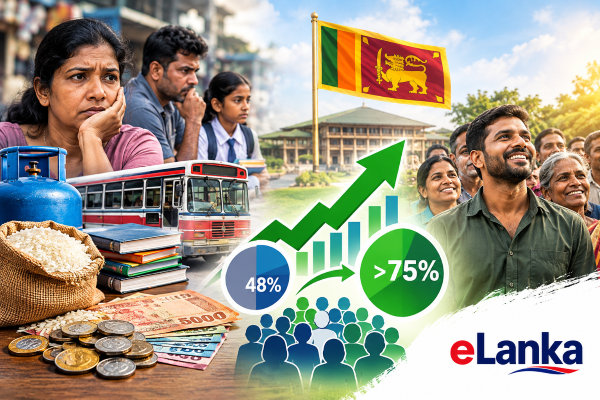
Rice, gas, bus fares, schoolbooks — the weekly budget still bites. In normal politics, that would be a recipe for a drop in approval ratings.
Nevertheless, the paradox is that, rather than waning, the government’s support has grown. Support, which was 48% in the most recent general election, is now estimated to surpass 75%.
For those of you watching from abroad, it may feel like a paradox.
How can a government preside over stubborn inflation and still grow more loved?
The answer lies not in spreadsheets, but in trust, expectations, and what people believe they are buying with their vote.
The Bar Was Set at “Not Corrupt”
After 2022, Sri Lankans did not just vote against hardship. They voted against a system they felt had robbed them. The NPP came in on a promise of clean governance, transparency, and no political patronage.
For many, the metric of success in year two is not just “is milk cheaper?” but “are my taxes being stolen less?”
Raids by the Consumer Affairs Authority, action against expired goods, and visible anti-corruption drives signal that the state is finally working for the people, not the other way around.
That buys political capital.
Pain Without Scapegoats
Previous governments lost support because people felt the pain and felt lied to about it.
This time, the message has been consistent: the crisis is structural, the IMF program is painful but necessary, and no secret deals cushion the elite. When people understand why they are suffering, they are more willing to endure it — especially if they believe everyone, including the powerful, is enduring it too.
The Opposition Vacuum
Popularity is always relative. The traditional parties have not presented a credible alternative vision. For the diaspora who send remittances home, this matters: families are telling us, “Yes, it’s expensive, but who else do we trust not to make it worse?”
Without a convincing alternative, incumbency becomes an asset.
Hope as a Policy
The 75% figure is not a celebration of today’s prices. It is a bet on tomorrow. Many voters, especially younger ones, see this
government as the first in decades trying to change the rules of the game — digitisation, state enterprise reform, cutting waste. They are trading short-term comfort for long-term reform.
Diaspora communities know this gamble well — it is the same calculation many made when they left.
The Challenge Ahead
Popularity, however, is not a policy. It is a loan that must be repaid. If the cost of living remains flat for too long, patience will wear thin.
The government now must convert trust into tangible relief: targeted subsidies, stronger market regulation, jobs, and lower food prices.
The CAA’s (Consumer Affairs Authority) work on stale food and outdated products is a good start because it touches daily life. But it must be followed by bigger wins on the grocery bill.
For the Diaspora
We watch with two hearts. One heart feels the strain our families face every month. The other heart sees a country finally trying to break a 70-year cycle of patronage and crisis.
This 75% is not unquestioning loyalty. It is conditional trust.
It says: “We gave you a mandate to clean the house. Now show us the house is worth living in.
If the NPP can deliver even modest relief in the next year while keeping its integrity intact, this paradox may become a model. If not, the same voters who lifted it to 75% will be the first to ask hard questions.
That is democracy. And that, perhaps, is why so many of us still believe in Sri Lanka.
End