


At What Age Did We Decide We Were Too Old to Start Again?-by Dr Sarath Jayawardana
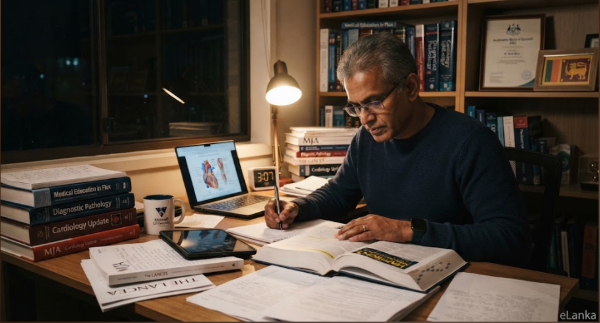
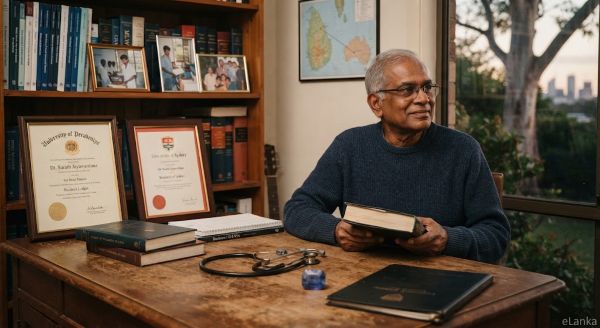
In my early 50s, I became a medical student again.
I had already practised medicine in Sri Lanka, migrated to Australia, built a career in education and was running a college. It would have been easy to decide that my student days belonged to another chapter of my life.
Instead, I found myself waking at around 3am on many mornings to study.
I didn’t return because I needed another qualification. Since leaving Sri Lanka in 1990, my involvement in medicine had largely been through education.
I continued reading medical journals and books because I wanted to give my students the best knowledge and skills I could. But I became curious: how much has medicine—and medical education itself—changed since I had graduated?
The answer fascinated me.
Medical education had moved considerably from the subject-based curriculum I remembered, towards learning built around clinical cases. I loved refreshing old knowledge, discovering what had changed and sharing what I learnt with my students.
It was hard work. I was studying while still running a college. Fortunately, I had an excellent team I could rely on.
There were amusing moments too. During clinical placements, perhaps because of my age and previous experience, staff would sometimes assume I was a senior doctor. It could take them a little while to realise I was actually the student.
I found that rather enjoyable.
There is something wonderfully humbling about having experience in life while still being willing to say, “I am here to learn.”
Being an older student had disadvantages. My memory wasn’t as sharp as that of some younger students, and neither were my computer skills. But maturity gave me other advantages. I had life experience, discipline and the confidence to ask questions.
Most importantly, I wasn’t studying simply to collect another qualification. I was there because I wanted to learn.
That made the journey enjoyable and exciting.
A childhood dream I had left behind
As a schoolboy in Sri Lanka, I enjoyed public speaking and debating. I won several competitions and discovered that I loved constructing a compelling argument.
By Year 10, I had developed a strong interest in becoming a lawyer. I had even been told that becoming a lawyer might be easier than becoming a doctor, which made the idea even more attractive to my teenage mind!
Life, however, took me towards medicine.
Decades later, I found myself thinking: Why shouldn’t I fulfil that childhood dream now?
Law also had practical value. I was running a business and teaching law and ethics to students, so I knew formal legal education could help both me and the people I taught.
In my late 50s, I enrolled at the University of New England to study law. I eventually completed my law degree and was admitted to the Supreme Court of Western Australia as a lawyer.
Looking back, what interests me most isn’t the additional qualification. It is the question I could easily have asked instead:
“Why bother at my age?”
Had I believed that, I would have denied myself one of the most rewarding learning experiences of my life.
Sometimes the barrier is not age
There are genuine reasons why starting again may become harder as we grow older. Our energy can change. Health can change. We have responsibilities. Learning may sometimes take longer.
We shouldn’t pretend those things don’t exist.
But sometimes the greater barrier is our mindset.
We worry about what other people expect of someone our age. We become comfortable with the identity we have already built. Perhaps we are embarrassed to be beginners again.
I decided that what other people thought about my age was secondary. I wanted to remain true to myself—to keep developing, do the best I could and contribute where I could.
At nearly 70, I am still a beginner in many things.
I am learning and practising music. I meditate. I go to the gym and try to remain physically active. I volunteer my time to organisations I value. I continue learning about technology and new discoveries.
But perhaps my most difficult learning now is inward.
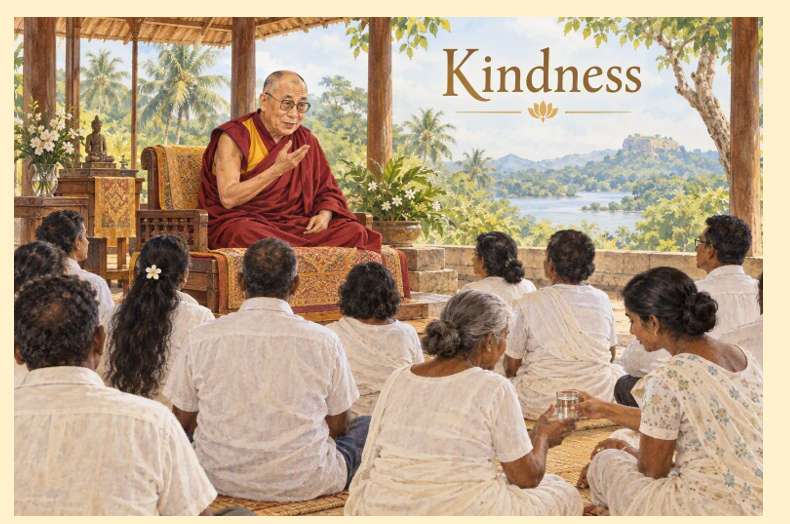
I am trying to become better at letting go—of unnecessary desires, cravings and attachments. I am trying to practise loving-kindness and identify less rigidly with labels such as race, colour, religion, profession or status.
I understand some of these ideas intellectually. Living them consistently is much harder.
In that sense, I am still very much a beginner.
Perhaps we need to redefine retirement
For me, retirement does not mean doing nothing.
It means having the freedom to do something meaningful without necessarily expecting financial reward, status or recognition in return. You do it because it matters to you, because it gives you joy and satisfaction, or perhaps because it allows you to contribute.
There is no qualification required for that, and there is certainly no age limit.
So when someone in their 60s or 70s tells me there is something they have always wanted to learn or do but they are now too old, my response is simple:
Start today with a single step.
If you cannot take a big step, take a small one.
You don’t need to become a lawyer, earn another degree or completely reinvent your career. Learn an instrument. Study a language. Volunteer. Travel somewhere new. Learn how to use a piece of technology that intimidates you. Explore an idea that has fascinated you for years.
The goal doesn’t always need to be achievement. Sometimes the value is simply in learning.
Had I decided in my early 50s that I was too old to become a student again, the time would still have passed.
The difference is that I would never have had those experiences.
Perhaps, then, the question worth asking ourselves is not:
“Am I too old to start?”
But:
“If I don’t start now, what might I wish I had begun when I look back ten years from today.?”
________________________________________
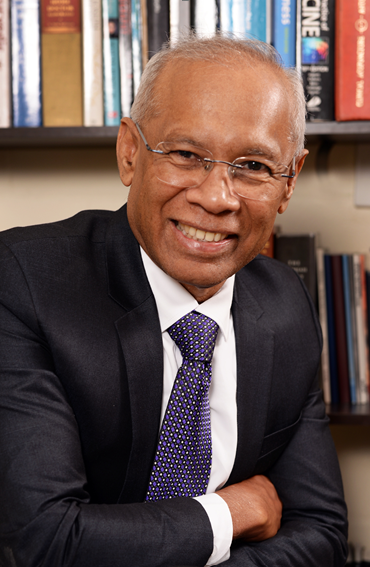
Dr Sarath Jayawardana is the author of Precious Gems: Collected Over 70 Years and Unchartered Horizons.