


When Philosophy Is Misused: Buddhism, Identity, and the Need for National Calm-by Harold Gunatillake

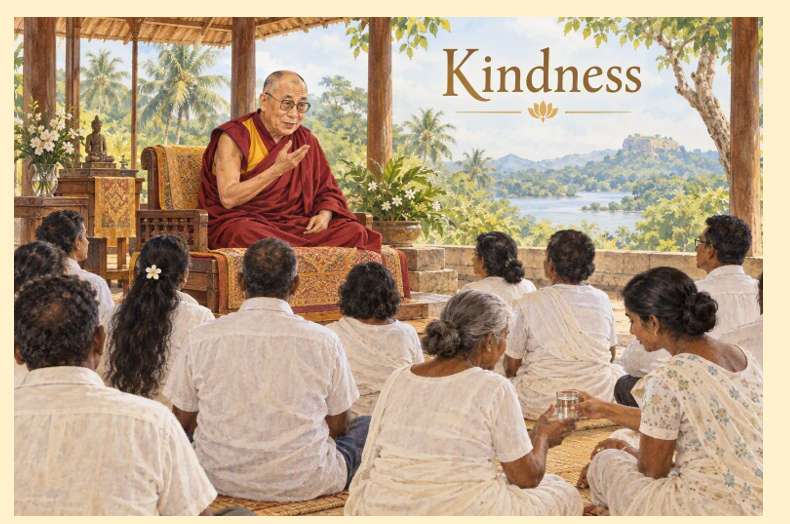
Sri Lanka’s many faiths have long coexisted, sometimes with tension and often in harmony. Christians may practise meditation, Hindus study Buddhist psychology, and Muslims embrace mindfulness. Such exchanges between spiritual traditions enrich the island’s culture rather than threaten religious identity.
The Dalai Lama’s widely shared message—“My religion is kindness”—captures a truth that transcends doctrinal boundaries. Buddhism, at its philosophical core, is an inward discipline. It teaches mastery over one’s own mind, not domination over others. It encourages compassion, not confrontation. It invites self-reflection, not political theatre.
Yet today, Sri Lanka is witnessing a troubling distortion of this philosophy.
The Misuse of the Yellow Robe
The yellow robe has historically symbolised renunciation, humility, and detachment from worldly power. But in recent years, segments of the clergy have stepped into the political arena with a force that contradicts the very principles they claim to defend.
The case of Galagoda Aththe Gnanasara Thero—whose convictions span hate speech, contempt of court, and intimidation—has become a flashpoint. His supporters frame him as a defender of Sinhala-Buddhist identity. But many citizens, legal experts, and moderate Buddhists see something else: the weaponisation of religious symbolism to challenge the rule of law.
The current agitation demanding his release, led by Ven. Balangoda Kassapa Thera, has escalated into a political ultimatum. The slogan “Free Gnanasara or elect a new president” is not a spiritual appeal. It is a direct attempt to pressure the executive into overriding the judiciary.
This is where the danger lies.
Philosophy vs. Power
Buddhism can be a philosophy. It can be a religion. It can be a way of life. But it cannot be a political weapon without losing its essence.
The Dalai Lama’s teachings emphasise:
- Mastery over worship – The Buddha is a teacher, not a deity demanding
- An inward journey – Liberation comes from self-discipline, not external
- Kindness as a universal ethic – Compassion is not confined to one faith or one ethnic group.
These principles allow a Christian, Hindu, or Muslim to practice Buddhist mindfulness without conflict. They allow Buddhism to enrich lives without demanding conversion. They allow Sri Lanka’s pluralistic society to breathe. But when monastic authority is used to challenge Supreme Court rulings, distort police reports, or mobilise crowds against constitutional order, Buddhism ceases to be a philosophy of liberation. It becomes a political tool—one that risks inflaming tensions in a country already navigating global economic shocks and domestic fragility.
The President’s Responsibility—and the People’s Choice
President Anura Kumara Dissanayake’s stance is clear: no interference with Supreme Court decisions. This is not anti-Buddhist. It is pro-democracy. A nation cannot function if judicial rulings are overturned by clerical pressure or street protests.
Sri Lanka’s voters now face a crucial choice.
Will they stand with the rule of law, judicial independence, and national stability? Or will they allow a small but loud clerical movement to redefine governance through intimidation?
In a world shaken by conflict, inflation, and geopolitical uncertainty, Sri Lanka cannot afford internal chaos. The priority must be economic recovery, social harmony, and the protection of all communities—Buddhist, Christian, Hindu, Muslim, and others.
A Call for Calm and Clarity
Sri Lanka’s spiritual traditions have always been strongest when they inspire personal transformation, not political confrontation. The Dalai Lama’s message reminds us that kindness, discipline, and compassion are not owned by any one religion. They are human values.
The country must now reaffirm that the yellow robe is a symbol of peace—not a banner for rebellion.
Sri Lankans of all faiths can practice Buddhist philosophy. But no one—monk or layperson—should misuse it to undermine the nation’s stability.
Can Christians practise Buddhism? Yes, the traditions share ethical teachings, but their worldviews and ultimate aims differ. Christianity centres on a creator God, salvation, and eternal life; Buddhism emphasises rebirth and dependent origination rather than belief in a creator God. Practising both therefore requires a clear understanding of these differences.
Insight for the Global Sri Lankan
Harold Pulse is an independent editorial platform offering clear, thoughtful analysis on Sri Lanka’s political direction, governance reforms, diaspora concerns, and the evolving health landscape of Sri Lankans living abroad. Built for global Sri Lankans who value informed perspectives, it clarifies the issues shaping the nation’s future—from domestic policy shifts to the well-being of expatriate communities navigating new health systems, lifestyles, and challenges worldwide.
Harold Pulse speaks to Sri Lankans everywhere: those shaping change at home, and those building lives overseas while staying deeply connected to the island’s progress. It is a space where political clarity, community insight, and diaspora health awareness come together to support a stronger, more informed global Sri Lankan identity.
At eLanka, we respect the rights of creators. If we have used an image you own and you’d like it removed, please email us at info@elanka.com.au and we’ll handle it promptly.
Thanks.
eLanka team
eLanka Disclaimer
Content published on eLanka may be created by the eLanka team, submitted by contributors or third parties, reproduced or adapted from other sources with appropriate source acknowledgement, or provided as promotional/advertising material by our clients. While eLanka takes reasonable care in preparing and publishing content, we do not warrant its completeness or accuracy. Views expressed are those of the respective authors or contributors and do not necessarily represent the views of eLanka. Third-party contributors, content providers and advertisers are responsible for the accuracy of material they supply and for ensuring they hold the necessary rights and permissions for its publication. Advertising and promotional content should not be regarded as an endorsement by eLanka of any product, service or claim.