Views: 19
Reminiscing Hon Gamini Dissanayake on his 32nd death anniversary From development to cricket, he had a vision-by Sunil Thenabadu
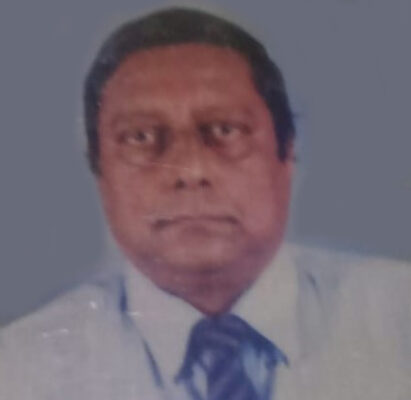
October 23, marks the 32nd death anniversary of Hon Gamini Dissanayake. His tragic death occurred following a bomb explosion while he was participating in his Presidential campaign meeting on October 23rd thirty two years ago His untimely death was indeed an irreparable loss to all citizens of Sri Lanka.
He was a lawyer by profession who sacrificed a lucrative career and entered politics in the early 1970’s. He drew inspiration from leaders like D.S. Senanayake, Dudley Senanayake and J.R Jayewardene. All those who were acquainted with him knew very well that he was a person of courage who always stood up for what was right, He was a humanist – congenial, honest, upright, humble and an exemplary politician. Whatever he did, he did to perfection through sheer commitment. He was initially elected a Member of Parliament by winning a seat in the Nuwara Eliya-Maskeliya by election in 1972. As a young and energetic politician and the people’s representative in the Nuwara Eliya District, he extended yeoman service to all constituents irrespective of caste, creed and religion.
Gamini Dissanayake was an extraordinary politician who listened to the masses, solved their problems and touched their lives in a positive and compassionate way. Anyone who wanted to meet him had easy access to him regardless of their political affiliations. He was one person who never engaged in petty, diverse and partisan politics. He was an excellent orator who always spoke sense. His vision was clear and dynamic and he had no interest in making false and hollow promises. His humility and friendly disposition endeared to him many and he was held in high esteem by his colleagues and even respected by his political opponents.

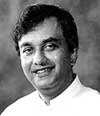
Gamini Dissanayake
When the United National Party won the Parliamentary elections in 1977, he was entrusted with several Ministerial portfolios – Irrigation, Power, Construction, Lands and Land Development, Mahaweli, Plantation Industries and Highways. He once said that “the word development is mostly used in terms of developing the infrastructure such as roads, factories, transport and the end result of development means to uplift the living standards of the masses in physical, mental, moral, social and cultural advancement.” The most gigantic task entrusted to him was of course the accelerated Mahaweli Project. The toughest challenge was the exercise of evacuating approximately 6000 families from over 50 villages who lived in the valley of the Kotmale reservoir. They were forced to leave their traditional homes and shift to unfamiliar environments. He sacrificed his own lands too, setting an example to the villagers and gifted the lands of his ancestors as well without any reluctance. The Kotmale reservoir was one among other reservoirs -Victoria, Randenigala, Rantembe, Ulhitiya, Rathkinka and Maduruoya to be built and commissioned under the accelerated Mahaweli Development programme.
This multipurpose river diversion scheme also included the development of several canals and waterways. This massive Mahaweli scheme was handled by efficient personnel deployed both locally and internationally using innovative modern technology under his able administration.The accelerated Mahaweli development project was undoubtedly the largest project with foreign collaboration undertaken in our history. It was initially targeted to be completed in 30 years taking into consideration the magnitude of the volume of work involved. Owing to his enormous skill and charismatic leadership it took only an unbelievably short period of just seven years.
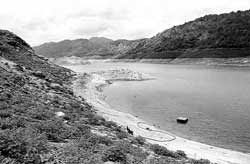
The Kotmale reservoir was commissioned on August 24, 1985. While paying great tribute to those who sacrificed lands engulfed in the reservoir, Minister Dissanayake emphasized that it was made for the sake of national interest with a view to have a definite development revolution. He said, “I believe that the agony and the pain of mind the people of Kotmale and my relatives suffered as a result of the loss of their ancestral lands will be compensated with happiness when they witness the great benefits that this project will bring to the next generation.”
The vast majority of those who gifted lands were given alternate lands under the Mahaweli scheme. These settlers living independently today have their basic needs like jobs, housing and food, while making maximum use of the golden waters of the reservoir for their agricultural needs.
The proposal to rename the Kotmale reservoir was made by the then Prime Minister, Ranil Wickremesinghe to pay homage and tribute to Gamini Dissanayake. It was indeed a memorable gesture of national gratitude.On the April 11, 2003 the Kotmale reservoir was renamed as ‘Gamini Dissanayake reservoir’ by unveiling his statue in close proximity to the reservoir site at a glittering ceremony with the participation of Cabinet Ministers, Srima Dissanayake, Chairperson of the Gamini Dissanayake Foundation and Navin Dissanayake, the then Deputy Minister of Plantation Industries and several other distinguished invitees.
While holding several ministerial portfolios, Mr. Dissanayake uplifted the basic living standards especially of the average citizen and made a tremendous impact on the economic revival of the country. He was also chiefly instrumental in obtaining full ICC status for Sri Lanka to play Test cricket. He was appointed the President of then Board of Control of Cricket in Sri Lanka on two occasions — initially from 1981 to 1989 and again for a short period, in 1994. As President he stood firm against the rigid resistance of the ICC officials. His efforts helped Sri Lanka to be admitted as a full member of the ICC to play Test cricket.
Another significant contribution made by him to international cricket was making an impassioned plea to the ICC for India and Pakistan to host the 1987 World Cup away from England for the first time. Addressing the ‘chair’ he said there are millions and millions in the sub continent obsessed and passionate about this game of cricket. “You have already staged three World Cups in England from the inception in 1975 and are you going to deprive them of the opportunity of viewing a World Cup? It is time that we globalize this event in the best interest of the game of cricket,” he said.
It was however very unfortunate that his life was ended tragically not even two years before our triumph at the Wills World Cup in 1996. As a fitting tribute Skipper Arjuna Ranatunga and his team paid homage to the late leader by handing over the World Cup to Mrs Dissanayake as a mark of deep respect, at their residence at Alfred House Gardens.
It should be the wish of every citizen that the untiring efforts of the late Gamini Dissanayake rendered for the benefit of development and cricket would be sufficient enough to shorten his life through Sansara until he attains supreme bliss of Nibbana.
At eLanka, we respect the rights of creators. If we have used an image you own and you’d like it removed, please email us at info@elanka.com.au and we’ll handle it promptly.
Thanks.
eLanka team
eLanka Disclaimer
Content published on eLanka may be created by the eLanka team, submitted by contributors or third parties, reproduced or adapted from other sources with appropriate source acknowledgement, or provided as promotional/advertising material by our clients. While eLanka takes reasonable care in preparing and publishing content, we do not warrant its completeness or accuracy. Views expressed are those of the respective authors or contributors and do not necessarily represent the views of eLanka. Third-party contributors, content providers and advertisers are responsible for the accuracy of material they supply and for ensuring they hold the necessary rights and permissions for its publication. Advertising and promotional content should not be regarded as an endorsement by eLanka of any product, service or claim.