



The Historic Gates of St. Peter’s College: Walking Down Memory Lane with Peterites Everywhere

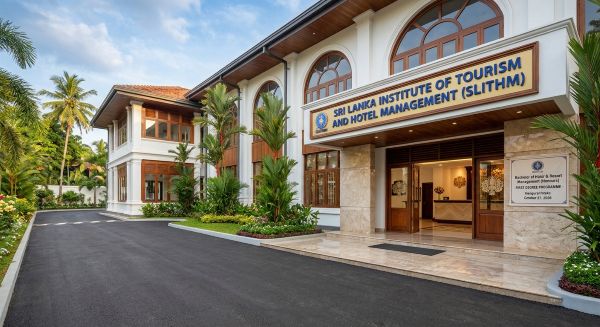
AI-generated illustration for this article, based on the campaign description; it is not an archival photograph. Photographs from the original Facebook post could not be embedded.
A school entrance is more than a point of arrival. For generations of students, it becomes a landmark around which the ordinary details of school life gather: the route taken each morning, the friends waiting nearby, the sound of a bus pulling in, or the familiar vendors outside the gates. A recent “Walking Down Memory Lane” campaign shared through the eLanka Facebook page turns its attention to the historic gates of St. Peter’s College, Colombo, and the memories they hold for Peterites.
The campaign presents the gates as a threshold between the busy streets of Bambalapitiya and a world of friendships, sporting triumphs, youthful mischief and school-day routines. For old boys living in Sri Lanka and across Australia, the United Kingdom, Canada, New Zealand and elsewhere, the image of a familiar school entrance can bring distant memories into sharp focus. The place may be far away; the attachment to it can remain close.
A school with roots in Bambalapitiya
The gates form part of a setting with a history extending back more than a century. According to St. Peter’s College’s official history, the school’s beginnings were shaped by the need for a further Catholic school for boys in the south of Colombo, after St. Joseph’s College in Maradana had reached its capacity.
Rev. Fr. Maurice Le Goc identified a site in Bambalapitiya beside the Wellawatte canal. The land, known as Kelankaduwa Watte, was purchased for the Archdiocese of Colombo in 1921, and construction began that year. The new school opened on 18 January 1922 as St. Joseph’s College, Colombo South. In 1927, it became St. Peter’s College, establishing the name by which generations of students would come to know it.
That chronology gives the campaign’s focus on the gates a wider historical frame. The gates are not simply an architectural feature: they mark the entrance to an institution whose identity developed alongside Colombo’s growth and whose community has been sustained by successive generations of pupils, staff and old boys. The campaign’s reference to generations passing through since 1922 captures that long continuity, while the school’s published history provides the dates and institutional background.
The small moments remembered outside the gates
The campaign’s most vivid details are not formal milestones but recollections of everyday life. It recalls an old bus stand where, according to the shared memories, some Peterites would delay boarding their own bus while waiting for the Holy Family Convent bus to pass. The campaign remembers those moments as innocent excitement that still brings a smile.
It also recalls Canal View Restaurant as a place for a quick morning tea. With a light touch, the post remembers that some boys might have enjoyed “a sneaky smoke away from the watchful eyes of teachers and prefects”. This is presented as a humorous recollection in the campaign, not as a claim about particular individuals. The restaurant, once remembered as a popular gathering spot for students in the 1950s, 1960s and 1970s, no longer exists today; its place in these recollections remains part of the social landscape old boys carry with them.
Outside the gates, familiar vendors offered another enduring part of the scene. Ice cream and fresh fruit could tempt hungry students, adding colour and flavour to the daily routine. These memories are shared recollections, rather than a documentary record of every student’s experience, but they convey how a school’s life extends beyond classrooms and playing fields into the streets and small businesses that surround it.

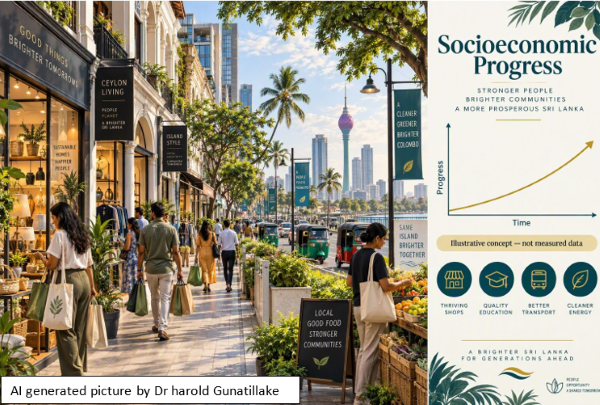
AI-generated illustration of the kinds of street-side scenes described in the campaign; it is not a historical photograph.
From school memories to a wider Peterite community
Nostalgia often begins with a specific place, yet its meaning travels. A gate, a bus stop or a vanished café can serve as a shared reference point for people whose lives have since unfolded in different cities and countries. For Peterites abroad, memories of Bambalapitiya can be part of how friendships and school identity are maintained across distance.
The phrase chosen by the campaign, “Once a Peterite, Always a Peterite,” expresses that sense of connection. It does not suggest that every old boy remembers the same details; rather, it recognises a common history that can hold many individual experiences. The campaign’s message is an invitation to remember the places that shaped those experiences and the bonds that continued long after school days ended.
eLanka has previously revisited the campus through Joe Paiva’s photographic tour of St. Peter’s College, published in April 2023. That feature offered readers a visual perspective on the college, complementing the present campaign’s focus on memory and the meaning attached to a familiar entrance.
Other eLanka coverage has highlighted Peterite stories and alumni connections beyond Sri Lanka. A feature on Bernard Wijetunge and Peterite cricket history recalls a significant chapter in the school’s sporting story. In Canada, eLanka has also covered a Peterite membership evening in Toronto, reflecting the ways Peterites continue to gather and maintain their associations overseas.
Together, these accounts show how school heritage is carried forward: through documented history, photographs, sporting memories and community gatherings. The gates, meanwhile, remain a powerful image of return, not necessarily a return to the past, but a reminder of where a shared story began.
A living landmark
Today, as the campaign notes, the gates continue to welcome new generations of students. Their daily passage gives the entrance a living purpose, while for old boys it can also act as a gateway to treasured memories, lifelong friendships and a lasting Peterite bond.
The history of St. Peter’s College is grounded in the Bambalapitiya campus established in the early 1920s and developed into a school with its own name and identity. The campaign adds a more personal layer to that history, gathering recollections of buses, tea, fruit, ice cream and the familiar places around the school. Those details may differ from one generation to another, but together they form a warm portrait of how school life is remembered.
For Peterites across Sri Lanka and around the world, “Walking Down Memory Lane” honours the places that remain woven into those memories. The gates stand at the meeting point of past and present: a daily entrance for today’s students and, for many old boys, a lasting symbol of belonging.
Sources
- St. Peter’s College, “Walking Down Memory Lane” campaign, shared via eLanka Facebook: https://www.facebook.com/eLanka.com.au/posts/pfbid02B2CivYzMkU1oJpP9XScueceeKuJ7vNXJ2FsQUfWJAiEHr7j5yPLv6phXLGfGnzadl?rdid=mOAW331j7XASwiFO
- St. Peter’s College, official history: https://stpeterscollege.lk/history-of-st-peters-college/
- St. Peter’s College Old Boys’ Union UK, “St. Pete’s College”, by Algi Wijewickrema: https://spcobu.uk/st-petes-college
- eLanka, “Tour of St Peters College, Colombo, April 2023”, by Joe Paiva: https://www.elanka.com.au/tour-of-st-peters-college-colombo-april-2023-by-joe-paiva/
This article was written based on the sources above, kindly email us at info@eLanka.com.au if any information needs to be corrected.
At eLanka, we respect the rights of creators. If we have used an image you own and you’d like it removed, please email us at info@elanka.com.au and we’ll handle it promptly.
Thanks.
eLanka team
eLanka Disclaimer
Content published on eLanka may be created by the eLanka team, submitted by contributors or third parties, reproduced or adapted from other sources with appropriate source acknowledgement, or provided as promotional/advertising material by our clients. While eLanka takes reasonable care in preparing and publishing content, we do not warrant its completeness or accuracy. Views expressed are those of the respective authors or contributors and do not necessarily represent the views of eLanka. Third-party contributors, content providers and advertisers are responsible for the accuracy of material they supply and for ensuring they hold the necessary rights and permissions for its publication. Advertising and promotional content should not be regarded as an endorsement by eLanka of any product, service or claim.