



The stories told by the Buddha’s hands – By Peter Vredeveld
When we look at a Buddha image, our eyes often go first to the face. Yet the hands can tell us just as much. An open palm, fingers reaching towards the ground, or two hands resting quietly in the lap can help us understand the scene before us.
These gestures are known as mudras. Across Buddhist traditions, they give visible form to teachings, qualities and episodes from the Buddha’s life. Three familiar gestures offer a useful starting point.
An open palm
A raised hand with the palm facing outwards is commonly associated with abhaya mudra, the gesture of reassurance and fearlessness.
To a modern viewer, the hand might initially resemble a signal to stop. In Buddhist sculpture, however, it offers protection and reassurance. The position of the arm and the treatment of the fingers vary between regions and periods, giving a shared gesture many different expressions.
Looking closely at the palm can change our encounter with the whole figure. The image becomes more than a quiet presence: it addresses the person standing before it.
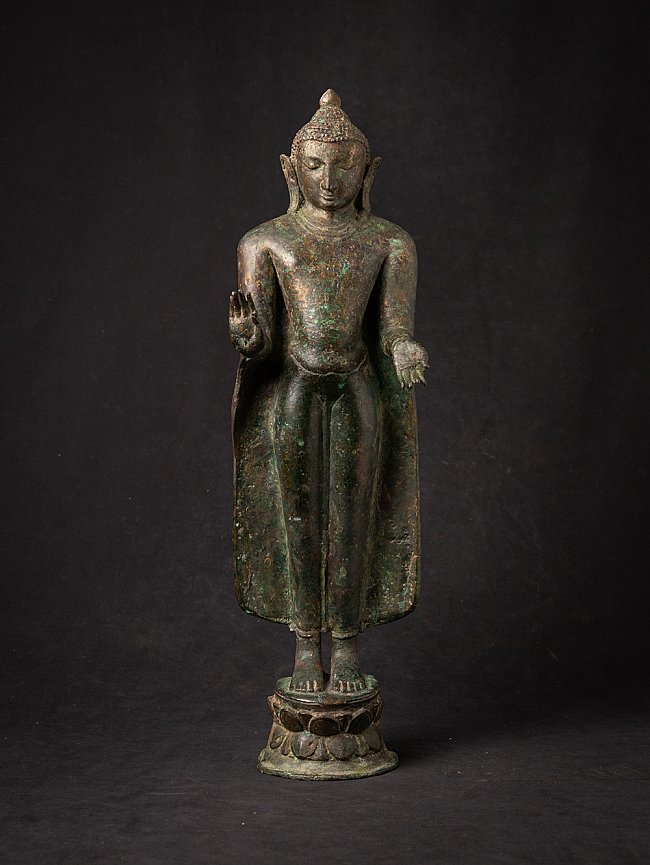
Abhaya mudra: the raised right hand offers reassurance. Standing Thai Buddha. Photograph: Original Buddhas.
Calling the earth to witness
In another familiar arrangement, the Buddha sits with his left hand resting palm upwards in his lap. His right hand reaches down over the knee, with the fingers pointing towards the earth.
Known as bhumisparsha mudra, this gesture recalls the Buddha calling the earth to witness his accumulated merit during his encounter with Mara, before his awakening.
When identifying the gesture, remember that “right” means the figure’s own right, which appears on the viewer’s left. This small detail is easily overlooked in photographs.
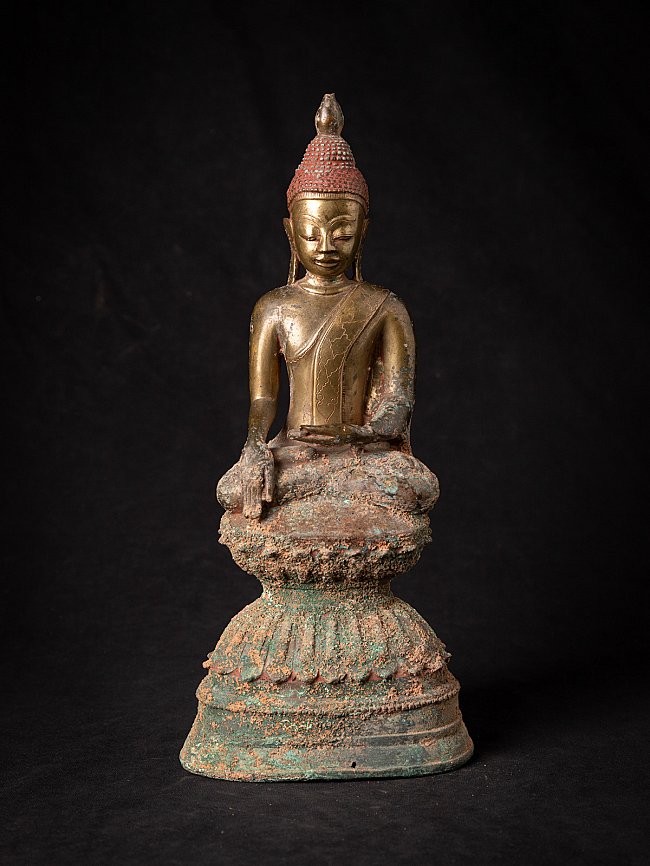
Bhumisparsha mudra: the right hand reaches towards the earth. Bronze Buddha from Myanmar. Photograph: Original Buddhas.
Hands resting in meditation
In dhyana mudra, both hands rest in the lap with their palms upwards, commonly with the right hand above the left. The gesture is associated with meditation and concentration.
Its simplicity invites attention to small details: the curve of the fingers, the space between the hands and the way the arms settle against the body. Different sculptors give this quiet arrangement a remarkably individual character.
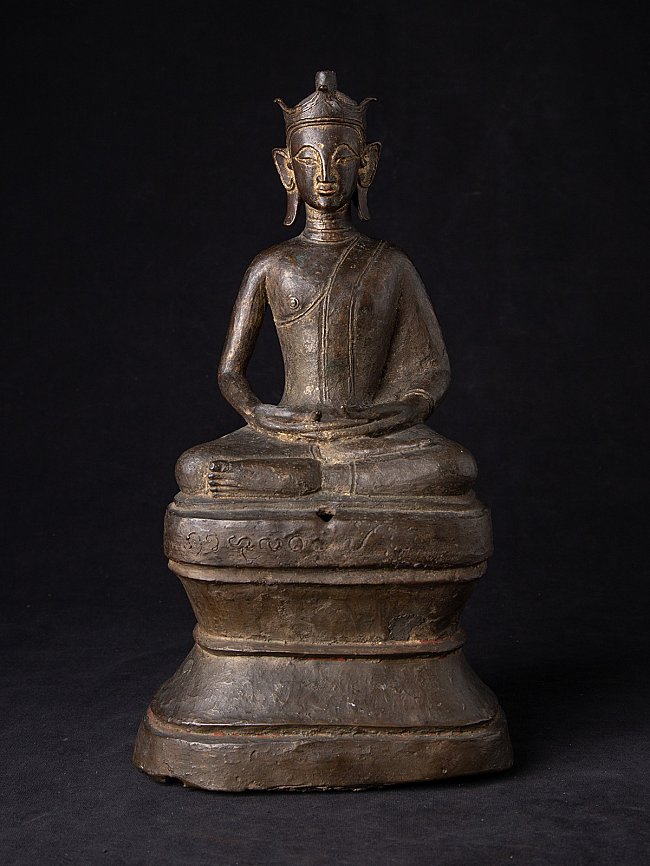
Dhyana mudra: both hands rest in the lap in meditation. Bronze Buddha from Myanmar. Photograph: Original Buddhas.
Looking beyond the gesture
A mudra is a beginning, rather than a complete explanation. The figure’s posture, clothing, attributes and original setting also matter. Buddhist communities across Asia have developed distinct artistic traditions, and similar gestures can appear in different contexts.
After more than twenty-five years of collecting Buddhist art, I still find that the most rewarding approach is to look slowly. Learning a gesture’s name helps, but noticing how a sculptor has expressed it makes the encounter personal.
About the author
Peter Vredeveld is the owner of Original Buddhas, a gallery specialising in antique Buddhist and Hindu sculpture in a former church in Deventer, the Netherlands. He has spent more than twenty-five years collecting and working with Buddhist art.
At eLanka, we respect the rights of creators. If we have used an image you own and you’d like it removed, please email us at info@elanka.com.au and we’ll handle it promptly.
Thanks.
eLanka team
eLanka Disclaimer
Content published on eLanka may be created by the eLanka team, submitted by contributors or third parties, reproduced or adapted from other sources with appropriate source acknowledgement, or provided as promotional/advertising material by our clients. While eLanka takes reasonable care in preparing and publishing content, we do not warrant its completeness or accuracy. Views expressed are those of the respective authors or contributors and do not necessarily represent the views of eLanka. Third-party contributors, content providers and advertisers are responsible for the accuracy of material they supply and for ensuring they hold the necessary rights and permissions for its publication. Advertising and promotional content should not be regarded as an endorsement by eLanka of any product, service or claim.