



From Sri Lanka to Sydney: S. Shakthidharan’s Family Home Carries Generations of Stories

Award-winning playwright and author S. Shakthidharan. Photograph: Alex Vaughan / The Indian Sun.
For Australian playwright and author S. Shakthidharan, a family home in Sydney’s west holds more than the traces of a journey between countries. Rebuilt from parts carried across the ocean, it embodies the choices, obligations and changing sense of belonging that have shaped his family across generations.
The house is also at the heart of his debut memoir, Gather Up Your World in One Long Breath, which won the $30,000 Multicultural NSW Award at the NSW Literary Awards in May. The award recognised a personal account of migration, family responsibility and the search for a place to call home.
The story begins with Shakthidharan’s grandmother, Linga. In 1983, as anti-Tamil violence reached the family’s home in Sri Lanka, she arranged for the house to be dismantled and its parts sent to Australia. Her decision preserved not simply a building, but the possibility of a family home continuing in another country.
“The staircase, the kitchen sink, all the furniture, everything,” Shakthidharan recalled, describing what was taken apart. Linga, he said, wanted “a new place of belonging for many generations to exist in another country”.
Over the following decade, the house was reconstructed in Homebush, in Sydney’s west. Shakthidharan has described it as a “double-bricked Sri Lankan McMansion”. Linga lived to see the work completed in 1996, then moved into the house with her daughter and grandson. She died after the family had settled there.
A house that held a community
Shakthidharan remembers his grandmother as “a force of nature bigger than life itself”. His mother, Anandavalli, raised him as a single parent and worked as a Bharatanatyam dancer, choreographer and teacher. At home, the activity of her Lingalayam Dance Academy brought students and their families into the household.
“I lived inside a community inside my home,” he said.
That close connection could be sustaining, but it could also feel overwhelming to a young person growing up in a large, busy household. Shakthidharan has described the house as “as much a prison for me as it has been a sanctuary. It was too big and too full of people”.
The home’s meaning, then, was never simple. It represented Linga’s determination to make a place for the family in Australia, and the community Anandavalli cultivated through dance; it also carried the demands of maintaining a large property and the weight of family expectations.
As a young adult, Shakthidharan moved to inner Sydney, where he began shaping a life beyond the Homebush house. He embraced Australian popular culture, including grunge music, cricket and the beach, while pursuing his artistic interests. But the distance from home did not remove the responsibilities attached to it.
An uncle confronted him with the family’s financial difficulties, warning: “You’re going to lose that house. Your mum’s in a lot of debt.”
Shakthidharan returned to help. It was a turning point, requiring him to reconsider what the house meant to him and how he might belong there on his own terms. “I tried to make it my home in a way that was actually somewhere I could belong, and that was terrifying,” he said.

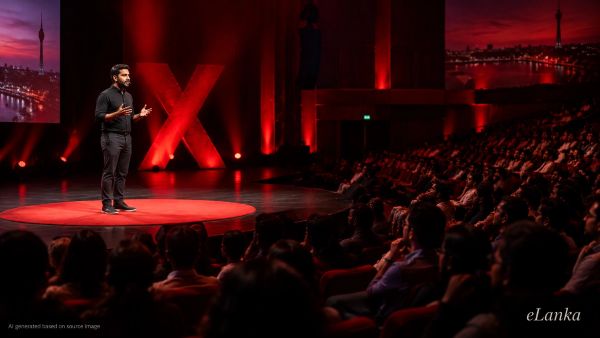
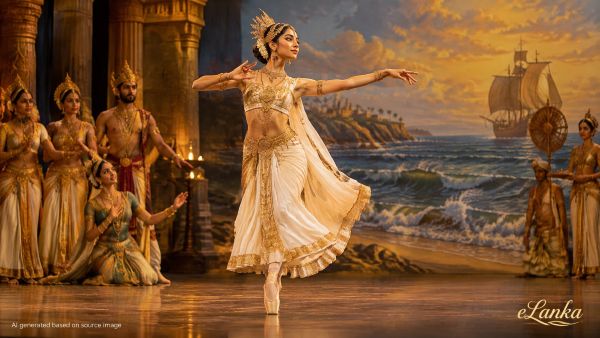
AI-generated illustration based on the source profile; it evokes the themes of home, memory and belonging.
A shoebox of letters opens a wider story
In his late twenties, despite his mother’s objections, Shakthidharan travelled to Sri Lanka to learn more about his family’s past. During the visit, an uncle brought out a shoebox of old letters. Among them was material connected to his great-grandfather, C. Suntharalingam, an Oxford-educated politician who served in Sri Lanka’s first post-independence cabinet.
The letters shifted Shakthidharan’s understanding of the stories he might tell. “That’s when I realised you can tell a family story and a country story at the same time,” he recalled.
That insight became instrumental to his work. His acclaimed theatre production Counting and Cracking traces generations of a Sri Lankan Tamil family against the country’s political history. The work connected intimate family experience with a broader national account, while giving the stories of successive generations a place on the public stage.
It also helped change the relationship between Shakthidharan and his mother. Anandavalli became involved in the production as its costume and cultural adviser, bringing her knowledge and experience into the creative process. Shakthidharan described the collaboration as “a project of reconciliation between mother and son”.
When Counting and Cracking opened in 2019, one of the first people to stand in appreciation was the uncle who had urged him to give up the arts for a conventional job. Shakthidharan recalled: “He’s never asked me to get a real job since.”
Stories as a way of belonging
For Shakthidharan, the experience of sharing family stories has strengthened a belief that belonging involves more than private attachment. “We don’t actually truly belong unless we belong publicly,” he said.
He has spoken about the value of showing migrant families as they are, rather than presenting only carefully edited accounts of their lives. “What if we just show everything about who we are… and say we’re just as human as you,” he said, describing that openness as “a radical act of belonging”.
His memoir brings those questions into the present, reflecting on his experiences as a son, husband and father. The impulse to write emerged during a demanding Christmas, as he balanced the needs of two young sons and ageing parents. Amid the pressure, he recognised an unexpected sense of connection: “It was the first time I was having the feeling of being inside a family in a place I belonged.”
That feeling prompted him to look back at what earlier generations had carried: the upheaval of migration, the effort involved in preserving a home, and the duties that can pass from one generation to the next. The book’s award recognises a story rooted in one family’s experience, while inviting a wider consideration of how people make home across time and place.
“Stories are a safe way for people to start talking about it again,” Shakthidharan said. He also believes that “Australia’s multicultural stories” can increasingly become “the way that all Australians see themselves”.
His reflection reaches beyond his own family. Sri Lankan Australians and Sri Lankan readers around the world may recognise something in the effort to keep family memories alive, particularly when lives have been reshaped by migration and distance. Each family’s history is distinct, yet the act of telling it can help make those experiences visible to others.
“There’s stories within each of us,” he said, “that no one else in the world can tell.”
The rebuilt Homebush house remains a powerful image within that account: a sanctuary and a burden, a family gathering place and a record of decisions made across generations. In carrying its story into theatre and literature, Shakthidharan has shown how a family’s history can speak not only to its own members, but also to the wider Australian community.
eLanka previously covered Shakthidharan’s Windham-Campbell Prize. This feature focuses on the distinct family story behind his memoir, the Homebush house and the role of storytelling in bringing generations closer.
This article was written based on the sources https://www.theindiansun.com.au/2026/11/02/from-sri-lanka-to-sydney-a-family-home-carries-generations-of-stories/ and https://www.multicultural.nsw.gov.au/stories/shakthi, kindly email us at info@eLanka.com.au if any information needs to be corrected.
At eLanka, we respect the rights of creators. If we have used an image you own and you’d like it removed, please email us at info@elanka.com.au and we’ll handle it promptly.
Thanks.
eLanka team
eLanka Disclaimer
Content published on eLanka may be created by the eLanka team, submitted by contributors or third parties, reproduced or adapted from other sources with appropriate source acknowledgement, or provided as promotional/advertising material by our clients. While eLanka takes reasonable care in preparing and publishing content, we do not warrant its completeness or accuracy. Views expressed are those of the respective authors or contributors and do not necessarily represent the views of eLanka. Third-party contributors, content providers and advertisers are responsible for the accuracy of material they supply and for ensuring they hold the necessary rights and permissions for its publication. Advertising and promotional content should not be regarded as an endorsement by eLanka of any product, service or claim.