A new constitution for Sri Lanka; a misplaced priority
The original article was published in the Asian Tribune on the 18th of January 2016
By Raj Gonsalkorale
Sri Lanka seems destined to engage in yet another mix up of priorities. Since independence in 1948, the country has been grappling with constitutions or major changes to administrative regulations and not economic priorities. The result has been that a country that was more economically advanced at one time than subsequent Tiger economies like Singapore and Malaysia, has sled back to where it was decades ago.
Sri Lanka could refer to two periods when an economic resurgence gave hope to a brighter future for its current and future generations. That was the liberalization of the economy and the initiation of giant projects like the Mahaveli development project in 1977 under President J R Jayewardene, and in 2009/10, soon after the defeat of the LTTE during the Presidency of Mahinda Rajapakse. The economic boom spearheaded by a hitherto unseen infrastructure development including the development and revamping of irrigation and power, raised Sri Lanka to a lower middle income status increasing the per capita income to more that USD 2700.
The discussion and debate that will ensue about a new constitution for Sri Lanka is by itself not a bad thing. The point is that this appears to be the only discussion and debate that is being promoted by the current regime, and being done at the cost of having no discussion or debate on the economy of the country.
Since the defeat of President Rajapakse, the economy of the country has been at a standstill and running on fuel pumped to the country’s economic engine during the previous regime. One does not have to guess the plight of the country if no new fuel is pumped into its economic engine.
Sri Lanka is back in the hands of those who are good at missing the woods for the trees. It is back in the hands of a select few who are good at engaging in esoteric theories and academic arguments about the rights of individuals and democratic governance. They forget that the future of a country lies in economic development and they forget Bill Clinton’s famous campaign one liner, it’s the economy stupid!”, that he used effectively to oust George W Bush who had neglected the country’s economy.
The discussion and debate that will ensue about a new constitution for Sri Lanka is by itself not a bad thing. The point that is missing is that this appears to be the only discussion and debate that is being promoted by the current regime, and being done at the cost of having no discussion or debate on the economy of the country.
A skeptic cannot be blamed if one were to say that the reason for this is that the regime has no idea or plan for economic development of the country, and it is engaging in an esoteric, academic exercise in order to cover its nakedness in regard to the void that is evident to its own supporters about the absence of any immediate, medium and long term plans for the economic development of the country.
Sri Lanka is primarily a rural based country and a majority of its people is rural based. If it were to push its economy forward, it is the rural economy that must take the lead in elevating the living standards of its people. Urban centric development will enrich a few and will have a marginal trickledown effect to the periphery and it will not lift the economy of the rural sector.
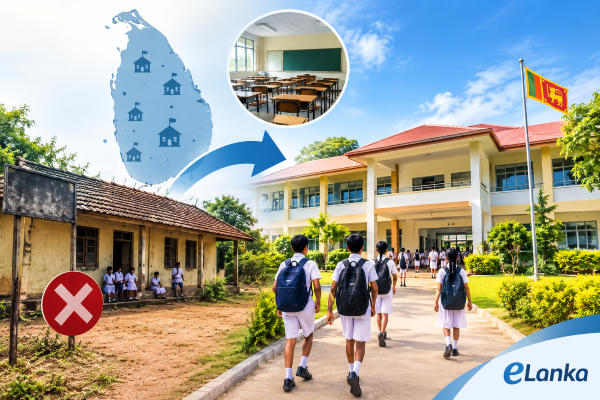
The previous regime very rightly focused on infrastructure, particularly to repair its degradation after three decades of terrorism and war, and to introduce new roads, bridges, railways, schemes for power generation, water supply and irrigation amongst other initiatives. Its education policy of introducing 1000 specialized teaching facilities in central schools was a commendable initiative, sadly, scuttled by the new regime.
Unfortunately for the country, the previous regime’s own follies coupled with a massive western nation led international intervention ousted it from office, and with it, derailed the economic resurgence witnessed since the end of the war. As it happens when Western nations openly or covertly plan and cause regime changes, they do not include plans post regime change management for the new regimes. Perhaps this is deliberate as the plotters could continue their interference in the internal affairs of the country in the guise of assisting” them to recover from the damage” done by the regime they helped to oust.
Sri Lanka could do with administrative devolution in order to provide better services for its people at all levels, in particular to the rural sector. It does not need more politicians as it is their interference that has impacted negatively on the provision of services. It is the administrative structure that needs to be strengthened and the administrators that need to be given the freedom to carry out their duties within policy guidelines determined by the people themselves through their representatives.
Whereas Sri Lankans should be discussing its economic future including the future of its Tea, Rubber and Coconut industry in the next few decades, the future of its overseas worker remittances that keeps the Nation afloat, its industrial policy, its agricultural policy, its irrigation and water management policy, its urban and rural development policy, its health policy, its education policy, its gender policy, all of which are national priorities, the discussion today is about a new constitution, devolution, more politicians, and of course the Rajapaksa’s and their supporters and what to do with them.
It is hoped that the combined Opposition would highlight this mixing of priorities and pressure the new regime to focus on what matters most to Sri Lankans, its economy. This is the discussion that should be exoteric and broad based and should involve all sectors of the country’s economy.
In regard to esoteric discussion on a new constitution, the key elements of political devolution is understood to provide defined geographic units the power to legislate (confined to defined subjects), including in areas of Policing, land management, ability to raise funds (both from taxes as well as from external sources), independent of the national government, for economic activities within the defined geographic area. No doubt there are other features included in political devolution.
Political devolution was essentially driven by the ethnic conflict and it had little or nothing to do with a demand for it from other sources, meaning, there was no demand for it from other communities except the Tamil community, and that too from the Tamil community of the North and the East. Primarily, it was linked to geography and the historical homeland claim of the Northern and Eastern region of the country.
The need” for political devolution therefore was based on the traditional homeland concept. One could say with some justification that the regular insecurities and inequalities that the Tamil community (the Tamils of recent Indian origin have always been excluded by the more traditional Sri Lankan Tamils from any discussion on their rights, insecurity and gross inequalities) had to face, strengthened the case for some form of self-determination for the traditional Tamils (as distinct to Tamils of more recent Indian origin) within a geographical area. What was really demanded, initially peacefully, and then with violent means, was asymmetrical political devolution, which concept, due to its non-acceptance by the majority Sinhala community, was broad-based to grant a degree of political devolution throughout the country. The 13th Amendment was not based on need (except by the Northern an Eastern Tamil community) but on the political and security realities in the country at the time.
While the predicaments faced by the Tamil community in a Sinhala dominated political landscape is acknowledged and understood, it is unlikely that political devolution as envisaged will be a solution to the ethnic conflict. It will exacerbate the divisions between the communities and within communities as citizens living a few feet away from each other in two provinces could potentially have different internal laws and regulations to contend with if provinces are given the right to legislate. The issue of the rights of Tamils living outside the North and the East, where today, due to whatever reason, more Tamils (including Tamils of recent Indian origin) live, has never been addressed. The fact that a majority of Tamils in the country will continue to be minorities in the areas where they live and political devolution would not have given them more rights and more equality in Sinhala dominated areas has been conveniently ignored. In this context, the fact that there will be some Tamils who enjoy more rights than other Tamils has not been addressed by the Tamil political leadership.
Rather than creating further divisions, Sri Lanka should actively move towards the creation of a national identity through central power sharing using a bicameral legislature (Parliament and a Senate with greater provincial representation, and even veto powers granted to the Senate on legislation that, for example, has the potential to discriminate, create inequalities based on ethnicity or religion) strong and independent commissions, a constitutional Council and an executive with defined powers. The executive should also include two Vice Presidents, one from the Tamil community and one from the Muslim community.
Provincial administrations should be granted powers to administrate within national policy guidelines formulated by the bi cameral legislature and approved by the Constitutional Council.
Granting Police powers may be looked at as an administrative issue where a provincial police carries out their duties within national guidelines. Land powers may be similarly devolved as a shared responsibility within national guidelines. Fund raising could also be considered within national guidelines. Provincial councils basically should not have legislative powers, and their focus should be administration rather than legislation.
A solution that has the potential to further divide a divided Nation will not be a solution. It will only be the beginning of another problem. Rather than giving priority to developing a new constitution, the new regime could have united all people and all parties behind a long term economic development plan for the country. It is a relevant argument that democracy and political governance matters little to those who have no means of income, no job, no roof over their heads and those who are perpetually on empty stomachs. Sri Lankan poverty levels have dropped considerably over the past few years, but there are many very poor people in Sri Lanka if one only cares to look around the country.
– Asian Tribune –