



Cabinet Clears Foreign University Partnerships Including Peradeniya with Australia’s RMIT
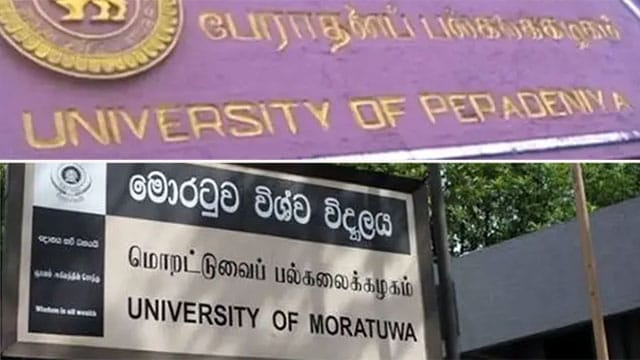
Image credit: Ada Derana
Sri Lankan universities are set to broaden their academic links with institutions in India, Thailand, China, Spain and Australia, following Cabinet approval of a proposal to establish a series of international partnerships. The agreements are intended to strengthen cooperation in higher education through exchanges, research collaboration, academic training and joint publications.
The proposal was submitted by the Prime Minister in her capacity as Minister of Education, Higher Education and Vocational Education. The stated objectives are to promote the internationalisation of higher education and support the standing of Sri Lankan universities in global university rankings. Such partnerships may contribute to those aims, although rankings depend on many factors and no particular outcome is guaranteed.
For students, researchers and academic staff, the value of international agreements is most tangible when they create opportunities to learn, teach and conduct research with colleagues in other institutions. The approved arrangements set out several different forms of cooperation, each with a distinct focus.
Four partnerships with different academic aims
The agreements, as reported by Ada Derana, are as follows:
- University of Colombo and Manipal Academy of Higher Education, India: An MoU to strengthen educational cooperation, facilitate the exchange of publications and academic information materials, promote the exchange of academic staff, research scholars and students, and obtain technical assistance.
- Buddhist and Pali University of Sri Lanka and Mahamakut Buddhist University, Thailand: An MoU aimed at promoting academic and research cooperation between the two universities.
- University of Moratuwa, Xi’an Jiaotong-Liverpool University, China, and Universitat La Salle, Barcelona, Spain: An MoU to facilitate research cooperation among the three universities.
- University of Peradeniya and the Royal Melbourne Institute of Technology (RMIT), Australia: An MoU covering collaborative research training programmes, joint publications and related activities.
The range is notable: it encompasses the exchange of people and academic materials, focused cooperation in Buddhist and Pali studies, research collaboration across three institutions, and research training involving an Australian university. The agreements are not identical in scope, but together they offer a framework through which Sri Lankan institutions can develop academic relationships across several regions.
What international cooperation can mean for students
An agreement between universities does not, by itself, establish that every student will have access to an exchange or joint programme. The practical opportunities depend on how each partnership is implemented, which departments participate and what arrangements are made for eligibility, funding and academic credit.
Nevertheless, the stated areas of cooperation provide useful signposts. At Colombo and Manipal, the proposed exchanges of students, research scholars and academic staff could enable participants to experience different academic environments and build connections with peers and researchers in India. The exchange of publications and academic information materials may also support access to research and teaching resources, while the provision for technical assistance offers a further avenue for institutional cooperation.
The Moratuwa agreement brings together a Sri Lankan university with partners in China and Spain, with research cooperation as its specified focus. If developed through projects and active collaboration, this type of arrangement can connect researchers working in different settings and help them share methods, knowledge and perspectives. For early-career academics and postgraduate researchers, sustained contact with international collaborators can be an important part of building a research network.
The Buddhist and Pali University’s agreement with Mahamakut Buddhist University, meanwhile, centres on academic and research cooperation. Its focus provides a foundation for scholarly exchange between institutions with shared interests in Buddhist studies and related fields.
Peradeniya and RMIT: a connection of particular interest in Australia
The proposed Peradeniya–RMIT MoU covers collaborative research training programmes, joint publications and related activities. For Sri Lankan families and graduates in Australia, the partnership is an especially relevant connection: it brings a leading Sri Lankan university and an Australian institution into a formal framework for academic cooperation.
The agreement also sits alongside a separate RMIT–Sri Lanka water-security partnership previously covered by eLanka. That initiative concerned water infrastructure and technical cooperation; it is distinct from the newly approved university-level MoU involving Peradeniya, and the two should not be conflated.
The announcement also refers to bilateral agreements under an Umbrella Cotutelle Agreement, which are to facilitate collaborative research training programmes and the awarding of postgraduate degrees. A cotutelle is a joint doctoral arrangement in which a candidate is enrolled at two universities and is typically supervised by academics at both institutions. Under the arrangement, the candidate receives a degree recognised by both partner universities.
That is a general explanation of the cotutelle model, not confirmation that a specific programme under these new agreements is already operating. The bilateral agreements will be needed to set out how collaborative training and postgraduate awards are organised. For prospective researchers, the model can be appealing because it offers a structured academic connection to two institutions and, where the agreements provide for it, recognition of the qualification by both.

A framework whose value will depend on implementation
The Cabinet’s approval creates a basis for the universities to enter into the proposed agreements, but the educational benefits will depend on the details developed by the institutions. Clear information about participating faculties, research areas, student eligibility, supervision, funding and degree requirements will help students and researchers understand which opportunities become available.
International partnerships are most useful when they support sustained academic work: researchers collaborating on defined projects, staff sharing expertise, and students receiving clear guidance about exchanges or postgraduate pathways. The approved agreements identify a range of possible areas for such cooperation, from academic exchanges and technical assistance to research training and joint publications.
For Sri Lankan universities, the new links extend across South Asia, Southeast Asia, East Asia, Europe and Australia. For students and academic staff, they offer the prospect of wider connections and shared learning, while the Peradeniya–RMIT agreement provides a direct point of interest for readers with ties to Australia. As the universities move from approval towards implementation, the detail of each partnership will determine how this international framework translates into opportunities on campus.
This article was written based on the sources https://adaderana.lk/news/251830, https://www.themorning.lk/articles/kpabDjIHMZL8rwb1mrXL and https://www.lankanewspapers.com/2026/11/17/sri-lankan-universities-set-to-broaden-global-academic-ties-in-major-expansion-drive, kindly email us at info@eLanka.com.au if any information needs to be corrected.
At eLanka, we respect the rights of creators. If we have used an image you own and you’d like it removed, please email us at info@elanka.com.au and we’ll handle it promptly.
Thanks.
eLanka team
eLanka Disclaimer
Content published on eLanka may be created by the eLanka team, submitted by contributors or third parties, reproduced or adapted from other sources with appropriate source acknowledgement, or provided as promotional/advertising material by our clients. While eLanka takes reasonable care in preparing and publishing content, we do not warrant its completeness or accuracy. Views expressed are those of the respective authors or contributors and do not necessarily represent the views of eLanka. Third-party contributors, content providers and advertisers are responsible for the accuracy of material they supply and for ensuring they hold the necessary rights and permissions for its publication. Advertising and promotional content should not be regarded as an endorsement by eLanka of any product, service or claim.