News & Community eLanka

eLanka

Thursday, 15 Oct 2026
  • Home
  • Read History
  • Articles
    • eLanka Journalists
  • Events
  • Useful links
    • Obituaries
    • Seeking to Contact
    • eLanka Newsletters
    • Weekly Events and Advertisements
    • eLanka Testimonials
    • Sri Lanka Newspapers
    • Sri Lanka TV LIVE
    • Sri Lanka Radio
    • eLanka Recepies
  • Gallery
  • Contact
Newsletter
Sri lankan news
  • eLanka Weddings
  • Property
  • eLanka Shop
  • Business Directory
eLankaeLanka
Font ResizerAa
Search
  • Home
  • Read History
  • Articles
    • eLanka Journalists
  • Events
  • Useful links
    • Obituaries
    • Seeking to Contact
    • eLanka Newsletters
    • Weekly Events and Advertisements
    • eLanka Testimonials
    • Sri Lanka Newspapers
    • Sri Lanka TV LIVE
    • Sri Lanka Radio
    • eLanka Recepies
  • Gallery
  • Contact
Follow US
© 2005 – 2026 eLanka Pty Ltd. All Rights Reserved.
Home » Goodnews Stories Srilankan Expats » Articles » Jackfruit: the ‘vegan sensationʼ that saved Sri Lanka
Articles

Jackfruit: the ‘vegan sensationʼ that saved Sri Lanka

eLanka admin
Last updated: December 27, 2021 5:20 am
By
eLanka admin
ByeLanka admin
Follow:
Share
16 Min Read
SHARE
Views: 567

Jackfruit: the ‘vegan sensationʼ that saved Sri Lanka

Cooked jackfruit has a shredded meat texture that resembles pulled pork (Credit: Nathan
Mahendra)

Source:BBC

My mother grew up in a house of eight people in Kurunegala, Sri Lanka, 100km north-east of Colombo. During the islandʼs severe droughts in the 1970s, most of her familyʼs humble, home-cooked meals consisted of boiled jackfruit served in a clay pot with a handful of freshly grated coconut. This simple, carb-rich meal fused with natural fats fuelled enough energy for the farmer-family to toil day and night in the dry plains.

Today, Starbucks serves jackfruit in wraps, while Pizza Hut offers it as a topping. The London Evening Standard called jackfruit “the new kimchi, kale and cauliflower all rolled into one”. Pinterest named it “the hottest food trend of 2017”, and more recently, The Guardian declared it “a vegan sensation” thanks to its shredded meat texture.


But for my mother, her memories of growing up are studded with her eldest sisterʼs myriad jackfruit dishes. Sheʼs particularly fond of kiri kos, a creamy jackfruit curry cooked in coconut milk. For kiri kos, my aunt plucked unripe jackfruits. Decades later in the early 2000s, it was the same tree that pleased my jackfruit cravings as a child. My mother recalls the days where I sat side by side with her as she removed and discarded the sticky white sap – koholla, as she called it in Sinhala – from ripe jackfruit, gobbling up each yellow, egg-like pod.

This humble fruit has been revered by Sri Lankans, as it has repeatedly saved the island from starvation creamy jackfruit curry cooked in coconut milk. For kiri kos, my aunt plucked unripe jackfruits. Decades later in the early 2000s, it was the same tree that pleased my jackfruit cravings as a child. My mother recalls the days where I sat side by side with her as she removed and discarded the sticky white sap – koholla, as she called it in Sinhala – from ripe jackfruit, gobbling up each yellow, egg-like pod.

I loved the strong smell of the ripe fruit. People in the West often describe it as “stinky”, but for me, other Sri Lankans and those living between many parts of India and the rainforests of Malaysia where the fruit naturally grows, this seasonal smell of ripe jackfruit brings immense joy.
Jackfruit is the worldʼs largest tree-borne fruit and it has a spiky skin that changes colour from green to yellow as it ripens. We use unripe jackfruit in our cooking and eat the ripe fruit raw, just as we eat a ripe mango or an
apple. While the West is now touting it as an ethical meat alternative, for centuries, this humble fruit has been revered by Sri Lankans, as it has repeatedly saved the island from starvation.
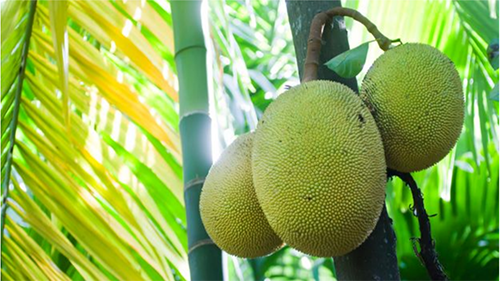
Jackfruit is the world’s largest tree-borne fruit and mature trees produce 200 fruits each year
(Credit: Utopia_88/Getty Images)

Across Sri Lanka, the jackfruit tree is known as bath gasa (“rice tree”). Sri Lankans are rice eaters and pre-colonial Sri Lanka took pride in the countryʼs vast reservoirs and irrigation canals that harnessed monsoon
rains, suppling water for paddy cultivation. But when British forces occupied the island starting in 1815 and subsequently stripped farmers of their land, they made it difficult for islanders to grow rice and instead expanded plantation crops such as tea, rubber and cinnamon for their export gains.


In 1915, a member of Sri Lankaʼs independence movement named Arthur V Dias, who had been sentenced to death by the British for his perceived role in an uprising, was freed from prison. Upon his release, Dias dedicated himself to helping Sri Lankans fight British rule and he realised that islanders would soon face food shortages as rice cultivation continued to decline. During his independence movement marches in Sri Lankaʼs central highlands, he also saw the destruction of the islandʼs native jackfruit trees. When he learnt about the harrowing food shortages caused by World War One across Europe, Dias sought to establish food
security and self-sufficiency throughout Sri Lanka.
You may also be interested in:
• The tree that changed the world map
• Sri Lanka’s musical ‘choon paan’ bread trucks
• How a plant saved a Japanese island
“One person canʼt build a tank for paddy cultivation, but Arthur V Dias realised he could plant jackfruit trees, which [would] be the same as rice and eradicate starvation in Sri Lanka,” said Damith Amarasinghe, a history teacher at St Mary’s Maha Viduhala in the town of Uswetakeiyawa.
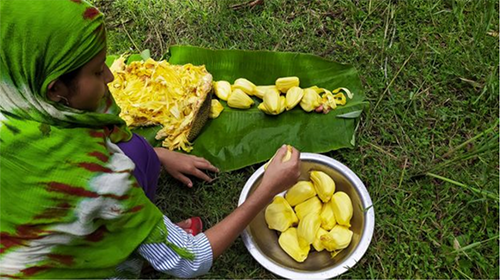
Today, jackfruit trees are everywhere in Sri Lanka and are a vital source of protein for local
residents (Credit: Sahid Laskar)

Dias came up with the ambitious goal of planting one million jackfruit trees across Sri Lanka. A planter by trade, Dias imported jackfruit seeds from Malaysia and gathered healthy seeds for germination. He visited villages to distribute seedlings and mailed seeds to far-flung corners in the country. Over time, Diasʼ campaign paved the way to many successful jackfruit plantations across the country and earned him the heroic nickname of Kos Mama, or Uncle Jack.


Today, Dias is considered a national hero, and like most Sri Lankan children, I first learned about Dias in a school textbook. His jackfruit campaign also helped establish food security in Sri Lanka during World War Two while nearby places such as Bengal and Vietnam experienced horrific famines in the 1940s. Amarasinghe explained that jackfruit was also known as the “starvation fruit” in Sri Lanka during the 1970s, fleetingly transferring me to my motherʼs memories of her childhood.

In the 1970s, a combination of inflation, droughts and a food shortage pushed Sri Lanka to the verge of collapse. A 1974 New York Times article quotes Sri Lankaʼs then-prime minister Sirimavo Bandaranaike as saying
Jackfruit has birthed a host of flavourful delicacies, and we welcome every bit of it into our diverse cuisine the dire economic situation has “almost squeezed the breath out of us – we are literally fighting to survive”.
But thanks to Diasʼ campaign in the early 1900s, people had jackfruit growing in their backyards. Amarasinghe explained that those saplings – which had become tall, fruit-bearing trees long before the 1970s – are what got people through the crisis.
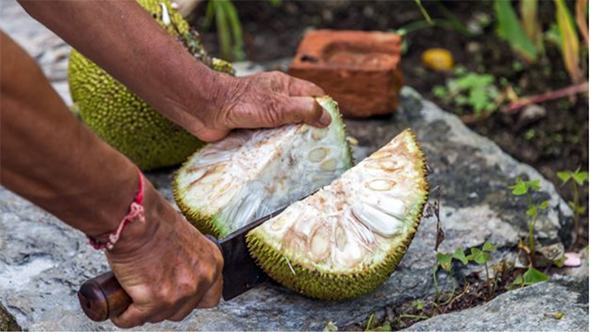
“My grandmother hailed from a well-to-do family, but the government only allowed them to purchase 2kg of rice for a week. During these years, itʼs jackfruit that kept them fed,” Amarasinghe told me.

Most recently, Amarasinghe says that jackfruit also became a staple during Sri Lankaʼs months-long curfew to control Covid-19. During the initial weeks of the pandemic, many people in rural villages lost their incomes and it took weeks or even months for government welfare programmes to reach these remote hamlets. Without access to money or food, many villagers resorted to boiling jackfruit – just as my motherʼs family did in the 1970s.


But jackfruit isnʼt just a starvation fruit. The islandʼs deep love and gratitude for jackfruit has birthed a host of flavourful delicacies, and we welcome every bit of it into our diverse cuisine. Tender baby jackfruit without seeds go into a flavourful curry known as polos ambula. The curryʼs labour-intensive process involves slow cooking the young fruit in a clay pot over an earthen fire for at least six hours. As the hours pass, the baby jackfruit slices simmer in a spice-infused coconut broth, soaking up the flavours of cloves, cardamom, dried tamarind and other
aromats.
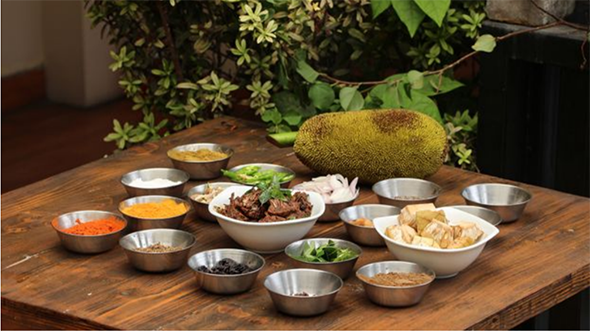
Sri Lankans incorporate jackfruit into a wide variety of traditional dishes (Credit: Nathan
Mahendra)

Ripe jackfruit pods are slimy and taste better with a sprinkle of salt. Seeds donʼt go to waste in our homes; we eat them boiled. When combined with a ground mix of pan-fried rice and shredded coconut, boiled seeds make for a dark curry called kos ata kalu pol maluwa. My mother loves seeds as a snack, smoking them over a charcoal fire. My favourite is my fatherʼs kos ata aggala, pan-roasted and ground jackfruit seeds blended with scraped coconut, sugar and a hint of pepper that are formed into balls for sublime taste and a subtle crunch. He makes them
for evening tea when Iʼm home as a token of his love.

This jack-of-all-fruitsʼ versatility runs beyond the kitchen. “Itʼs hard to think of another tree with so many uses,” said Diwani Welitharage, a pharmacist who cooks with locally sourced ingredients in her spare time. Welitharage cites jackfruit treesʼ popularity as timber and the many uses of its leaves and flowers in Ayurvedic medicine to treat diabetes. Rich in carbs, jackfruit is also a good source of dietary fibre and vitamin C.


Welitharage uses jackfruit flour in muffins and cakes, and fries sliced jackfruit pods into chips laden with sugar. Similarly, many Hela Bojun restaurants – an initiative by the Ministry of Agriculture allowing women to cook traditional Sri Lankan cuisine and earn a living – prepare kos kottu. Kottu, a popular street food and hangover cure, is a greasy mix of leftover flatbread, sliced vegetables, eggs and meat. The female-run Hela Bojun stalls dish up a healthier vegan kottu using boiled jackfruit pods.
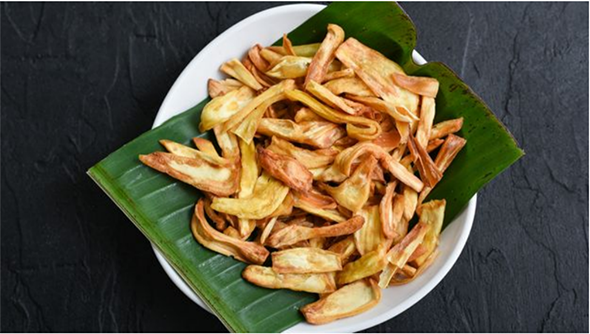
Jackfruit is often fried and made into crunchy chips as a snack (Credit:
santhosh_varghese/Getty Images)

Though jackfruit is traditionally cooked at home, this humble fruit is increasingly found in many upscale restaurants across the country. “One day we had additional baby jackfruit, so I thought of preparing cutlets [a croquette-like snack] with it for guests who are vegetarian or vegan,” said chef Wasantha Ranasinghe at Upaliʼs by Nawaloka, a popular restaurant in Colombo that serves authentic local dishes. His tender jackfruit cutlets, served with a homemade spicy chilli sauce, soon became a hit among the epicureans frequenting the restaurant.

Curious to see how jackfruit fares at hipster cafes, I visited the chic Colombo restaurant Cafe Kumbuk, which plates tacos with fried baby jackfruit alongside mango salsa and guacamole. “Living in Sri Lanka, I realised jackfruit is such a widely available, versatile fruit that can be cooked and enjoyed in so many ways,” said cafe founder Shana Dandeniya, who returned to Sri Lanka a few years ago after growing up in the UK. “To me, itʼs one of the greatest local superfoods we have access to, and we should champion it more.”
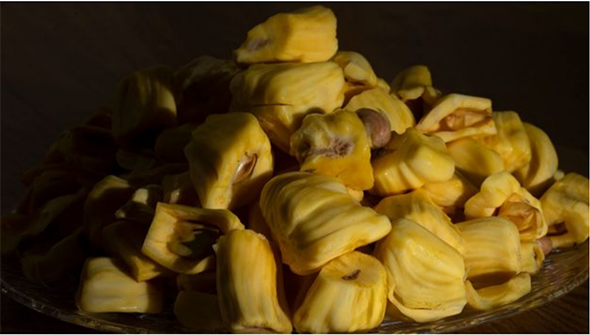
This humble fruit is increasingly being served at upscale restaurants across Sri Lanka (Credit:
Karel Bock/Getty Images)

She is particularly fond of the pulled pork-like texture in cooked jackfruit and has plans to reintroduce a pulled jackfruit burger on the cafeʼs menu following customer requests. “Itʼs great when slow-cooked and pulled; I
think itʼs even better than pulled pork.”

When I spoke to my mother again, she tempted me to visit my aunt in the village for a bowl of creamy white kiri kos cooked over a woodfire and enjoyed with a plate of hot rice and lemongrass-scented freshwater fish
curry. I canʼt recreate my auntʼs authentic flavours in my Colombo kitchen with a gas stove, but I can visit her and then see my father for a token of love that comes with his teatime kos ata aggala.

Tender jackfruit cutlets recipe (makes approximately seven)
Filling:
1 young jackfruit
100g potatoes
2 tbsp coconut oil
1 finely chopped onion
2 finely chopped garlic cloves
1 finely chopped green chilli
¼ tsp finely chopped ginger
½ tbsp ground pepper
¼ tbsp chilli flakes
1 tbsp roasted curry powder
finely chopped 2 sprigs of curry leaves
salt to taste
Batter:
50g wheat flour
150ml water
pinch of turmeric
pinch of salt
150g breadcrumbs
Clean the young jackfruit, and then peel and cut it into medium-sized
chunks. Boil until soft, and mash.
Boil the potatoes, and then peel and mash them.
Heat the coconut oil in a shallow pan. Once the oil is hot, add onions, garlic cloves, green chilli, ginger, pepper, chilli flakes, roasted curry powder and chopped curry leaves. Sauté until onions turn tender and light golden in colour. Add salt, the mashed jackfruit, and potatoes and stir well for five minutes. Switch off the heat. Once cool, shape the mixture into small balls about 1.5in in diameter.
Prepare the batter by whisking together the wheat flour, water, turmeric and salt.

Dip the balls in the batter and roll them in breadcrumbs. Heat a pan with oil and fry the cutlets until golden brown. Serve them with a spicy chilli sauce.
(Credit: Upaliʼs by Nawaloka, Colombo, adapted for BBC Travel)
—
Join more than three million BBC Travel fans by liking us on Facebook, or follow us on Twitter and Instagram. If you liked this story, sign up for the weekly bbc.com features newsletter called “The Essential List”. A handpicked selection of stories from BBC Future, Culture, Worklife and Travel, delivered to your inbox every Friday

 

TAGGED:jackfruit trees across Sri Lanka
Share This Article
Facebook Whatsapp Whatsapp LinkedIn Email Copy Link Print
Previous Article High Commission of India British Tamils Forum (BTF) and Hindu Council United Kingdom (HC UK) met with High Commission of India
Next Article The-Peterenes Trio of HFC girls added extra class at St Peter’s – By Algi Wijewickrema
FacebookLike
YoutubeSubscribe
LinkedInFollow
- Advertisement -
eLankaproperty - sell property in Sri Lanka, Sri Lanka property for sale, Sri Lanka real estate, Sri Lanka property listings, property marketplace Sri Lanka, land for sale Sri Lanka, houses for sale Sri Lanka, apartments for sale Sri Lanka, commercial property Sri Lanka, luxury villas Sri Lanka, Sri Lankan property investment, buy property in Sri Lanka, Colombo property for sale, beachfront property Sri Lanka, development land Sri Lanka, investment property Sri Lanka, property advertising Sri Lanka, real estate agents Sri Lanka, property brokers Sri Lanka, overseas Sri Lankan property buyers, Sri Lanka property website, list property online Sri Lanka, affordable property listings Sri Lanka, Sri Lanka homes for sale, Sri Lanka land investment, property developers Sri Lanka, real estate marketplace Sri Lanka, Sri Lanka commercial real estate, sell land in Sri Lanka, sell house in Sri Lanka, Sri Lanka property portal, global property marketplace Sri Lanka, Sri Lankan real estate investment, property management Sri Lanka, buy land Sri Lanka, residential property Sri Lanka, holiday homes Sri Lanka, Sri Lanka investment opportunities, real estate advertising Sri Lanka, eLankaProperty
- Advertisement -
ALTAIR
- Advertisement -
Ad image
eLanka Wedding
Most Read
Sandika Hemakumari

Sandika Hemakumari to Captain Sri Lanka’s Women’s Sevens Squad at the Colombo Leg of the Asia Rugby Sevens Series

Sri Lankan junior tennis players

Three Sri Lankan Girls Reach the ATF Under-16 Quarter-Finals in Colombo

Otherland Galle Opens on Sri Lanka’s Southern Coast With a Locally Built Approach to Hospitality AI-generated illustration based on source material. No authentic photograph of the Otherland Galle property is embedded in this article. Otherland Hotels opened its first property, Otherland Galle, on 12 October 2026, introducing a 66-key lifestyle hotel that brings together accommodation, dining, music and locally curated experiences on Sri Lanka’s southern coast. The opening adds a new hospitality concept to a region known for its beaches, historic Galle Fort and established surf culture, with the hotel’s programme designed to encourage visitors to engage with the wider destination as well as the property. Located on Matara Road, Otherland Galle is approximately 400 metres from Dewata Beach and 2.8 kilometres from Galle Fort, the UNESCO World Heritage Site. The hotel draws on the area’s culinary traditions, creative communities and coastal way of life, positioning local experiences as a central part of its offer rather than an optional addition to a conventional hotel stay. Founded by Rishi Sreedharan, Samarth Gowda and Emanuel Siddhartha in partnership with Beryll Group, Otherland Hotels is built around the philosophy “Never the Same Twice”. Its approach combines private rooms and suites with shared accommodation and communal spaces intended for different kinds of travellers, from couples and groups of friends to solo visitors and culturally curious guests. The co-founders, pictured from left: Emanuel Siddhartha, Rishi Sreedharan and Samarth Gowda. Source photograph: Lanka Business News. A design-led mix of rooms and shared spaces Designed by Studio Camarada, led by Andre Camara, the hotel has been arranged as a series of interconnected spaces rather than a conventional sequence of corridors and separate facilities. Its interiors draw on the colours and materials of the southern coast, including sandy neutrals, ocean blues and earthy tones, alongside rattan, ash, hand-tufted textiles and marble finishes. The 66-key accommodation comprises 24 Ocean Rooms, 25 Terra Rooms, 12 suites and five dormitories. Room sizes range from 27 square metres to the 70-square-metre Patio Suite, while the property also includes rooms designed for guests with disabilities. The mix offers a range of accommodation formats within one property, including shared dormitory options alongside private rooms and suites. At ground level, Bar-kery combines several functions: reception, coffee shop, bakery, aperitivo counter and informal co-working space. Its Vinyl Corner invites guests to browse records and choose music, giving the communal area a more participatory character. Colombo Coffee Company has developed an exclusive signature blend for the hotel. AI-generated illustrative image based on the reported design approach; it is not a photograph of Otherland Galle. The rooftop venue Creatures brings together a restaurant, cocktail bar, infinity pool and music space, with 270-degree views of the Indian Ocean. It is intended to serve as a daytime dining and swimming venue as well as an evening social space, linking the hotel’s food and music programmes with its coastal setting. Sri Lankan flavours, music and a sense of place The food programme is led by Chef Rajeev Kumar and draws on Sri Lankan culinary traditions, alongside international influences and contemporary techniques. Dishes listed for the menu include King Coconut Ceviche, Yellowfin Tuna Tataki, Lankan Fish Cutlets and Devilled Pork Ribs glazed with kithul treacle. A Watalappam Brûlée brings a familiar Sri Lankan dessert into a contemporary format. Arijit Bose leads the cocktail programme, while Aneesha Thapa manages day-to-day operations. Music is another part of the hotel’s identity, with programming across Afro, R&B, folk, funk, jazz fusion, house, techno and electronica. The combination of food, music and shared spaces is intended to make the property relevant to both visitors and people from the surrounding area. Co-founder Samarth Gowda described the approach as one intended to make the hotel feel accessible and personal: > “Otherland Galle should feel like yours from the moment you walk in. Luxury has often come with a sense of distance, with places appearing impressive because they do not feel accessible to everyone. That is not what we are building. Everything here is designed around who you are and how you want to spend your time.” AI-generated illustration of ingredients associated with Sri Lankan culinary traditions; not a photograph of the hotel’s kitchen or menu. The Other Side: experiences created with local communities A key element of the concept is The Other Side, an experiences programme developed in collaboration with local surfers, fishermen, artisans, guides, chefs and musicians. The activities are designed to connect guests with people and places beyond the hotel, while drawing on knowledge and skills already present in the Galle region. The programme includes curry masterclasses, guided walks through Galle Fort and surf lessons at Dewata Beach. Further afield, guests can take whale-watching excursions off Mirissa or kayak through the mangroves of Koggala Lake. Rooftop sunset sessions, arrack tastings, beach cricket and tuk-tuk bar crawls are among the social activities described as part of the offer. This community-led model gives local participants a role in shaping and delivering visitor experiences, rather than presenting the area only as a backdrop for sightseeing. Its longer-term value will depend on how consistently these partnerships are sustained and how directly local contributors benefit from the activity they help create. Co-founder Rishi Sreedharan said: > “At Otherland, curiosity is the operating principle. We measure success by whether guests leave with a real sense of Galle. The surfers, fishermen, chefs and craftspeople who live here have helped build these experiences, and they are the ones bringing them to life.” AI-generated coastal illustration based on the article’s setting; it does not depict a verified view from the property. A new option for visitors to Galle The opening marks the first phase of Otherland Galle’s development. A gym, wellness centre and banquet facilities are planned for a subsequent phase. The property’s initial offer, however, is already structured around more than its room inventory: its communal areas, food and beverage venues, music programme and locally developed activities form a connected hospitality concept. For Sri Lankans abroad planning a visit home, the opening provides another option near Galle, with a programme that brings together coastal recreation, local food, heritage and community knowledge. For the Galle area, the approach places local contributors at the centre of the visitor experience. Whether the model makes a lasting contribution will be measured not only by the facilities it offers, but also by the strength and continuity of those relationships. The launch also reflects a wider interest among culturally curious travellers in experiences that extend beyond accommodation and conventional sightseeing. In Galle, where historic landmarks sit alongside a living coastal culture, the opportunity is to create hospitality that is carefully designed while remaining connected to the people and traditions that give the destination its character. Sources: Lanka Business News; Colombo Times; Hiru News Gold FM; SoulofHospitality. This article was written based on the source https://www.lankabusinessnews.com/otherland-hotels-makes-its-debut-in-galle/ and corroborated by https://colombotimes.net/otherland-hotels-makes-its-debut-in-galle/, https://hirunews.lk/goldfmnews/493932/otherland-galle-opens-with-66-rooms-introduces-dormitories-to-luxury-hotel-mix and https://www.soulofhospitality.com/business/hotel-openings/otherland-hotels-enters-sri-lanka-with-a-new-approach-to-lifestyle-hospitality, kindly email us at info@eLanka.com.au if any information needs to be corrected. Click here to receive your free copy of the eLanka Newsletter twice a week delivered directly to your inbox! At eLanka, we respect the rights of creators. If we have used an image you own and you'd like it removed, please email us at info@elanka.com.au and we’ll handle it promptly. Thanks. eLanka team eLanka Disclaimer Content published on eLanka may be created by the eLanka team, submitted by contributors or third parties, reproduced or adapted from other sources with appropriate source acknowledgement, or provided as promotional/advertising material by our clients. While eLanka takes reasonable care in preparing and publishing content, we do not warrant its completeness or accuracy. Views expressed are those of the respective authors or contributors and do not necessarily represent the views of eLanka. Third-party contributors, content providers and advertisers are responsible for the accuracy of material they supply and for ensuring they hold the necessary rights and permissions for its publication. Advertising and promotional content should not be regarded as an endorsement by eLanka of any product, service or claim.

Otherland Galle Opens on Sri Lanka’s Southern Coast With a Locally Built Approach to Hospitality

Dilmah SIAL Paris 2026

Dilmah’s Three Innovations Selected for SIAL Paris 2026 as Company Named a Top Five SIAL For Change Finalist

Sigiriya Sri Lanka

WHY WOULD A KING BUILD HIS PALACE ON TOP OF THIS ROCK?

Related News
Re-writing history – the queer-washing of prolific Sri Lankan artist George Beven  ( PART ONE ) – by   Cat Clare Wright
Articles

Re-writing history – the queer-washing of prolific Sri Lankan artist George Beven ( PART ONE ) – by Cat Clare Wright

Sash Jayasinghe – 4LANKA 1,400KM Sri Lanka Run 2027
Articles

Sash Jayasinghe’s 4LANKA: 1,400KM Around Sri Lanka – July 2027

A Vision for Culturally Inclusive Aged Care-Pearl Life Care Meets with Hornsby Shire Council
Articles

A Vision for Culturally Inclusive Aged Care: Pearl Life Care Meets with Hornsby Shire Council

Janani Dananjana Wickramasinghe at Asian Para Games 2026
Articles

Janani Dananjana Wickramasinghe Carries Sri Lanka’s Medal Hopes in Three Events at the Asian Para Games 2026

Sri Lanka U19 Women
Articles

Limansa Thilakarathna and Sanjana Kavindi Lead Sri Lanka U-19 Women Past Pakistan for a Fourth Straight Win

  • Quick Links:
  • Articles
  • DESMOND KELLY
  • Dr Harold Gunatillake
  • English Videos
  • Sri Lanka
  • Sinhala Videos
  • Obituaries
  • eLanka Newsletters
  • Sunil Thenabadu
  • Trevine Rodrigo
  • Dr. Harold Gunatillake
  • Tamil Videos
  • Sinhala Movies
  • eLanka Newsletter
  • Photos

eLanka

Your Trusted Source for News & Community Stories: Stay connected with reliable updates, inspiring features, and breaking news. From politics and technology to culture, lifestyle, and events, eLanka brings you stories that matter — keeping you informed, engaged, and connected 24/7.
Kerrie road, Oatlands , NSW 2117 , Australia.
Email : info@eLanka.com.au / rasangivjes@gmail.com.
WhatsApp : +61402905275 / +94775882546
  • About eLanka
  • Terms & Conditions

Disclaimer:
eLanka is committed to sharing positive and community-focused stories. We do not publish or endorse political, religious, or ethnic viewpoints. The content published on eLanka, including articles and newsletters, reflects the opinions and views of the respective authors and not those of eLanka. eLanka accepts no responsibility or liability for the accuracy, completeness, or consequences of any content provided by contributors.

(c) 2005 – 2025 eLanka Pty Ltd. All Rights Reserved.