Re-writing history – the queer-washing of prolific Sri Lankan artist George Beven ( PART ONE ) – by Cat Clare Wright
Queer.
What is the first thing you think of when you hear that word?
A homosexual slur?
You should – because if he was still living, that is what George Beven would have heard.
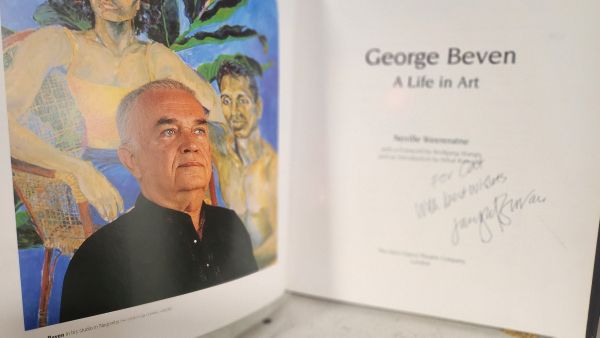
George Beven was born in Negombo in 1929 and died aged 93 on 29 January 2023. The Guardian newspaper described Beven in 2023 as “one of Sri Lanka’s leading contemporary artists.” (1) In 2015 Time Out described him as “one of Sri Lanka’s greatest figurative artists.” (2) The Sunday Times in 2023 remembers him as “one of Sri Lanka’s greatest modern artists.” (3)
But in the recent essay written by Dr Edwin Coomasaru titled George Beven Unbound Island Imaginary: Crossing the Borders of British-Sri Lankan Art (4) Beven is described as “a queer artist.”
In the above-mentioned news articles not one nor many more articles ever included the words “gay” or “homosexual” or “queer.”
Beven’s Wikipedia page does not mention these words. It does say: “Beven initially met his lifelong partner Wolfgang Stange in the early 1970s.” Labels are not required when details are self-evident.
Beven grew up during a time when “queer” was a homophobic slur, and his nine decades of life continually informed him that it was an ugly word used to describe the loving and committed relationship he shared with Stange.
Beven and Stange did not subscribe to the new umbrella term “queer” nor affirm or subscribe to queer or trans ideology.
How do I know this as factual? Unlike the author of the disrespectful essay George Beven’s Unbound Island Imaginary, I asked. The pair categorically stated that they were gay men. In fact, both he and Stange did not know or understand what “trans” was.
When I spoke to Stange about trans people, a confused expression appeared on his face and he answered, “do you mean drag queens?” No, I said, and tried to explain. Stange remained confused and not terribly interested. So be very clear, if Stange wasn’t informed, then neither was Beven.
Even after death, Beven and Stange remain entitled to their opinion and cannot be expected to retrospectively and posthumously adopt the term queer in place of the term gay. Especially now when they are incapable of speaking for themselves.
Using current technology, a Google AI query regarding the word queer produces this result: queer is a “reclaimed slur,” and concludes by warning: “Current Status: While widely embraced, it is still viewed as offensive by some older individuals or community members who remember its hurtful history. It is always best to know if someone is comfortable with the term before using it to describe them.”
It is always best to know if someone is comfortable with the term: In his essay Coom uses the word queer twelve (12) times.
Coomasaru employs this word to describe Lionel Wendt as a “queer photographer;” David Paynter is a “queer artist,” David Hockney is a “queer British artist.” Beven, Wendt and Paynter all “crafted a queer aesthetic vision” and writes of “the queer aesthetic worlds they built.”
Was there some document or treaty this trio drafted about a shared vision of this queer aesthetic world vision? Has Coomasaru sited this groundbreaking creative contract? No, because it doesn’t exist. It is a fanciful invention born out of Coomasaru’s wishful thinking.
Yet historian Robert Aldrich isn’t labelled by his sexuality; neither is art critic Edward Lucie-Smith. Are we to assume they are heterosexual? Why isn’t their sexuality also included?
Did Coomasaru ask even one of these “queer” men if they were comfortable with a) having their sexual preference discussed in open publication, b) being labelled “queer” c) queer ideology. Since all are deceased, their permission is doubtful unless Coomasaru resorted to tapping tables with a Ouija board.
Edwin Coomasaru has made sweeping assumptions about a man he never met, and his conclusion couldn’t be further from the mark.
Beven would have been mortified by the essay; Stange would have been furious.
No less than twelve times will Beven’s Burgher relatives and his family friends and acquaintances from Sri Lanka and the entire world will read that Beven was a faggot, a poofter, a limp wrist.
It turns my stomach to write those ugly words but be in no doubt: this is what people who mattered to Beven will hear. Slur after slur after slur after slur.
I recall my Dutch Burgher father using the word queer many times to describe a strange person or odd behaviour and can only imagine his confusion and outrage to read his respected first cousin described in this manner.
Beven was not “a queer artist” because he was not queer. He rarely discussed his sexuality and most certainly not in the public sphere. He didn’t need to. His life with Stange lived openly was his statement.
What gives anyone else the right to out another person? Was Coomasaru given permission by Beven to announce his sexual attraction? What gave Coomasaru the idea that just because a person is homosexual, this gives another person free licence to broadcast the fact to the rest of the world?
Beven never discussed his private affairs in printed media, so why does Coomasaru presume he is entitled to do so?
Beven and Stange were not political. They did not involve themselves with politics. Hence when Coomasaru mentions that Beven didn’t paint about the Sri Lankan civil wars it was because it was not what he cared to portray. Beven did not take sides. He loved all Sri Lankans. Instead of painting the war he and Stange volunteered their time and resources to help out victims and didn’t choose between victims. All were victims of the war.
Just as people from all demographics made up the huge contingent of friends and acquaintances kept by Beven and Stange. The pair did not seek niche company, they socialised with anyone and everyone regardless of their ethnicity, their nationality, their skin colour and their sexuality. Women were as much part of their society as were men. All were welcome and none seen as either more or less important than another.
The major aim of the inaugural launch of The Beven Foundation was to raise awareness of its existence and to draw in interested persons seeking financial investment, and to further the final
wishes of Wolfgang Stange: that his life partner George Beven’s artworks were sold to raise money to fund Sri Lankan artists of all genres, be it the visual arts, dancing or fashion designing.
However, the pointedly queer agenda and deeply alienating content of Coomasaru’s essay dog-whistles to just one demographic, in apparently towering importance over all others: adherents of Queer and Trans Ideology. Coomasaru calls to a minority audience, when Beven’s art was welcoming to all.
Coomasaru’s essay presumes that all gay men align with queer politics but a fast growing contingent of gay men, lesbians and bisexuals are opposed to the queer label and are unsupportive of trans ideology: and it is this group into which Beven and Stange fall.
Fifty years ago, I met my cousin George Beven and I know categorically that Beven, the man and absolutely the artist would recoil from this essay’s portrayal of him. It is a detrimental re-writing of history which neither Beven nor Stange would have approved of.
I have firsthand experience of Beven and Stange’s attitude regarding my own sentiment of Beven’s artworks. It was me who created the title of the 2019 Barefoot exhibition George Beven at 90 – Seven Decades of Art.
Discussion about the exhibition title took place one early afternoon in 2019 at the Barefoot Garden Cafe. Present was the young female curator of that exhibition, Stange and me. When I vocalised the proposed title, the curator was not approving; she thought it was not important to mention George’s age nor his many decades of painting.
Both Stange and I opined the very opposite – we thought that reaching age 90 to be a wonderful achievement to be happily celebrated, and mentioning the seven decades amplified the longevity and endurance of a proficient talent.
So Stange settled on that title; my opinion was significant and validated.
So when I state in no uncertain terms Coomasaru’s essay be discontinued from further promotion of the George Beven Foundation, I am speaking on behalf of a creative powerhouse duo who can no longer speak for themselves.
George and Wolfgang didn’t wave rainbow flags or attend pride marches or demand pronouns or only associate with other gays. Beven was not wrapped up in sex, gender and identity politics.
To assume he was speaking to the author’s own political and ideological stance which he seems to believe must be promoted at all costs.
But not at the cost of my relative’s legacy.
It may be admirable to have and speak to one’s own ideology, but to assume that everyone thinks the same way based solely on demographic category is shortsighted as best, manipulation at worst.
This divisive essay could very well put off any big sponsors and alienate otherwise interested companies. And crucially at a time when people are fast becoming fatigued with LGBTIQA+ rhetoric and pronoun policing. Society is tired of walking on eggshells. Silence does not equal acceptance; it can represent fear, fear of being labelled “transphobic,” “Terf” or “queer haters.” People are weary of the near fanatical demands of gender identity ideologues.
Consider members of the Burgher Association Australia and the UK, the Ceylon/Australia fellowship, the Facebook page for the Dutch Burgher Union of Ceylon etc – Coomasaru’s essay would repel the vast majority of members. As potential investors they are naturally interested in a fellow country man, and not with his supposed queer identity.
The essay has reduced Beven to a 2-dimensional cartoon character: classified by his mere sexuality. He would have been outraged he had been tarnished in the pursuit of some stranger’s personal political and ideological agenda and simultaneously denied a right of reply.
Coomasaru and the essay publishers owe a profound apology to the memory of George Beven and to those who hold him close to their hearts. We the friends, relatives and acquaintances of George Beven expect swift reparation for the harm and pain caused by the publication of such a contentious, fractious, polarising, alienating and detrimental essay.
Cat Clare Wright
Negombo
19 September 2026
Granddaughter of Sri Lankan Dutch Burghers F. John Wright, Maths/Physics teacher 25 years at St Peter’s College Colombo and of Verbena Francis Spittel Wright R.L Spittel ancestor
References:
- George Beven obituary Alison King author 2 April 2023
https://www.theguardian.com/artanddesign/2023/apr/02/george-beven-obituary
- George Beven, one of Sri Lanka’s greatest figurative artists talks to Ashok Ferry about his life and work Time Out Wednesday 22 July 2015
- Remembering George Beven – the man and the artist Lahiru Pathmalal writer; Sunday, February 12, 2023
- George Beven Unbound Island Imaginary: Crossing the Borders of British-Sri Lankan Art Dr Edwin Coomasaru author 2026 The Beven Foundation
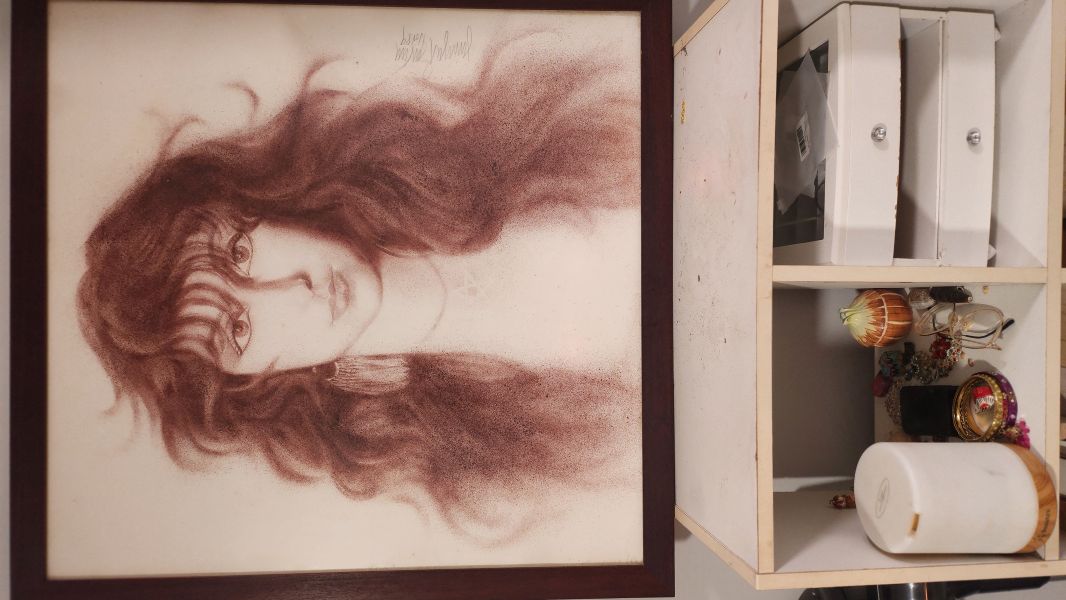
Author Cat Wright aged 21 painted by George Beven in 1989 in London
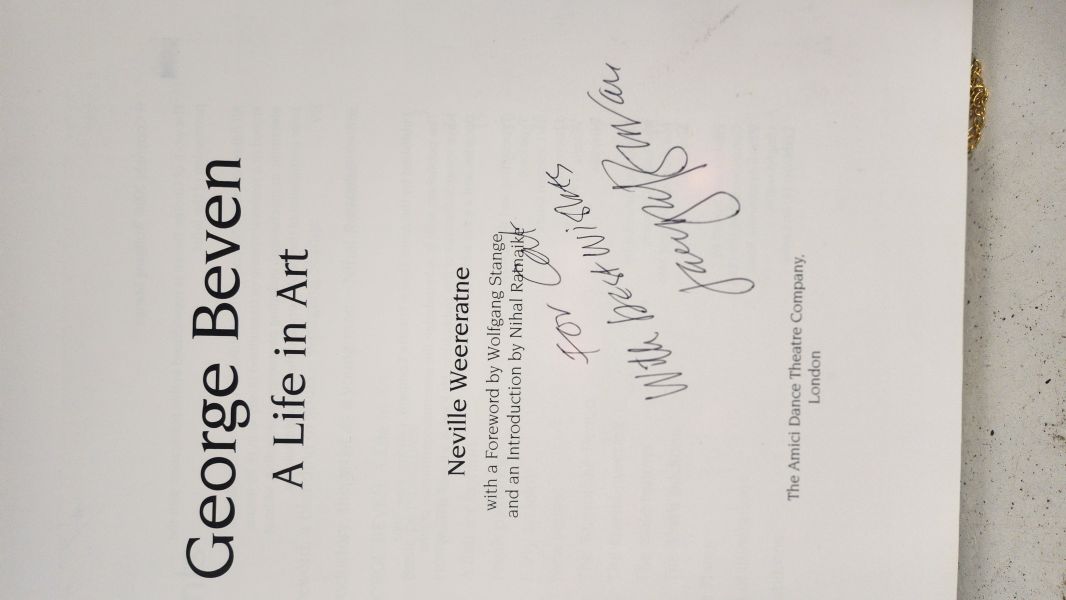
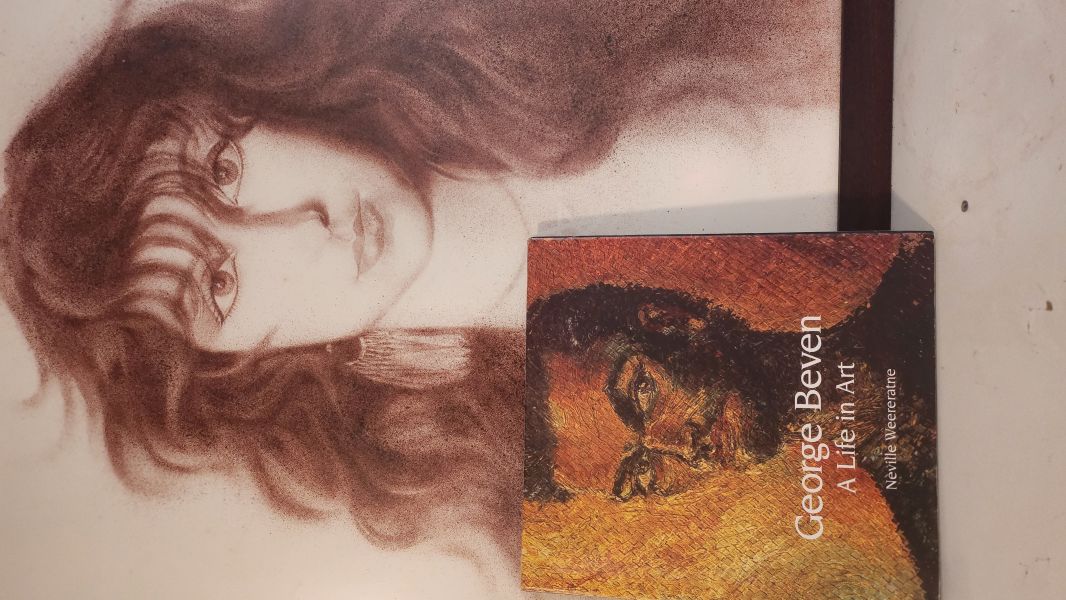
Author Cat Wright aged 21 painted by George Beven in 1989 in London
At eLanka, we respect the rights of creators. If we have used an image you own and you’d like it removed, please email us at info@elanka.com.au and we’ll handle it promptly.
Thanks.
eLanka team
eLanka Disclaimer
Content published on eLanka may be created by the eLanka team, submitted by contributors or third parties, reproduced or adapted from other sources with appropriate source acknowledgement, or provided as promotional/advertising material by our clients. While eLanka takes reasonable care in preparing and publishing content, we do not warrant its completeness or accuracy. Views expressed are those of the respective authors or contributors and do not necessarily represent the views of eLanka. Third-party contributors, content providers and advertisers are responsible for the accuracy of material they supply and for ensuring they hold the necessary rights and permissions for its publication. Advertising and promotional content should not be regarded as an endorsement by eLanka of any product, service or claim.