Govt. committed two mistakes : Dr. Jayawickrama-by Kamanthi Wikramasinghe

Source:Dailymirror
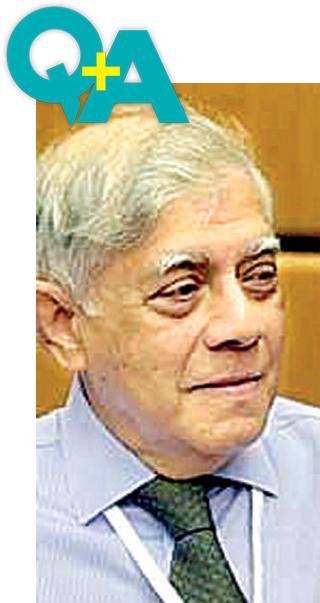
“The 2021 Resolution endorses the Report of the High Commissioner, and expresses serious concern at what it describes as “trends emerging over the past year, which represent a clear warning sign of a deteriorating situation of human rights in Sri Lanka,” said Dr. Nihal Jayawickrama in an exclusive interview with the Daily Mirror. Dr. Jayawickrama represented the Government in the Third Committee of the UN General Assembly while serving as the Permanent Secretary to the Ministry of Justice. In his capacity as Chairperson of the International Commission of Jurists (Hong Kong), he regularly appeared before the ICCPR Human Rights Committee when reports on Hong Kong submitted by the UK Government were being considered. He also represented the ICJ before the UN Human Rights Commission and Sub-Commission when the “Tiananmen Massacre” was being examined and, together with colleagues from Hong Kong, was responsible for drafting and securing the first ever resolution relating to China to be adopted.
Excerpts of the interview:
|
|
Q: Could you give a background about the passing of the Resolution and what it means for Sri Lanka?
Sri Lanka is a member state of the United Nations. The UN Charter requires member states to promote and encourage respect for human rights without distinction as to race, sex, language or religion. The UN General Assembly established the Human Rights Council and entrusted it with the task of addressing situations of violations of human rights, and making recommendations thereon. It was in the performance of that duty that the Human Rights Council adopted the Resolution on Sri Lanka this week. It was submitted
by the core group of six states, and co-sponsored by 30 other member states of the UN. The Resolution was based on the Report presented by the High Commissioner for Human Rights. The Resolution contains several recommendations addressed to the Government of Sri Lanka. By endorsing the High Commissioners Report, the Resolution also addresses other member states on actions which they should take in the event of the Sri Lankan government failing or neglecting to adopt the remedial measures.
The repeated intervention of the Human Rights Council is based on the principle of accountability. Accountability is the obligation to accept responsibility or to account for one’s actions. In May 2009, following the end of the conflict with LTTE, President Mahinda Rajapaksa and UN Secretary-General Ban Ki-Moon issued a joint statement which underlined “the importance of an accountability process to address allegations of violations of international humanitarian and human rights law,” and the Government committed itself to take “measures to address those grievances”. That commitment has remained unfulfilled.
This Resolution is a significant departure from those passed in previous years. The Resolutions adopted by the Human Rights Council between 2009 and 2015 focused principally on the failure of successive governments to address issues of accountability and reconciliation following the end of the armed conflict begun by the LTTE. The 2021 Resolution goes beyond that. It endorses the Report of the High Commissioner, and expresses serious concern at what it describes as “trends emerging over the past year, which represent a clear warning sign of a deteriorating situation of human rights in Sri Lanka”. The Resolution refers specifically to some of these:
The militarization of civilian government functions. The High Commissioner’s Report identifies 31 institutions assigned to the Ministry of Defence headed by a retired General; the Ministry of Public Security headed by a former Navy Admiral; 28 serving or former military and intelligence personnel appointed to key administrative posts and presidential task forces; and 25 senior military officers appointed as chief coordinating officers of districts.
The 20th Amendment which eroded the independence of the judiciary and, according to the Report, changed the balance of power by expanding the scope of presidential and executive power.
The erosion of the independence and credibility of the Human Rights Commission by the appointment of a former Minister as its Chair.
The political obstruction of accountability for crimes and human rights violations in “emblematic cases”. The Reports states that the current government has proactively obstructed or sought to stop ongoing investigations and criminal trials to prevent accountability for past crimes, including the killing of five Tamil students in Trincomalee and the 17 humanitarian workers in Muttur, the killing of protesters in Weliwerya and the anti-Muslim riots in Alutgama. The Report says that the Abeyratne Commission intervened in police investigations and ongoing judicial proceedings in several high profile human rights and corruption cases. It refers, in particular, to the Lasantha Wickrematunge murder, the enforced disappearance of Eknaligoda, and the disappearance of 11 persons in Navy custody. The Report also refers to the arrest of Shani Abeysekera who had led the investigations into several high-profile crimes and emblematic human rights cases.
The increased marginalization of persons belonging to Tamil and Muslim communities. The Report refers to “the increased use of ethno-nationalistic and majoritarian rhetoric and symbols by the President”, and to the refusal to play the national anthem in the Tamil language on national occasions.
The surveillance and intimidation of civil society. The Reports says that over 40 civil society organizations had approached the Office of the High Commissioner with complaints of harassment, surveillance and repeated scrutiny by a range of security services including the CID. It also notes that the National Secretariat for NGOs had been moved from a civilian ministry to a ministry headed by a retired general.
Restrictions on media freedom and shrinking democratic space. The Report notes the misuse of the ICCPR Act in an arbitrary manner to arrest or detain people for peacefully expressing their opinion.
Restrictions on public memorialization of victims of war including the destruction of a memorial on the campus of the Jaffna University.
Arbitrary detentions. The Report refers to the continued detention of Hejaaz Hizbullah under renewable 90-day detention orders.
Alleged torture and other cruel, inhuman degrading treatment and punishment. The Report refers to several deaths is custody, including that of Madush Lakshitha and 11 inmates of Mahara prison.
Sexual and gender-based violence.
The prevention of Muslims and members of other religions from practicing their own burial religious rites. The Report noted that WHO guidance had stressed that “cremation is a matter of cultural choice”.
Q:Only 22 out of 47 countries voted in favour. What does this mean?
Resolutions in UN organs are adopted by a simple majority. On this occasion, 22 member states voted in favour of the Resolution, while 11 voted against. On human rights issues, there is a tendency for states that are under scrutiny to either vote against a Resolution relating to another state or to abstain from voting. On this occasion, Eritrea and Venezuela who voted with Sri Lanka to reject the Resolution were themselves the subject of similar resolutions. China, Philippines and the Russian Federation, who also voted with Sri Lanka, are states that are regularly under scrutiny for human rights violations.
Q: How could the Resolution have been improved?
A Resolution can be avoided, not improved. If the government had complied with the previous resolutions, it could have avoided, but only partially, the present Resolution. On this occasion, the findings in the Report of the High Commissioner reflect not only the failure to hold to account security forces and surviving members of the LTTE for “war crimes” arising out of the conflict, but also numerous current human rights violations, especially since November 2019. The mistake that the government appears to have made was to think that it was all about “40,000 deaths”, and to rely on a backbencher’s speech made in the House of Lords. It was never about that. Another mistake that the government appears to have made was to convince itself that the Resolution was initiated by “Diaspora Tamils” when it was not.
Q: India, Nepal and Japan abstained from voting. Is this a warning sign for Sri Lanka in terms of international relations?
A serious lack of professionalism in the conduct of international relations has been evident since the present government assumed office. A comparison of the original draft of the resolution with the final version suggests that it was the inclusion in the latter of a reference to the need to hold elections to Provincial Councils that led India to abstain from voting. The treatment of Japan by the present government, especially by repudiating solemn commercial commitments entered into with a long-standing friendly country, probably accounts for its actions.
Q: The Government has repeatedly denied claims on war crimes and even withdrew from Resolution 30/1. What would be the repercussions of not supporting international mechanisms to serve justice to victims of the conflict?
The Resolution stresses the importance of a comprehensive accountability process for all violations and abuses of human rights committed in Sri Lanka by all parties, including the LTTE, and it notes the persistent lack of accountability of domestic mechanisms. Following the failure of the Sri Lankan government to investigate the alleged “war crimes”, the former High Commissioner invited three distinguished experts – the former President of Finland Martti Ahtisaari, former Governor-General of New Zealand and international jurist Dame Silvia
Cartwright, and former President of the Human Rights Commission of Pakistan Asma Jahangir, to perform that task. Their report identifies several individuals, including LTTE personnel, who were allegedly complicit in “war crimes” on the basis of command responsibility.
The Resolution now goes further. It has authorized the High Commissioner to “collect, consolidate, analyse and preserve information and evidence” of gross violations of human rights or serious violations of international humanitarian law in Sri Lanka, and allocated over two million dollars for that purpose. That exercise is intended to support judicial and other proceedings in member states. It then proceeds to call upon member states to exercise options to advance criminal accountability and provide measures of redress for victims. These include prosecutions for the international crimes committed by all parties in Sri Lanka before their own national courts under the principle of universal jurisdiction. Other options that are recommended include targeted sanctions, such as asset friezes and travel bans, as well as the referral of the situation in Sri Lanka to the International Criminal Court.