The many dimensions of animal rights-by Garrett Broad
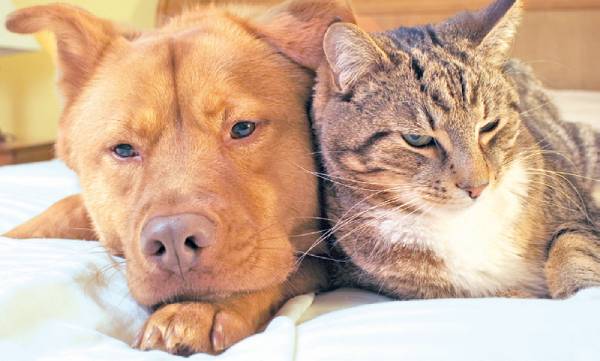
Source:Dailynews
How can you love some animals but eat others?
It’s a question posed frequently by vegan activists, often accompanied by a picture of a cute dog or cat juxtaposed with an equally adorable pig or cow.
Despite Americans’ food preferences, most of us like to think of ourselves as animal lovers — there’s about one cat or dog for every 2.4 people — and many Americans can even express pretty radical views about animal rights, at least when pollsters call.
For example, 32 percent of respondents to one 2015 Gallup poll agreed that “animals deserve the exact same rights as people to be free from harm and exploitation.” Skeptical of such strong support for animal rights, I conducted a follow-up survey a few years later, finding an even higher rate — 47 percent — endorsed this view. (I’m a professor and researcher who studies social movements, food systems, and animal rights.)
These results might lead you to believe that one-third to a half of Americans support giving animals substantial rights. But when respondents support animal rights in polls, they’re not actually talking about all animals.
In reality, people have a classification system for animals in their heads, and then perceive and treat them differently based on those classifications. Case in point: 75 percent of my survey respondents identified as an “animal lover,” though only about six percent followed a vegetarian or vegan diet. How we sort animals into different categories is shaped by an intersecting and evolving mix of factors, based in human psychology, cultural norms, direct experience, and media exposure.
Each year in the US alone, billions of animals are factory-farmed in terrible conditions, millions are confined in cages in medical labs, and countless animals’ habitats are cleared for development.
Until we have a clearer picture of how people actually think about animals, we have little hope of changing public opinion, let alone the laws that govern how animals live and die.
As a way to better understand these surprising poll results and their inconsistencies, I conducted a series of focus groups with diverse groups of Americans. My research demonstrates the serious barriers that stand in the way of change — while also pointing to some strategies to shift the way people think and eat.
For the focus groups, I first screened participants by asking them the same Gallup poll question — whether they believe “animals deserve the exact same rights as people to be free from harm and exploitation.”
When thinking about the poll question, many people told me their mental picture of “animals” was restricted to only those they considered pets. Regardless of their response to the poll, almost no one endorsed the idea that all animals deserved legal protection on par with humans. As one respondent put it, “There is definitely a hierarchy.”
The conversations showed people slot different animals into different mental categories, a mostly unconscious sorting process that has enormous implications.
The topic has received some attention in recent years from social psychologists and anthrozoologists, although there remains ongoing debate about what, exactly, these categories are, as does a recognition that there will be major differences across global cultures.
One study proposes four clusters based on the animal’s perceived warmth (defined as whether they have good intentions toward humans) and competence (defined as whether they have capability and skill). The groups included predators (low warmth, high competence), companions (high warmth, high competence), prey (high warmth, low competence), and pests (low warmth, low competence).
While these existing categories are useful for scholars, they don’t really reflect how people discuss animals in their everyday lives. In order to inform research and practice, I wanted to understand how people make sense of these issues on their own terms.
Based on my focus groups and some additional surveys, I came to identify four main categories of animals that people held within their mental schema: companions, wildlife, food/farm, and pests. From there, people connected each category to a different set of moral obligations and ideal forms of legal protection.
Companion animals included household pets, mostly dogs and cats but also a host of other domesticated animals, such as horses and rabbits. These animals were spoken about with sincere love and affection, and participants supported strong laws to protect them.
Wildlife brought to mind charismatic megafauna such as great apes, elephants, and whales. People believed these animals deserved respect and the ability to live free from human control, and many argued it was unethical to force them to perform as circus acts. However, respondents were ambivalent about the ethics of keeping wildlife in zoos, which they saw as having valuable educational and conservation possibilities.
Food/farm animals referred not only to those most common in the American diet — pigs, chickens, cows, fish, and the like — but also to several so-called “exotic” animals less frequently consumed in the United States, such as an octopus or alligator.
Here, participants expressed hope that these animals would not be subject to excessive cruelty, and in some instances recognized the moral ambiguity of their own meat consumption. Mostly, though, people just tried not to think much about it.
Finally, the category of pests included animals with little to no moral consideration or legal protection. “I don’t look at pests like that as animals,” another respondent said. “I don’t look at rats and roaches and stuff, even though they are animals, I don’t look at them as animals.” (VOX)