

News & Community eLanka

eLanka

Sunday, 21 Jun 2026
  • Home
  • Read History
  • Articles
    • eLanka Journalists
  • Events
  • Useful links
    • Obituaries
    • Seeking to Contact
    • eLanka Newsletters
    • Weekly Events and Advertisements
    • eLanka Testimonials
    • Sri Lanka Newspapers
    • Sri Lanka TV LIVE
    • Sri Lanka Radio
    • eLanka Recepies
  • Gallery
  • Contact
Newsletter
Sri lankan news
  • eLanka Weddings
  • Property
  • eLanka Shop
  • Business Directory
eLankaeLanka
Font ResizerAa
Search
  • Home
  • Read History
  • Articles
    • eLanka Journalists
  • Events
  • Useful links
    • Obituaries
    • Seeking to Contact
    • eLanka Newsletters
    • Weekly Events and Advertisements
    • eLanka Testimonials
    • Sri Lanka Newspapers
    • Sri Lanka TV LIVE
    • Sri Lanka Radio
    • eLanka Recepies
  • Gallery
  • Contact
Follow US
© 2005 – 2026 eLanka Pty Ltd. All Rights Reserved.
Home » Goodnews Stories Srilankan Expats » Articles » Resolving human-elephant conflict: It’s High Time to Treat the Root Cause – By Bernard Fernando
Articles

Resolving human-elephant conflict: It’s High Time to Treat the Root Cause – By Bernard Fernando

eLanka admin
Last updated: January 9, 2022 2:53 am
By
eLanka admin
ByeLanka admin
Follow:
Share
6 Min Read
SHARE
Views: 24

Resolving human-elephant conflict: It’s High Time to Treat the Root Cause – By Bernard Fernando

Resolving human-elephant conflict: It’s High Time to Treat the Root Cause - By Bernard Fernando

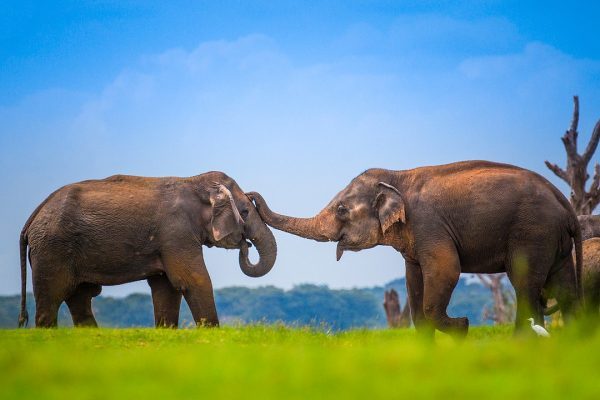
Photo Source:tripadvisor.com,kidadl.com

Arising from requests by the President and the COPA, urging a quick and durable solution with policy changes to protect humans and elephants, the writer initially suggested to treat the crystal-clear root cause for human-elephant conflict by determining the optimum manageable number of wild elephants in our small Sri Lanka through research and exporting the excess, thereby opening an avenue to earn the much-needed foreign exchange too.

I have since been informed that export of elephants has been restricted by the State as well as the rest of the world. If it is so, are we to perpetuate the hackneyed, harmful and impermanent strategies like elephant chasing crackers, electrical fences, trenches and bee boxes, etc. which have become obsolete and wasteful investments in the face of these wild elephants that have become wily and aggressive due to the natural instinct to douse their pangs of hunger?

As stated in my previous submission, an ongoing research by the Department of Wildlife Conservation (DWC) and Agricultural Biotechnology Centre (AgBC) of the University of Peradeniya has revealed that, carrying a wild elephant population between 5,000 and 6,000 is relatively high for a small country of 65,610 square kilometres inhabited by a human population of nearly 22 million.

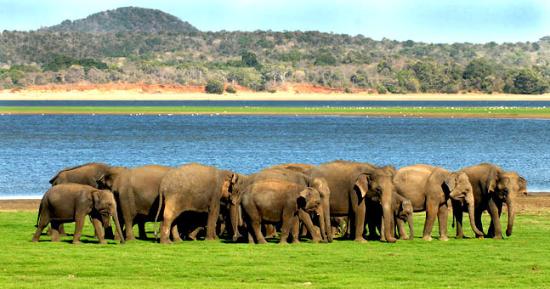
Does our public know that an elephant consumes about 150 kilogrammes of vegetation per day? With an estimated 5,600 wild elephants as at present, their food requirement works out to an astounding 840,000 kilogrammes per day! How can a small developing country like Sri Lanka cope up with such daily consumption levels when the human food, cultivable land and habitat requirements are also increasing exponentially?
elephents in sri lanka

The ground realty demands a permanent solution

It is high time that the authorities realise the widening imbalance between the increasing population of humans and wild elephants as strikingly evident from their ever-increasing death rates despite expensive and invasive countermeasures. The seemingly revengeful attacks and damage being done to, property, harvest and laboriously cultivated plots of those helpless, poor farming population, are utterly disgusting and heart-wrenching! In such circumstances, those farmers treating the arrogant elephants as their enemies at times seem justifiable!

Therefore, I repeat that in the face of Sri Lanka being a small, developing country with depleting resources, and recognising the crucial importance of elephant conservation (EC), religious and tourism needs, the only and best way is to strike that ‘delicate balance’ between the two populations. We fervently hope that the said research findings will effectively deal with the issue and throw enough light to convince those vociferous, but sincere elephant conservationists and environmentalists to appreciate this bitter ground reality.

In the meanwhile, let us implement the alternatives towards striking that ‘delicate balance.’ They are begin neuter/birth control programmes as already suggested in my previous articles, expand efforts to export excess numbers of elephants, to the ‘zoos’ of different countries using our Ambassadorial network and /or government to government discussions. If such exports are done in couples, the elephant conservationists in those countries will ensure that the Sri Lankan elephant does not become an endangered species, effect necessary policy changes as indicated by COPA, firstly at our end to remove existing export restrictions and convince the rest of the world on the need to preserve a scrupulous balance in the universal elephant population.

The benefits accruing from alternate measures are redemption of those poor farmers from their present plight of misery, arising from the research-related relocation exercises of elephants, additional availability of safe habitat for humans/elephants and cultivable land to the increasing human population in the medium and the long term.

Saving copious volumes of jungle vegetation for elephants and food crops for humans, opening a new avenue to earn the much-needed foreign exchange, reduction of wasteful foreign exchange spent on electrical fences, elephant chasing crackers and anaesthetics which are inimical to wildlife and saving manpower of Wildlife Department staff, the savings can partly be utilised to catch, tame and export (CTE) the elephant surplus and ensuring undisturbed forest cover and reforestation programmes.


Conclusion

The adoption of the above mentioned long-term, non-invasive export strategy will surely contribute towards solving many of the practical problems of HEC and EC, while helping to meet the country’s food and habitat requirements of both humans and elephants as well as mitigate the current foreign debt repayment problems


TAGGED:Agricultural Biotechnology CentrBernard FernandoDepartment of Wildlife ConservatioelephantsUniversity of Peradeniya
Share This Article
Facebook Whatsapp Whatsapp LinkedIn Email Copy Link Print
Previous Article Service Desk Service Desks: A customer assistance tool? – By Aditya Abeysinghe
Next Article The Magic of Scent – by Anil Wickremetunge The Magic of Scent – by Anil Wickremetunge
FacebookLike
YoutubeSubscribe
LinkedInFollow
- Advertisement -
BAY ONE Residences - Colombo, Sri Lanka_eLanka
eLanka Wedding
- Advertisement -
Ad image
Most Read
sell property in Sri Lanka, Sri Lanka property for sale, Sri Lanka real estate, Sri Lanka property listings, property marketplace Sri Lanka, land for sale Sri Lanka, houses for sale Sri Lanka, apartments for sale Sri Lanka, commercial property Sri Lanka, luxury villas Sri Lanka, Sri Lankan property investment, buy property in Sri Lanka, Colombo property for sale, beachfront property Sri Lanka, development land Sri Lanka, investment property Sri Lanka, property advertising Sri Lanka, real estate agents Sri Lanka, property brokers Sri Lanka, overseas Sri Lankan property buyers, Sri Lanka property website, list property online Sri Lanka, affordable property listings Sri Lanka, Sri Lanka homes for sale, Sri Lanka land investment, property developers Sri Lanka, real estate marketplace Sri Lanka, Sri Lanka commercial real estate, sell land in Sri Lanka, sell house in Sri Lanka, Sri Lanka property portal, global property marketplace Sri Lanka, Sri Lankan real estate investment, property management Sri Lanka, buy land Sri Lanka, residential property Sri Lanka, holiday homes Sri Lanka, Sri Lanka investment opportunities, real estate advertising Sri Lanka, eLankaProperty

Sell Your Property in Sri Lanka with eLankaProperty.com – The Smart, Affordable Way to Reach Local and Global Buyers

Sri Lanka tourism promotion in Moscow-eLanka

Sri Lanka tourism promotion in Moscow-by Harold Gunatillake

AUSTRALIA SRI LANKA ASSOCIATION (ASLA) AGM & Curry Lunch )

A Month of Goodness

Sanjiva’s SERENDIB Straddles the Trading Routes Over The Centuries-eLanka

Sanjiva’s SERENDIB Straddles the Trading Routes Over The Centuries

Related News
HCA at the UNHCR Lunch 2026 01
Articles

International Yoga Day 2026

Articles

Newsletter of Hindu Council of Australia

Articles

CARNAGE Launches the Carnage Athlete Foundation with a Commitment to Building the Next Generation of Champion Athletes

Brad and Kiara Show
Articles

The Brad and Kiara Show – Sydney

Josh Fleming, Race caller-eLanka
Articles

THE FACES BEHIND THE RACES

  • Quick Links:
  • Articles
  • DESMOND KELLY
  • Dr Harold Gunatillake
  • English Videos
  • Sri Lanka
  • Sinhala Videos
  • eLanka Newsletters
  • Obituaries
  • Sunil Thenabadu
  • Dr. Harold Gunatillake
  • Tamil Videos
  • Trevine Rodrigo
  • Sinhala Movies
  • eLanka Newsletter
  • Photos

eLanka

Your Trusted Source for News & Community Stories: Stay connected with reliable updates, inspiring features, and breaking news. From politics and technology to culture, lifestyle, and events, eLanka brings you stories that matter — keeping you informed, engaged, and connected 24/7.
Kerrie road, Oatlands , NSW 2117 , Australia.
Email : info@eLanka.com.au / rasangivjes@gmail.com.
WhatsApp : +61402905275 / +94775882546
  • About eLanka
  • Terms & Conditions

Disclaimer:
eLanka is committed to sharing positive and community-focused stories. We do not publish or endorse political, religious, or ethnic viewpoints. The content published on eLanka, including articles and newsletters, reflects the opinions and views of the respective authors and not those of eLanka. eLanka accepts no responsibility or liability for the accuracy, completeness, or consequences of any content provided by contributors.

(c) 2005 – 2025 eLanka Pty Ltd. All Rights Reserved.