A question that touches the hearts of many Sri Lankans living abroad is: “How do people live in Sri Lanka?”-by Harold Gunatillake

Hello Dr.,
I will read your attachment ASAP. In the meantime, can you please inform me as to how persons in Sri Lanka manage financially- that is, if they are not rich (e.g. in the lower socio-economic status)? Is there a welfare system that provides financial support to people (as we have in Australia)? If not (I hate to ask), how do these persons manage to live? (Is there a huge difference between ‘the haves’ and ‘ have-nots’, and how is this manifesting itself?). What about the Chinese people who come to live in Sri Lanka? Are they totally self-funded?
What about language? Is the Chinese language becoming more prevalent? (Are they happy to learn/speak Sinhalese and/or Tamil?) If so, is the Chinese language gradually becoming the status quo, or is it a language of choice? Are the locals being ‘forced’ to learn and use the Chinese language?
If these questions are ‘too political ‘, then I will understand if you don’t respond.
Thanks. Annesley
Here’s my response to Annesley and all my Sri Lankan readers living abroad. I truly appreciate your support and interest.
Dear Annesley,
Thank you so much for your warm and thoughtful message, and for caring about how people live in our beautiful mother Lanka. Your questions truly matter, and they show the curiosity many friends living abroad have about daily life in Sri Lanka, especially outside the more privileged circles.
Let me share a clear, honest, and reassuring picture with you.
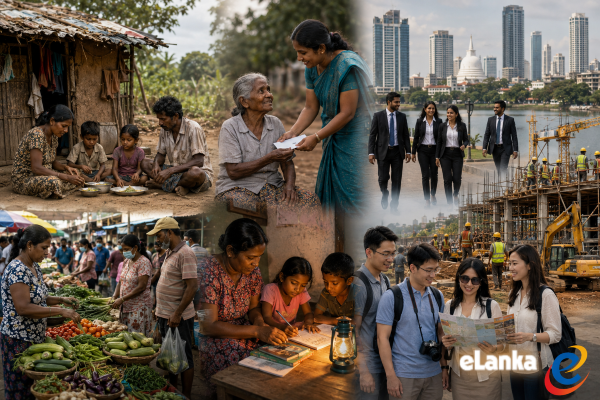
Discover how Sri Lankans manage their finances with remarkable simplicity and resilience. Their quiet strength and pragmatic approach inspire many, showing that sometimes the simplest methods are the most effective in maintaining stability and peace of mind.
Sri Lanka’s families, especially those in lower- and middle-income groups, live in ways that are beautifully different from the Western way of life. Instead of being weighed down by long-term loans, mortgages, or credit card debt, they build their lives step by step, in tune with what they can afford. Their homes are often built gradually over years as savings grow. Vehicles are bought only when really needed, and everyday life revolves around simple comforts rather than costly obligations. Families work together by sharing resources, meals, childcare, and even housing when necessary. This straightforward way of living isn’t a sign of poverty
— it’s a heartfelt cultural choice based on resilience. Sri Lankans value peace of mind more than financial stress, steering clear of the endless payment plans common in many developed countries. Even in tough economic times, communities, extended families, and a lifestyle that avoids constant borrowing help people stay strong and hopeful.
Is there a welfare system? It’s something many people care about, and it can really make a difference in lives.
Understanding how it works can help us feel more confident about the support that’s available to us.
Sri Lanka has a range of social support programs, even though they are not as comprehensive as Australia’s. These include:
- Samurdhi, which provides financial help to families with low incomes
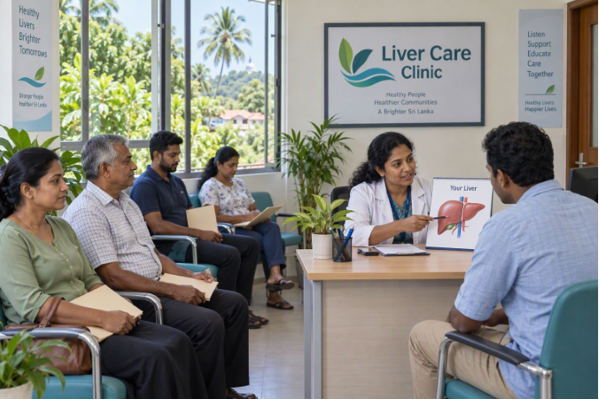
- Free healthcare available to all citizens
- Free education from primary school all the way through university
- Subsidies on essential goods during times of crisis
While these systems may not be perfect, they do a good job of ensuring that nobody is left without help.
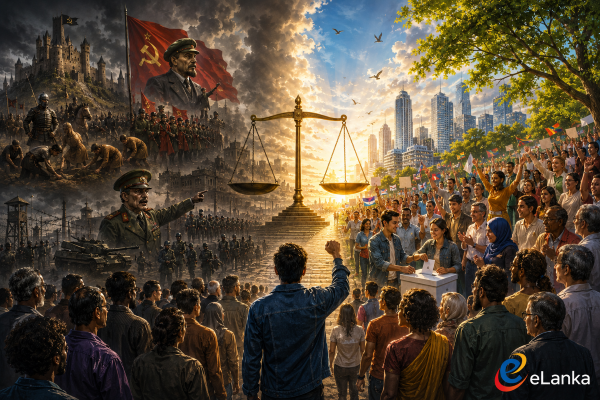
The “Haves” and “Have-Nots’ highlight the ongoing differences in wealth and opportunity that many people experience. It’s a reminder of the importance of working towards a more equitable and caring society where everyone can share in prosperity.
Yes, there’s a clear difference between wealthy families and those with more modest means — just like in most countries. However, how this gap shows itself can be quite different here: the wealthy might enjoy modern luxuries, imported goods, and private education, while most people live comfortably with simpler lifestyles, close family ties, and a sense of community. What’s truly important to remember is that social respect isn’t about how much money someone has. A schoolteacher, farmer, shopkeeper, or driver is valued for their vital role in society, and people don’t judge their worth based on material possessions.
(Recently, a grand wedding took place at the Shangri-La, celebrating the union of a successful businessman’s son and a lovely daughter of another hotelier. The celebration was truly spectacular, with the total bill surpassing 100 million rupees).
Chinese Residents in Sri Lanka
Chinese nationals living in Sri Lanka—whether for business, construction projects, or cultural exchange—are usually self-funded and handle their own finances. They typically have their personal financial plans in place and don’t depend on local
welfare programs. You’ll find them mainly in urban areas and at project sites, where they actively contribute to the local community.
Language and Cultural Integration
Chinese visitors and residents are respectful of local languages and do not push their own. They often pick up basic English or Sinhala to communicate in daily life. Some Sri Lankans choose to learn Chinese because it can improve job prospects, but Chinese isn’t becoming a dominant or required language. There’s no pressure on locals to adopt Chinese as their main language.
Instead, Sri Lanka continues to cherish Sinhala, Tamil, and English as the languages of everyday life, education, and government, proudly maintaining its linguistic diversity.
The Heart of the Matter — Celebrating the Resilience of Our People
Sri Lankans have faced many challenges like economic struggles, political instability, and global shocks. Despite this, they continue to live with grace, humour, a strong sense of community, and a deep feeling of contentment. They find happiness in simple pleasures—a shared meal, family gatherings, religious festivals, walks by the river, or enjoying a cup of tea at sunset. Instead of chasing stressful comforts, our people focus on building lives that are sustainable, debt-free, and rich in emotional fulfilment. That’s why many visitors often say, “People here smile even when life is hard.”
See this Instagram post by @thaalabentota: https://www.instagram.com/reel/DXRIc0Ǫgkq4/?igsh=ZGUzMzM3NWJiOǪ==
In Summary
Sri Lanka is not just a land caught between despair and luxury; rather, it’s a beautiful country filled with resilient, resourceful people. They live within their means, support each other, and carry themselves with dignity, all without being weighed down by endless financial worries.
And please, your questions are perfectly heartfelt — I truly appreciate you asking them.
Warm regards,
Harold Gunatillake (OAM)
Now enjoying my retirement in Kandy, I love getting my hands dirty in my vegetable gardens, walking 35,000 steps (intermittently) every day, and writing articles that bring our community together.