Australian Referendum and Human Rights-by Dr Laksiri Fernando
Source:Island
Australia is holding a referendum on 14 October (2023) proposing a constitutional amendment in the country in recognising the Aboriginal and Torres Strait Islander people as the ‘first nations people’ and creating a body as ‘a voice’ to express their views through representatives to Parliament and the government on policies relevant to their welfare and development. A referendum is usually a vote in the form of ‘Yes’ or ‘No’ to a particular question and the question in this instance is the following.
“A Proposed Law: to alter the Constitution to recognise the First Peoples of Australia by establishing an Aboriginal and Torres Strait Islander Voice. Do you approve this proposed alteration?”
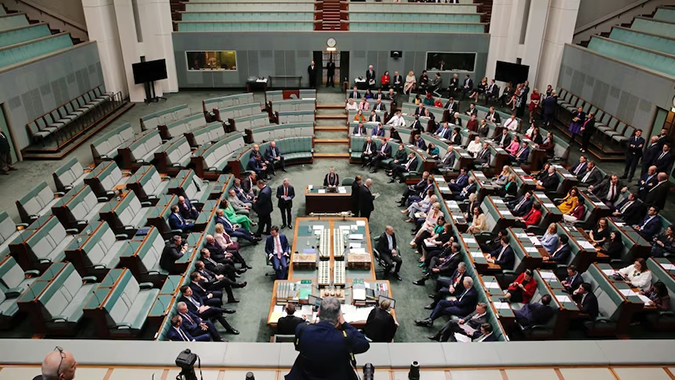
In May this year, both houses of Parliament approved the holding of a referendum and since then the campaign for yes and no has been launched by various political parties and organisations. It would have been very much better if the ‘yes’ campaign had been conducted on a bipartisan or nonpartisan basis. Because the voice to parliament is mainly a human rights issue. When a particular community or a group of people is disadvantaged in society, they should be given a special push or place to overcome those disadvantages. In human rights vocabulary this is called affirmative action. In 1998, the UN Sub-Commission on Human Rights appointed a Special Rapporteur on the subject and in his report, he gave the following tentative definition on the matter.
“Affirmative action is a coherent packet of measures, of a temporary character, aimed specifically at correcting the position of members of a target group in one or more aspects of their social life, in order to obtain effective equality.”
Even before this date, affirmative actions were in practice particularly on women, minorities, and indigenous people in some countries. In 1974 when I entered the University of New Brunswick, Canada, I could meet many indigenous students enrolled under affirmative action. When I came to Australia in 1991 however, I unfortunately could not see any indigenous person in Sydney universities. In the American continent it was under John F. Kennedy’s initiative in 1961 that affirmative action programs were initiated in the university sector although a recent Supreme Court decision is meant to be reversing it. Affirmative action programmes are in operation in many democratic countries today for women, blacks, immigrants, poor people, disabled persons, war veterans, indigenous peoples, and specific minorities. Through practice it is revealed that affirmative actions work as human rights promotion. One of the best explanations on the subject is ‘A Philosophical Defense of Affirmative Action’ by Engelbert Ssekasozi (1999).
Voice to Parliament also has some historical origins and emotional aspects. These are clear from the Uluru statement. However, these are not against human rights or against any other Australian. The statement says it is a ‘Statement from the Heart.’ Through a Voice to Parliament some of the emotional claims or sentiments could be appeased. This is a human duty of all other Australians. Apart from the human rights aspects of the proposed referendum, there are very many humanitarian aspects. Whatever the weaknesses of the Uluru statement, it must be admitted that it is the way probably most of the Aboriginal and Torres Strait Islander people feel and think at present. Australia as a tolerant and democratic society should be able to understand and allow these views.
When it says, “Our Aboriginal and Torres Strait Islander tribes were the first sovereign Nations of the Australian continent and its adjacent islands and possessed it under our own laws and customs” there is no point in having a dispute. However, when it says, “This sovereignty is a spiritual notion: the ancestral tie between the land, or ‘mother nature’, and the Aboriginal and Torres Strait Islander peoples who were born therefrom, remain attached thereto, and must one day return thither to be united with our ancestors” there can be some impractical aspects. This confusion enlarges when it follows the following statement. “This link is the basis of the ownership of the soil, or better, of sovereignty. It has never been ceded or extinguished and co-exists with the sovereignty of the Crown.”
The Uluru statement was made in 2017, more than five years ago. Unfortunately, there was no apparent dialogue between those who formulated the statement and modern Australians who would support the ideas/demands with necessary and possible amendments. Indigenous people have every right to express their views and aspirations. Two years before the Uluru statement, Meagan Davis and George Williams wrote ‘Everything You Need to Know About the Referendum to Recognize Indigenous Australians’ (2015) supplying convincing reasons for the matter before us at the referendum. They said, “The 1967 referendum deleted discriminatory references to Aboriginal people but put nothing in their place. Torres Strait islanders have never been referred to in the Constitution. As a result, rather than recognizing Indigenous people, the referendum left a silence at the heart of the Constitution.”
The Australian Government has issued an official pamphlet on the referendum according to the Referendum Act 1984. It has fairly given a balanced assessment on both sides of the coin to vote Yes or No. On the Yes side, what is proposed is a new Chapter IX to the constitution in “Recognition of Aboriginal and Torres Strait Islander Peoples.” The proposal further says, “there shall be a body to be called the Aboriginal and Torres Strait Islander Voice.” This is what has created the controversy and doubts.
From a human rights perspective, just recognition of indigenous people as the First Nations in the constitution is not enough. There should be some positive measures and mechanisms. A major reason for this necessity is their appalling socio-economic conditions and neglect. Uluru statement says “Proportionally, we are the most incarcerated people on the planet.” This is what needs to be changed with their participation and support. There are several devoted charity and nongovernmental organizations working with indigenous people. But that is not sufficient. What is necessary is an overall development action plan under the national government based on the voices expressed by the indigenous representatives. Their health, education, employment, and security should be looked into with a road map and a plan of action.
Indigenous Voice might not be the correct name for the proposed mechanism. However, that can be rectified after the referendum. What is proposed is not a Third Chamber. It cannot override the Australian parliament and it has no veto power as some people incorrectly argue. The ‘Voice’ is also not like a mere commission appointed by a government. Voice is elected by the indigenous people. As the referendum proposal says, ‘Voice may make representations to the Parliament and the Executive Government of the Commonwealth on matters relating to their peoples.’
At a referendum, the ‘yes’ or ‘no’ compulsory vote should be completely a personal decision unlike voting at a parliamentary election. People do not need to worry at all about the dangers of the referendum or the Voice to their sovereignty or democracy. Indigenous people are an innocent, helpless and victimized small community not even exceeding 4 percent of the population. If the campaign for the referendum, already approved by Parliament, becomes further divisive and partisan, the victims again would be the Aboriginal and Torres Strait Islander people. This is the most important human rights issue today in Australia.