News & Community eLanka

eLanka

Sunday, 14 Jun 2026
  • Home
  • Read History
  • Articles
    • eLanka Journalists
  • Events
  • Useful links
    • Obituaries
    • Seeking to Contact
    • eLanka Newsletters
    • Weekly Events and Advertisements
    • eLanka Testimonials
    • Sri Lanka Newspapers
    • Sri Lanka TV LIVE
    • Sri Lanka Radio
    • eLanka Recepies
  • Gallery
  • Contact
Newsletter
Sri lankan news
  • eLanka Weddings
  • Property
  • eLanka Shop
  • Business Directory
eLankaeLanka
Font ResizerAa
Search
  • Home
  • Read History
  • Articles
    • eLanka Journalists
  • Events
  • Useful links
    • Obituaries
    • Seeking to Contact
    • eLanka Newsletters
    • Weekly Events and Advertisements
    • eLanka Testimonials
    • Sri Lanka Newspapers
    • Sri Lanka TV LIVE
    • Sri Lanka Radio
    • eLanka Recepies
  • Gallery
  • Contact
Follow US
© 2005 – 2026 eLanka Pty Ltd. All Rights Reserved.
Home » Goodnews Stories Srilankan Expats » Articles » Australia’s Great Barrier Reef hit by mass coral bleaching
Articles

Australia’s Great Barrier Reef hit by mass coral bleaching

eLanka admin
Last updated: March 12, 2024 1:47 am
By
eLanka admin
ByeLanka admin
Follow:
Share
5 Min Read
SHARE
Views: 13

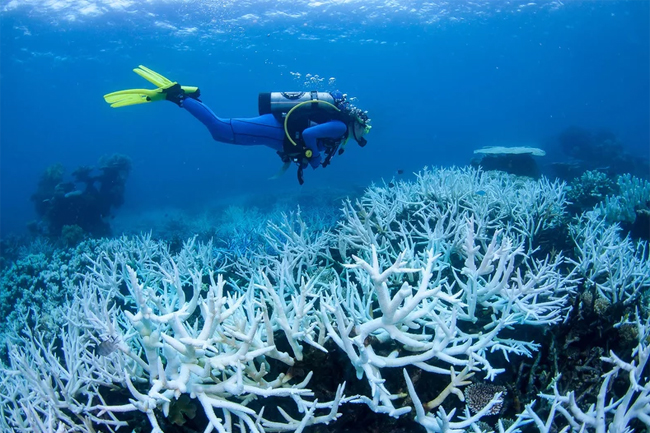
Australia’s Great Barrier Reef hit by mass coral bleaching

https://adaderanaenglish.s3.amazonaws.com/1709970612-Australia-Great-Barrier-Reef-mass-coral-bleaching-l.jpg

Source : adaderana

Australia’s Great Barrier Reef has been hit by a major coral bleaching event likely caused by heat stress built up over the summer at the biologically diverse site, a government agency has said.

The Great Barrier Reef Marine Park Authority (GBRMPA), which monitors the reef’s health, said on Friday that the damage was “widespread” in at least two-thirds of the areas surveyed at the UNESCO World Heritage Site.

The reef, a living organism, stretches some 2,300km (1,429 miles) off the northeastern coast of Australia and is considered one of the most species-rich habitats on earth. It is home to hundreds of coral, 1,500 fish species and 4,000 different molluscs.

Coral reefs are an important part of marine life as they house more than a quarter of all sea life on Earth, provide protection for coastal communities, and are natural carbon sinks. Climate change is the biggest threat to their survival because of their sensitivity to heat.

Bleaching causes corals to lose the colourful algae living in their tissues, turning them white. Corals can survive a bleaching event although it can stunt their growth and affect reproduction.

Prolonged, or intense heat could cause coral deaths.

“The results are consistent with what we have seen with above average sea surface temperatures across the Marine Park for an extended period of time,” Roger Beeden, chief scientist at GBRMPA, said in a statement.

“While the area’s aerial surveys are showing that the coral bleaching is extensive in the shallow water areas, we will need in-water surveys to confirm the severity of the coral bleaching and also what the depth range is.”

“We know the biggest threat to coral reefs worldwide is climate change. The Great Barrier Reef is no exception,” environment minister Tanya Plibersek said in a statement. “We need to act on climate change. We need to protect our special places and the plants and animals that call them home.”

The bleaching event is similar to reports on reefs around the world due to elevated sea surface temperatures primarily driven by climate change but amplified by the effects of the El Nino phenomenon, which usually results in warmer ocean waters, the agency added.

Earlier this week, the United States National Oceanic and Atmospheric Administration said the world was on the verge of a fourth mass coral bleaching event which could see wide swaths of tropical reefs die, including parts of the Great Barrier Reef.

The World Wide Fund for Nature (WWF) said in a statement that the bleaching event, which is one of several in recent years, proved climate change was putting the reef under “tremendous pressure”.

“WWF is very concerned that this bleaching event is unfolding in an area where corals have not been previously exposed to these extreme temperatures. Unless we see a significant drop off in temperatures in the next few weeks, the risk of significant coral mortality is high,” said Richard Leck, WWF-Australia’s head of oceans.

The Great Barrier Reef saw mass bleaching events in 1998, 2002, 2016, 2017, 2020 and 2022, according to the Australian Institute of Marine Science.

The United Nations’ cultural and scientific agency (UNESCO) has proposed to put the Great Barrier Reef on an endangered list but Australia has lobbied intensively to block that move for years.

The reef is a major tourist attraction for the country, contributing about $6 billion Australian dollars (US$4bn) to the economy, and providing 64,000 jobs. A UNESCO endangered listing could mean it loses this heritage status, and could make it less attractive to tourists.

Source: Al Jazeera
-Agencies

Click here to receive your free copy of the eLanka Newsletter twice a week delivered directly to your inbox! 

TAGGED:Australia’s Great Barrier ReefGreat Barrier ReefThe Great Barrier Reef Marine Park AuthorityUNESCO world heritage
Share This Article
Facebook Whatsapp Whatsapp LinkedIn Email Copy Link Print
Previous Article Energy Efficiency Empowering Sri Lanka: Women Lead in Energy Efficiency and Sustainability Initiatives – By Muhammad Jawad
Next Article Athula Withanage - eLanka My Friend Athula Withanage – By Tilak S Fernando
FacebookLike
YoutubeSubscribe
LinkedInFollow
eLanka Wedding
- Advertisement -
Ad image
Most Read
Agriculture Sri Lanka , Community News , Southwest Monsoon , Sri Lanka Weather

Nature’s Refresh: Heavy Rainfall Expected to Cool Down the Island

Israel Aerospace Industries , Katunayake Base , Kfir C12 , Sri Lanka Air Force

Taking Flight: Success for Sri Lanka Air Force’s Upgraded Kfir C12

Sri Lanka biodiversity, iNaturalist Sri Lanka, citizen science Sri Lanka, wildlife observations Sri Lanka, Sri Lankan wildlife, biodiversity conservation, nature photography Sri Lanka, environmental conservation Sri Lanka, Sri Lankan flora and fauna, endemic species Sri Lanka, wildlife research Sri Lanka, biodiversity database, nature lovers Sri Lanka, conservation technology, mobile apps for nature, citizen scientists, youth environmental movement, University of Sri Jayewardenepura, wildlife monitoring, species identification, BioBlitz Sri Lanka, environmental education, Sri Lankan ecosystems, rainforest biodiversity, wildlife documentation, conservation awareness, digital biodiversity records, Sri Lankan natural heritage, ecological conservation, global biodiversity platform, environmental journalism, Malaka Rodrigo, biodiversity mapping, wildlife enthusiasts Sri Lanka, sustainable conservation, nature exploration Sri Lanka, wildlife data collection, conservation science, endemic birds Sri Lanka, Sri Lankan leopard, environmental stewardship, biodiversity hotspot, nature clubs Sri Lanka, wildlife photography community, citizen engagement, biodiversity records, conservation initiatives, ecology Sri Lanka, technology and nature, environmental sustainability

Wild Success: Sri Lanka Hits 300,000 Wildlife Observations on iNaturalist

FIFA Sri Lanka, Negombo Football Stadium, Kadolkale Grounds Negombo, Sri Lanka Football Development, FIFA Forward Programme, International Football Stadium Sri Lanka, Negombo Sports Infrastructure, Sri Lanka Sports News, Football in Sri Lanka, FIFA World Cup 2026 Fan Zone, Vijitha Herath, Sri Lanka Football Federation, Sports Tourism Sri Lanka, Negombo Tourism, Sri Lankan Football, AFC Football Tournaments, World Cup Qualifiers Sri Lanka, FIFA Investment Sri Lanka, New Stadium Negombo, Sri Lanka Sports Development, Football Stadium Construction, Negombo Sports Hub, Sri Lanka International Sports Venue, Youth Football Development Sri Lanka, Sri Lankan National Football Team, BOI Sri Lanka, Sports Economy Sri Lanka, FIFA Backed Projects, Global Sri Lankan Community, Football Tourism Asia, Sri Lanka Infrastructure Projects, Kadolkale Stadium Project, Football Facilities Sri Lanka, International Sports Events Sri Lanka, Negombo Community Development, Sri Lanka Football Future, Sports Investment Sri Lanka, FIFA Partnership Sri Lanka, Football Academy Sri Lanka, Sri Lanka Sporting Nation

Goal! FIFA to Build New International Football Stadium in Negombo

SUNDAY CHOICE – WHAT A DAY THAT WILL BE - DEDICATED TO ALL OUR LOVED ONES - GONE TO BE WITH THE LORD  -  by Charles Schokman

SUNDAY CHOICE – “I know that my Redeemer lives” (Job 19:25) – by Charles Schokman

Related News
Sinigama Devalaya
Articles Kalani Prabodha

Sinigama Devalaya (Seenigama Devol Maha Devalaya) – A Sacred Shrine of Faith and Tradition in Sri Lanka-by Kalani-eLanka

Tillys Beach Hotel at Mount
Articles

Tilly’s Beach Hotel at Mount: Burnt-Out in July 1983

Why Sri Lanka is Becoming a Top Travel Destination in Asia - By Malsha - eLanka
Articles Malsha Madhuhansi

Why Sri Lanka is Becoming a Top Travel Destination in Asia – By Malsha – eLanka

Articles Michael Roberts

Reflections on Sansoni’s LAST STAND IN KANDY-by Michael Roberts

The Brad & Kiara Show
Articles The Brad and Kiara Show - Sydney

The Brad & Kiara Show

  • Quick Links:
  • Articles
  • DESMOND KELLY
  • Dr Harold Gunatillake
  • English Videos
  • Sri Lanka
  • Sinhala Videos
  • eLanka Newsletters
  • Obituaries
  • Sunil Thenabadu
  • Dr. Harold Gunatillake
  • Tamil Videos
  • Sinhala Movies
  • Trevine Rodrigo
  • eLanka Newsletter
  • Photos

eLanka

Your Trusted Source for News & Community Stories: Stay connected with reliable updates, inspiring features, and breaking news. From politics and technology to culture, lifestyle, and events, eLanka brings you stories that matter — keeping you informed, engaged, and connected 24/7.
Kerrie road, Oatlands , NSW 2117 , Australia.
Email : info@eLanka.com.au / rasangivjes@gmail.com.
WhatsApp : +61402905275 / +94775882546
  • About eLanka
  • Terms & Conditions

Disclaimer:
eLanka is committed to sharing positive and community-focused stories. We do not publish or endorse political, religious, or ethnic viewpoints. The content published on eLanka, including articles and newsletters, reflects the opinions and views of the respective authors and not those of eLanka. eLanka accepts no responsibility or liability for the accuracy, completeness, or consequences of any content provided by contributors.

(c) 2005 – 2025 eLanka Pty Ltd. All Rights Reserved.