



Central Bank Governor: Fitch Upgrade Reflects Sri Lanka’s Progress and a Shift to Sustainable Investment
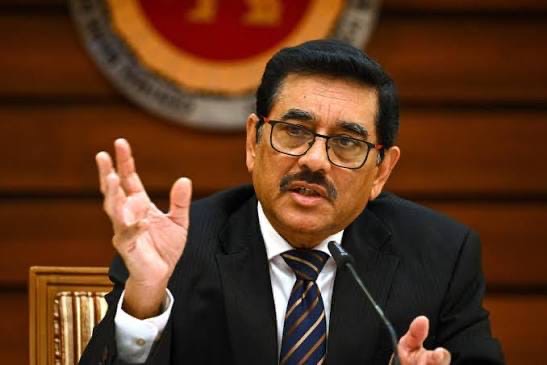
Image Source : www.newswire.lk
Sri Lanka’s recent sovereign credit-rating improvement represents more than a technical adjustment in international financial assessments; according to Central Bank Governor Dr. Nandalal Weerasinghe, it demonstrates that the country’s programme of macroeconomic stabilisation and structural reform is beginning to establish the conditions required for a more durable phase of development.
Fitch Ratings upgraded Sri Lanka’s Long-Term Issuer Default Ratings from ‘CCC+’ to ‘B-’ and assigned the country a Stable Outlook, a decision that was announced on 22 September 2026. While a separate eLanka article examines the Fitch decision itself, the remarks delivered by Dr. Weerasinghe provide important context regarding what the upgrade could mean for Sri Lanka’s economic direction, domestic businesses and Sri Lankan expatriates seeking to understand the country’s next stage.

Governor links rating improvement to economic reform
Dr. Weerasinghe made the comments while speaking at the 49th Annual General Meeting of the Association of Development Financing Institutions in Asia and the Pacific (ADFIAP) on 23 September 2026.
The meeting brought together representatives of development-finance institutions operating across the Asia-Pacific region, where questions surrounding economic resilience, productive investment and long-term development remain central to national policy discussions. Against that backdrop, the Governor presented Sri Lanka’s rating improvement as an indication that the restoration of economic stability following the severe crisis has created a stronger platform for future growth.
The Governor stated:
“This progress has also been recognised by the upgrade of Sri Lanka’s sovereign rating by Fitch Ratings to “B-” from “CCC+”, with a Stable Outlook, announced yesterday, reflecting the continued progress in macroeconomic stabilisation and reforms.”
The statement places the rating decision within a broader sequence of policy developments rather than portraying it as an isolated financial event. Sri Lanka’s economic recovery has involved efforts to restore fiscal discipline, improve foreign-exchange conditions, strengthen public revenue and address external financing pressures, while reforms have been pursued to support more credible and predictable economic management.

AI-generated illustration: sustainable investment, productivity and long-term growth. Image: eLanka.
What a sovereign-rating upgrade means
A sovereign credit rating is an independent assessment of a country’s capacity and willingness to meet its financial obligations. Ratings agencies consider a wide range of factors, including government finances, economic growth, foreign-exchange reserves, debt-servicing requirements, institutional strength and exposure to external shocks.
In plain terms, an upgrade from ‘CCC+’ to ‘B-’ indicates that Fitch considers Sri Lanka’s credit profile to have improved, although the country remains within a rating category that reflects substantial risk. The upgrade does not mean that economic challenges have disappeared, nor does it guarantee that all forms of borrowing will immediately become inexpensive or widely available.
However, the change can send a constructive signal to international lenders, institutional investors, development-finance organisations and businesses assessing Sri Lanka. A stronger rating may support improved confidence, encourage renewed consideration of investment opportunities and assist the country in seeking financing under more favourable conditions over time, provided that reform momentum is sustained.
For Sri Lankan companies, this may gradually improve the environment in which investment decisions are made. Businesses that depend on imported machinery, international partnerships, export finance or foreign currency funding may benefit if external perceptions of risk continue to moderate. The effect is unlikely to be immediate or uniform, but a more stable national financial framework can provide a foundation for companies to plan with greater confidence.
From stabilisation to sustainable investment
Dr. Weerasinghe said the focus must now move beyond the restoration of stability towards sustainable investment, higher productivity and long-term economic growth.
That transition is significant because stabilisation and development are related but distinct objectives. Stabilisation seeks to prevent further deterioration by controlling inflationary pressures, improving fiscal balances, rebuilding reserves and reducing the likelihood of renewed external imbalances. Sustainable investment, by contrast, requires the creation of productive capacity that can generate employment, exports, innovation and reliable public revenue over an extended period.
Sri Lanka’s next phase will therefore depend on whether improved stability can be converted into investment that strengthens the real economy. This could include modern manufacturing, technology services, renewable energy, logistics, agriculture, education, healthcare and export-oriented industries, provided that projects are selected according to transparent economic criteria and supported by consistent policy.
Higher productivity will also be essential. Productivity improvements occur when businesses, workers and public institutions can produce greater value from available resources through better technology, skills, infrastructure, management and access to finance. For Sri Lankan enterprises, the transition could create opportunities to move beyond short-term survival and consider expansion, digitisation, workforce development and participation in regional supply chains.

AI-generated illustration: productive investment and economic connectivity. Image: eLanka.
Relevance for Sri Lankan businesses
The Governor’s remarks carry practical importance for Sri Lankan businesses, particularly those that have faced uncertainty over costs, imported inputs, credit availability and foreign-exchange access.
A more stable macroeconomic environment can make it easier for business owners to prepare budgets, evaluate capital expenditure and negotiate long-term commercial arrangements. It can also support the development of a more predictable investment climate, although confidence will depend on the continued implementation of reforms and the reliability of economic policy.
Small and medium-sized enterprises will remain particularly important. These businesses account for a substantial share of employment and economic activity, yet they often experience the greatest difficulty in obtaining affordable finance and adapting to sudden changes in taxation, interest rates or import conditions. If the move towards sustainable investment is to produce broad-based benefits, development-finance institutions and commercial banks will need to ensure that viable smaller enterprises are not excluded from new opportunities.
The ADFIAP setting was therefore appropriate for the Governor’s message. Development-finance institutions can play an instrumental role in directing capital towards projects that strengthen productive capacity rather than merely supporting short-term consumption. Their contribution could include longer-term lending, risk-sharing mechanisms, technical assistance and support for businesses seeking to improve energy efficiency, digital capability and export readiness.
Significance for Sri Lankan expatriates
Sri Lankan expatriates and international members of the global Sri Lankan community are also likely to follow these developments closely, particularly those who operate businesses, invest in property or enterprises, support family ventures, or maintain professional links with Sri Lanka.
A more credible economic framework can encourage carefully assessed investment and create opportunities for knowledge transfer, partnerships and professional collaboration. Sri Lankan professionals living in Australia, the United Kingdom, Canada, New Zealand, the United States and other countries may be able to contribute through technology, management expertise, education, finance and international market access.
Nevertheless, the rating upgrade should be interpreted responsibly. Investment decisions must continue to consider currency movements, taxation, regulatory requirements, debt conditions and sector-specific risks. A sovereign-rating improvement is an encouraging indicator, but it is not a substitute for due diligence, transparent governance or a detailed assessment of individual projects.

AI-generated illustration: confidence, resilience and international economic links. Image: eLanka.
The importance of maintaining reform momentum
Fitch’s decision provides recognition of progress, but it also places greater importance on the continuation of that progress. The Stable Outlook offers a measure of reassurance, yet future assessments will continue to reflect the country’s debt burden, financing requirements, fiscal performance, reserve position and ability to withstand external pressures.
For Sri Lanka, the principal challenge will be to ensure that stabilisation becomes durable rather than temporary. That will require continued attention to public revenue, expenditure management, debt sustainability, monetary credibility and the strengthening of institutions. It will also require policies that encourage private-sector investment while protecting vulnerable households and maintaining public confidence.
Dr. Weerasinghe’s comments consequently point towards a demanding but potentially constructive economic agenda. The rating upgrade can help create a more favourable starting position, but sustainable investment and higher productivity will depend on the quality of implementation that follows.
For Sri Lankan businesses and the global Sri Lankan community, the central message is one of cautious possibility: the foundations of economic confidence appear to be strengthening, and the next opportunity lies in converting that improved stability into productive investment, stronger enterprises and long-term national growth.
This article was written based on the source https://www.newswire.lk/2026/09/24/cbsl-governor-says-fitch-upgrade-reflects-sri-lankas-progress-on-economic-reforms/, kindly email us at info@eLanka.com.au if any information needs to be corrected.
(adsbygoogle = window.adsbygoogle || []).push({});
At eLanka, we respect the rights of creators. If we have used an image you own and you’d like it removed, please email us at info@elanka.com.au and we’ll handle it promptly.