Sri Lanka Welcomes 107,000 Tourists in Three Weeks as Australia Ranks Third Source Market
Source : www.themorning.lk
Sri Lanka recorded 107,093 international tourist arrivals during the first three weeks of September 2026, providing a positive indication of continued momentum within the country’s tourism sector and highlighting the importance of Australia as a source market for visitors travelling to the island.
The latest figures, released by the Sri Lanka Tourism Development Authority (SLTDA) and reported by The Morning on 24 September 2026, place Australia third among the leading markets during the period. The strong Australian showing is particularly relevant to Sri Lankan families, businesses and community organisations across Australia, many of which maintain close personal and commercial connections with Sri Lanka.
The September arrivals also lifted Sri Lanka’s total international tourist arrivals for 2026 to 1,642,215, demonstrating that the country’s visitor economy has continued to attract substantial interest across several major international markets.
India remains the leading source market
India continued to provide the largest number of visitors during the first three weeks of September, recording 32,536 arrivals. The figure reinforces the enduring importance of India as Sri Lanka’s largest source market, supported by geographical proximity, frequent air connections, established commercial relationships and longstanding cultural links.
The United Kingdom ranked second, with 7,906 arrivals, while Australia followed closely with 7,393 visitors. China recorded 6,409 arrivals and Germany contributed 5,440, completing the five leading source markets identified in the latest figures.

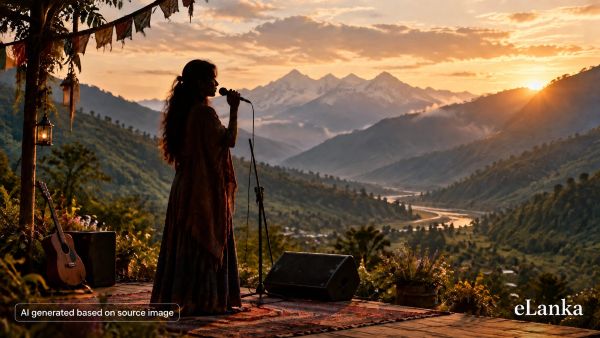
AI-generated illustration based on the supplied source image; no authentic source photograph was available.
Although the total number of visitors from Australia was considerably lower than the number recorded from India, Australia’s third-place ranking remains significant because it reflects the depth of the relationship between the two countries, including family connections, education, business, community networks and longstanding travel patterns.
For many Sri Lankan Australians, a journey to Sri Lanka represents more than a conventional holiday. It can involve reconnecting with parents and extended relatives, attending weddings and religious ceremonies, visiting ancestral homes, supporting local businesses or combining family commitments with time spent exploring the country’s diverse regions.
Australia’s importance to Sri Lanka’s visitor economy
Australia has remained a valuable source market for Sri Lanka, with visitors arriving from major cities including Sydney, Melbourne, Brisbane, Perth and Adelaide, as well as from regional communities. The country’s large Sri Lankan population has helped maintain an enduring flow of visitors, while Sri Lanka’s natural landscapes, cultural heritage, cuisine and family networks continue to provide strong reasons for travel.
The 7,393 Australian arrivals recorded during the first three weeks of September therefore carry importance beyond the headline number. Each visitor contributes to a wider chain of economic activity involving airlines, accommodation providers, restaurants, transport operators, tour companies, guides, retailers and local suppliers.

AI-generated illustration: international visitors receiving assistance from a Sri Lankan hospitality and travel business.
Hotels and guesthouses may benefit from greater demand for rooms, particularly in areas connected to family travel, cultural attractions and coastal or hill-country destinations. Travel businesses may also experience increased enquiries for airport transfers, private vehicles, guided excursions and customised itineraries designed around family visits.
Restaurants, cafes, supermarkets, handicraft sellers and small retailers can likewise benefit when visitors spend money in local communities. This distribution of tourism income is important because the sector’s contribution is not restricted to large hotels or internationally recognised attractions; it also reaches smaller enterprises that provide services, food, transport and locally produced goods.
A positive signal for hotels, travel operators and local businesses
The latest data does not, by itself, measure the revenue generated by visitors or the length of their stays. Nevertheless, the sustained arrival of international tourists provides a constructive foundation for businesses seeking to rebuild confidence, improve services and plan for future demand.
For accommodation providers, the figures underline the value of maintaining consistent standards, transparent pricing, reliable online booking systems and customer service that reflects the expectations of visitors from different countries. For travel operators, the market mix indicates the importance of offering flexible services, multilingual assistance where possible and itineraries that can accommodate both international visitors and Sri Lankan families returning home.
The figures also reinforce the value of digital visibility. International visitors increasingly research accommodation, transport, restaurants and experiences online before departure, meaning that businesses with clear websites, accurate contact details, current photographs and responsive communication are better positioned to convert interest into bookings.
eLanka’s Destination Sri Lanka coverage reflects the continuing interest in the country’s visitor economy and provides an example of how Sri Lankan stories can be shared with readers in Australia and around the world.
What the figures mean for Sri Lankan families in Australia
For Sri Lankan families living in Australia, the strong Australian ranking may encourage further consideration of visits to Sri Lanka, particularly among those who have postponed travel or are planning journeys around school holidays, family celebrations and religious observances.

AI-generated illustration: an Australian-Sri Lankan family planning a future visit to Sri Lanka.
Family travel often supports a broad range of local businesses because visitors may remain in the country for longer periods, move between several districts and combine personal commitments with leisure activities. A family returning to Sri Lanka may use airport transport, stay in hotels or guesthouses, arrange domestic travel, purchase gifts and support restaurants and service providers in several locations.
This pattern can be particularly valuable to smaller businesses that depend on consistent visitor activity rather than occasional large-scale events. It also creates an opportunity for Sri Lankan enterprises to improve the way services are presented to overseas customers, including through clear online information, secure payment options, dependable communication and professionally designed websites.
Momentum supported by a broad international market
The September figures indicate that Sri Lanka’s visitor economy is being supported by a broad range of markets rather than by a single source country. India, the United Kingdom, Australia, China and Germany together represent different geographical regions and travel motivations, providing a more diversified foundation for the sector.
This diversity can help reduce exposure to sudden changes in any one market, although continued progress will depend on factors such as air connectivity, visitor confidence, service quality, destination management and the country’s ability to provide a consistent experience.
Sri Lanka’s tourism sector is also well placed to present a wider national story, one that combines cultural heritage, wildlife, cuisine, wellness, beaches, mountains, historic cities and family connections. Such variety gives accommodation providers and travel companies the opportunity to develop more specialised experiences rather than relying only on conventional sightseeing packages.

AI-generated illustration: a cultural welcome for international visitors arriving in Sri Lanka.
The Australian market is particularly receptive to this broader approach because many visitors possess an existing familiarity with Sri Lankan traditions and may seek experiences that combine relaxation with cultural, family or community connections.
A constructive outlook for the months ahead
Sri Lanka’s 107,093 international arrivals during the first three weeks of September represent an encouraging contribution to the country’s 2026 tourism performance. With the year-to-date total reaching 1,642,215, the latest figures suggest that international interest has remained substantial during a month that is traditionally influenced by changing travel patterns in several source markets.
For Sri Lankan hotels, travel companies, restaurants, transport providers and local suppliers, the figures provide a reason to continue improving standards and investing in reliable, customer-focused services. For Sri Lankan families in Australia, the strong third-place position of Australia confirms the continuing importance of their connection with the island.
The figures therefore carry significance at both a national and community level: they reflect the continued movement of visitors towards Sri Lanka while also demonstrating how family relationships, cultural familiarity and international community networks contribute to the country’s economic activity.
Source: https://www.themorning.lk/articles/zjy9a5kPeUbKxwVbHyz8
This article was written based on the source https://www.themorning.lk/articles/zjy9a5kPeUbKxwVbHyz8, kindly email us at info@eLanka.com.au if any information needs to be corrected.
At eLanka, we respect the rights of creators. If we have used an image you own and you’d like it removed, please email us at info@elanka.com.au and we’ll handle it promptly.